
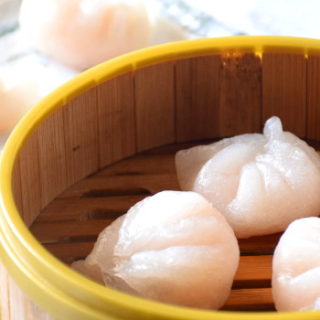
Ninety years ago, the proprietor of 怡珍茶樓 (Yee Zhen tea house) at the Five Phoenix Village 五鳳鄉 in Guangzhou created Har Gow (shrimp dumpling). He combined the shrimp, bamboo shoots, and pork fat and made a dumpling with the rice flour pastry. He named this delicacy the Five Phoenix dumpling.
Later, other chefs improvised the dumpling wrappers using wheat starch to form a thinner and more delicate dumpling skin. This delicacy has fast become famous in Guangzhou due to its unique presentation and flavor.
Ninety years later, it has evolved into one of the most recognizable Cantonese dim sum, Har Gow.
In this article, I will show you how to make Har Gow (shrimp dumplings) from scratch. It only involves some basic ingredients and can be done easily at home.
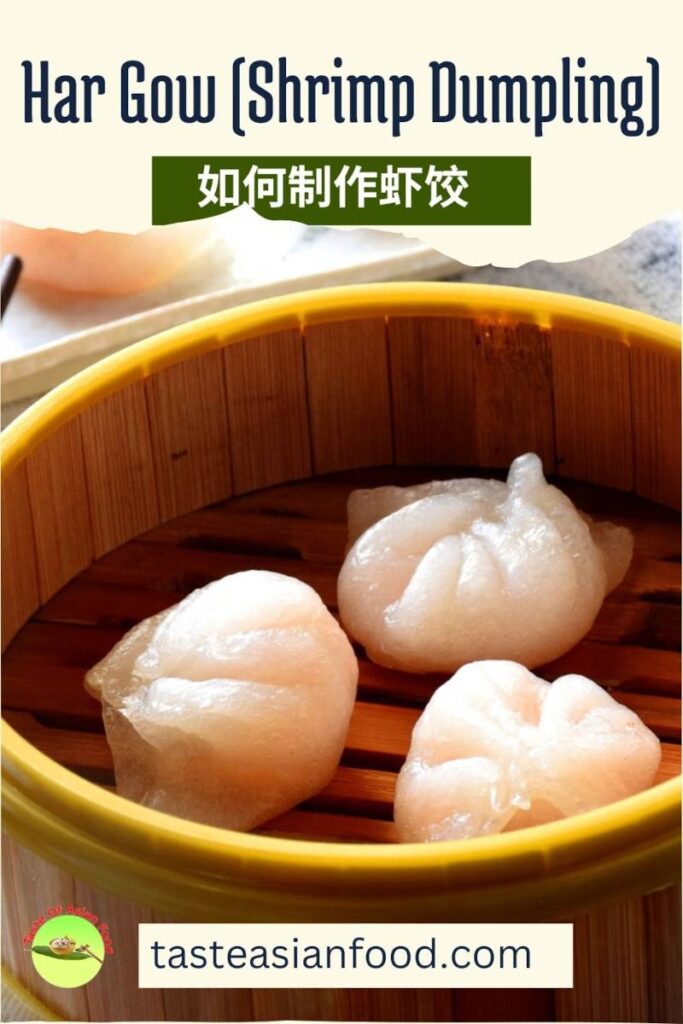
The Yam Cha culture
Har Gow (or Chinese prawn dumpling) is one of the old-school Cantonese Dim Sum classics served during ‘Yam Cha”, the time-honored Cantonese version of breakfast tea. The chef showcases his culinary craftsmanship by creating multiple pleats on the Har Gow. The Dim Sum lady will load the Har Gow on the trolley and skillfully trundle through the narrow gaps between the marble tables and wooden chairs in a small shop.
Har Gow is the transliteration of the Chinese term 蝦餃, which means shrimp dumpling. Shumai and Char Siu Bao also form the triumvirate of the world-famous Cantonese Dim Sum. Har Gow is by far the most artistry, with the bright pink chunks of fresh shrimp veiled through the thin, stretchy, chewy, delicate, and translucent wrapper.
Shrimp dumpling is the most recognizable Cantonese dim sum. It has crystal clear, translucent, and chewy skin with either chopped or whole shrimp encased. Hence, some dim sum restaurants call it crystal shrimp dumplings. It is a bite-size delicacy, much like sushi. You will experience the shrimp juice oozing out when you bite the best shrimp dumpling.
The key ingredients are shrimp, pork fat, and bamboo shoots, with the modern variation of only using fresh whole shrimp, which is more flavorful and crunchy.
Dim Sum’s master chefs can artistically fold eight to thirteen pleats imprinted on its wrapper. This masterful delicacy is called the king of Har Gow or crystal-skinned shrimp dumplings.
This staple of Cantonese tradition looks simple, but many people hesitate to make it at home due to the technique involved. In addition, you need some practice on how to pleat the dumplings, although the presentation does not affect the taste of Har Gow.
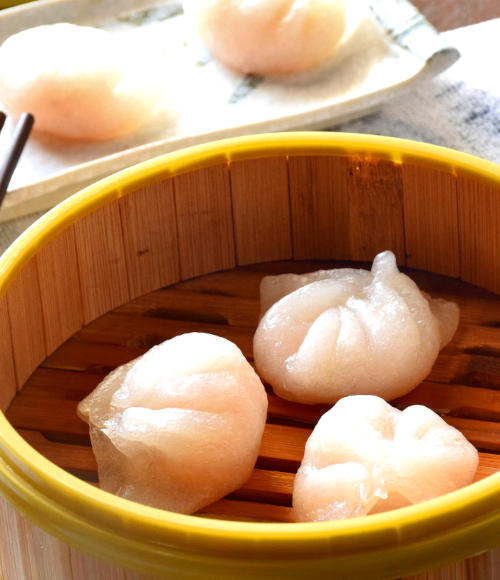
A step-by-step guide to making the best Har Gow
1. What are the best ingredients for the wrapper?
There is no consensus on the wrapper’s formula. Most recipes include wheat, corn, tapioca starch, and oil. I have done a series of tests to find the best wheat starch and tapioca starch ratio. The ratios are based on the recipe by well-known food bloggers and renowned Dim Sum master chefs.
The criterion is to have stretchable shrimp dumpling wrappers that can roll to an ultra-thin, translucent dough.
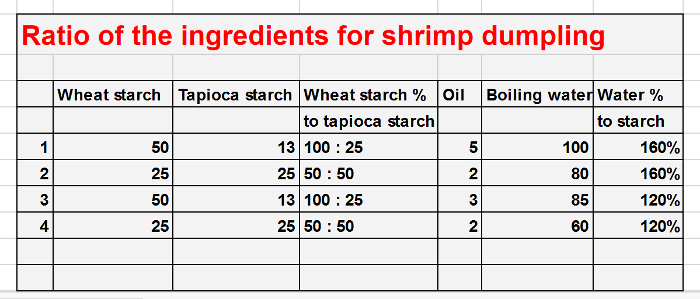
The result showed that recipe number 2 yielded the best result. The Har Gow skin is elastic, stretchable, and can roll out thinly without breakage. The amount of water is just sufficient to make it pliable and easy to wrap the filling.
You can adjust the amount of the ingredients in my recipe if the skin turns out to be less desirable. The result varies with the quality of the wheat starch and the use of potato starch or cornstarch.
Tips and suggestions:
- Reduce the amount of starch if the skin is too chewy.
- Adjust the amount of the boiling water if necessary until it is not too wet and easy to roll out. You may not need to change the quantity of the water in most cases, but sometimes the quality of the wheat starch differs, and adjustment may be required.
- Add a small amount of oil (either vegetable oil or lard) to the dough to make it softer and stretchable.
2. How to prepare the wrapper dough for the best result
Mix the wheat starch, tapioca starch, and salt in a mixing bowl. Add the boiling water and stir the flour vigorously until it forms a sticky dough. Then add a small amount of oil, and knead it until it is smooth, pliable, and homogeneous.
Anyone who knows how to make bread will understand this process. However, there are a few points you want to take note of to ensure it turns out perfectly:
Tips and suggestions:
- When making the dough, you must use hot water, preferably boiling water.
- The water should be sufficient to form a soft, malleable dough. If the dough cracks when you roll it out, you need to increase the quantity of water. (More information about this is in the following sections).
- I used vegetable oil for my recipe, but you can use lard as a substitute.
3. The optimum amount of water for the dough
When making the shrimp dumpling wrapper for the first time, you may find that the boiling water varies significantly from recipe to recipe. For example, chef 孙志强 uses only half the amount of boiling water compared to the total amount of starch, while blogger Wantanmian uses much more water than other chefs.
Why is there such a significant disparity in the quantity?
This is likely due to the different quality of the wheat starch. In addition, experienced Dim Sum chefs develop ‘hand-feel”, which means they can know whether the dough is moist enough by touching and kneading it.
Since this type of ‘feel” can only develop through experience, the following guideline is helpful to anyone new to making the shrimp dumpling wrapper:
Tips and suggestions:
The piece of dough is too dry if:
- The dough cracks at the side when you roll it into a circle.
- Hard to roll it to paper-thin.
- It tears when you wrap the filling halfway.
The dough is too wet if:
- It is sticky.
Either way, you can add a small amount of wheat starch to the dough if it is too wet or add some boiling water if it is too dry. After that, knead it again until it is smooth and even.
Let the dough relax for five minutes before cutting it into small pieces.
4. How to roll out the wrapper
I think spreading the dough to paper-thin with the back of the Chinese cleaver is more efficient than by the rolling pin.
Here are the steps:
- Roll the dough into a long cylinder. Cut it into equal pieces of 12g to 15g each. (You may want to start with 15g first, as it is easier to fold the large than the small one.)
- Keep the dough balls in a container with a cover, or leave them in a bowl and cover with a damp cloth to prevent them from drying.
- Apply some oil with a brush to the side of the knife to press and spread the dough into a thin, round layer. The oil will prevent the dough from sticking to the knife. You can apply more oil to the knife (and the surface of the dough) if the dough sticks to the knife as you drag and spread the dough into a thin layer. Oil works much better than flour and is the standard practice of chefs.
- Roll out the dough to a round shape, And one half should be thinner than the other. The thicker side is the base of the dumpling, and the other is for making delicate folds that reveal the shrimp inside the dumplings.
If this is too difficult, you can use the rolling pin to roll out the dumpling wrapper, just like making pastry. I think many people who have made pastry will find it easier to do it with the rolling pin.
5. How to fold the dumpling
There is no fixed method to fold the dumpling. An easy way for one person may be difficult for others.
I use simple methods to pleat the dumpling in the video. However, wrapping the dumpling is the tricky part of making shrimp dumplings for most people.
Here is the method:
Hold the dumpling skin in your hand and place the filling off-center, slightly towards the thicker side of the dumpling. Next, pleat the dumpling by pushing the dumpling skin with the index finger of one hand and pressing to secure the pleat with the index finger of another hand. (Ahh! It’s hard to explain, so please watch the video on this page!)
Tips for wrapping the Har Gow
The following points are applicable regardless of how you want to fold them.
- Place the shrimp filling slightly off-center and closer to the thicker part of the dumpling skin. This placing of the filling allows more area of the wrapper for pleating.
- A bigger dumpling is easier to make than a small one.
- Create a loose cavity to hold the filling to prevent the skin from tearing due to the expansion of the shrimp during steaming.
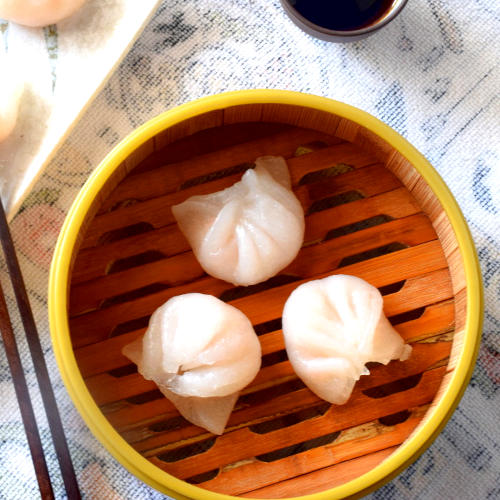
6. The best ingredients for the dumpling filling
The main ingredients for the filling consist of shrimp, bamboo shoots, and pork fat. The seasoning consists of oil, ground white pepper, sesame oil, salt, and sugar. Some recipe includes a small amount of oyster sauce, minced garlic, and chopped ginger. All you need is to mix everything thoroughly in a large bowl.
I prefer to keep the seasoning light and simple and let the flavor of the shrimp shine.
My recipe consists of coarsely chopped shrimp plus whole shrimp and bamboo shoots. I have omitted the pork fat for health reasons.
Here are the steps:
- Marinating the shrimp in a baking soda solution for twenty minutes is the secret to getting plump shrimp. Baking soda (some chefs use lye water) increases the shrimp’s pH and helps retain the moisture as it cooks. If you do not think plump shrimp is important, you may use salt to marinate the shrimp, as in this har gow recipe. However, omitting this step will get the same taste and flavor.
- Marinating the shrimp with salt will make it more crunchy.
- If you like to include some pork fat in the recipe (I am just happy with shrimp and bamboo shoots), cut the pork fat and blanch it in boiling water briefly until it is just cooked. Then, transfer it to cold water and soak it until it returns to room temperature. This simple treatment of pork fat can make it less greasy.
- You can double up the number of bamboo shoots if you want to omit the pork fat.
- Keep the filling in the refrigerator for at least 30 minutes before proceeding to wrap. The cold filling is easier to wrap into the wrapper.
7. How to steam the shrimp dumplings
Here are the steps:
- Steam for six minutes over high heat, lid on.
- You can place the shrimp dumpling directly in the bamboo steamer basket or by lining it with baking paper, parchment paper, or cheesecloth. Apply some oil to prevent it from sticking. After steaming, the dumplings are pretty sticky and can stick to the unoiled surface.
- Shrimp dumplings are best served while it is hot, immediately after steaming. That is why Dim Sum stores will steam the shrimp dumplings upon order.
- Deep freeze the uncooked shrimp dumplings if you do not intend to steam them immediately. You can steam the frozen shrimp dumplings just like the fresh one, but steam for an extra minute to ensure it cooks through.
Update 2023
Here is the list of useful information based on my readers’ comments, both in this post and on the YouTube channel.
Storage :
You can make the shrimp dumplings ahead of time. After you have made the har gaw, you can place them in a container and put them in the freezer. Ensure they are not touching each other to prevent them from sticking together.
When you want to steam them, you steam directly from the frozen state, but just a little longer. Most Dim Sum restaurants do that!
How to roll out the dough:
Some people find that it is not easy to roll the dough very thinly by using the traditional method of pressing the dough with the side of a cleaver; try these two methods which my readers use:
- Roll the dough between two plastic sheets with a small rolling pin. The plastic sheets will prevent the dough from sticking to the rolling pin. I use the same technique to roll my Chinese egg tart pastry. You can check out this recipe on my blog too.
- Use a tortilla press to make the dough. Not only does it roll out flat, but it is also quicker and easier than using the chef’s cleaver.
Substitute for wheat starch:
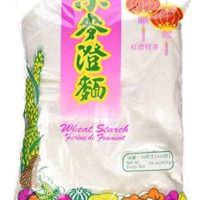
I am afraid there is no suitable substitute for wheat starch for the skin of these steamed prawn dumplings, as it is the primary ingredient for the pastry. You can, however, try to get it from any Asian grocery shop. Wheat starch is 澄麵粉. Show these three Chinese characters to the shopkeeper. I hope this can help you to get it. You can also get it online from Amazon.
How to make the best Har Gow (蝦餃)
Shrimp dumpling is one of the most famous Cantonese dim sum available.
Ingredients
The dough
- 50 g wheat starch
- 50 g tapioca starch
- 1/2 g salt
- 1/4 teaspoon vegetable oil
- 160 ml boiling water
The filling
- 500 g prawns, Weigh before cleaning, then peeled, deveined, and patted dry
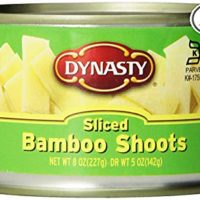
- 50 g bamboo shoot, finely chopped
- 2 teaspoons salt
- 5 g sugar
- 5 g corn starch
- 1/4 teaspoon ground white pepper
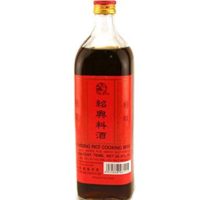
- 1 tablespoon Shaoxing wine
- 2 teaspoons sesame oil
Instructions
The dough
- Mix the wheat starch, tapioca starch, and salt in a mixing bowl.
- Add the boiling water into the mixing bowl. Stir the mixture vigorously until it looks like snowflakes.
- Add the oil.
- Knead the dough until soft and pliable.
- Cover it and let it relax for 5 minutes.
- Put it on a work surface and roll it into long strips.
- Cut dough into small portions, 15-20g each.
- Roll out the dough, and wrap the shrimp filling with the wrapper.
The filling
- Clean and devein the shrimps. Marinate with salt for 5 minutes and wash thoroughly under running water.
- Chop the shrimp coarsely.
- Chop the bamboo shoots into small pieces.
- Mix the shrimps, bamboo shoots, and the seasoning until it becomes sticky.
To steam
- Place the dumplings in the bamboo steamer.
- Steam for 6 minutes.
- Serve immediately.
Notes
The weight for the shrimp in the recipe weight around 300 g of shrimp meat.
Recommended Products
As an Amazon Associate and member of other affiliate programs, I earn from qualifying purchases.
Nutrition Information:
Yield: 15 Serving Size: 15 dumplingsAmount Per Serving:Calories: 74Total Fat: 1gSaturated Fat: 0gTrans Fat: 0gUnsaturated Fat: 1gCholesterol: 70mgSodium: 611mgCarbohydrates: 7gFiber: 0gSugar: 1gProtein: 8g
This data was provided and calculated by Nutritionix on 5/29/2019
Reference
1. Har Gow (Dim Sum Shrimp Dumplings)
2. Food of China Paperback – May 1, 2009, by Kay Halsey (Author)
3. Har Gow (Chinese Shrimp Dumplings) Recipe
4. Dim Sum Classics: How to Make Crystal Skin Shrimp Dumplings (Har Gow)
5. Wantanmien
6. 超多图示范在家怎样做出一品虾饺皇
7. 蝦餃之王 蜘蛛肚彈牙爆汁
Hi KP,
Would it makes any difference in using fresh or canned/frozen bamboo shoots? I noticed that you were using fresh bamboo shoots in making the filling.
thank you!
Hi KP, can we just use normal tapioca starch instead of modified one? What’s the difference between the two? Thanks in advance 🙂
Hi Wendy,
You can use either normal and modified starch, which will not make much difference to the Har Gow. Modified starch is starch that has been treated (modified), and therefore is either able to thicken something (for example, sauce) faster, and the thickening effect may stay longer.
KP Kwan
Hi KP,
Thanks for the lesson. I use a Tortilla press when I am making the dough. Not only does it roll out flat but it is very quick and easier than using the chefs cleaver. I also like to add garlic and ginger to my recipe.
What sauce do you like to serve your Har Gow with?
Chef David Paul
Hi Chef Paul,
The traditional way to serve Har Gow is without any sauce. In fact, people in Hong Kong eat Cantonese Dim Sum without sauce, and of course, seeping a cup of Chinese tea in between bites. I am living in Malaysia now, and people here like to add a bit of chili sauce, albeit this is not something non-traditional.
Using a tortilla press is a great idea. I never thought of it before.
KP Kwan
[…] #1 Har Gow (蝦餃) […]
Thanks for the information. Over here in Malaysia, there is wheat starch available in small quantity in the baking specialty shop, although it is not specified as you mentioned. Nevertheless, it does turn out well for making the dumpling.
[…] use the whole shrimps to make shrimp wonton. It is similar to another Cantonese delicacy Har Gow (shrimp dumpling). Most of the established wonton shop prefer to use whole shrimp and sometimes accented by shiitake […]