
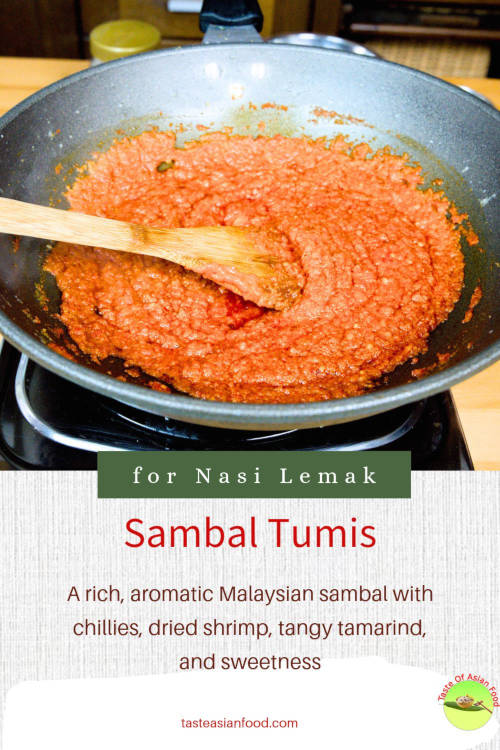
This is the sambal tumis recipe I used at my restaurant, where nasi lemak was one of the most popular dishes.
I prepare this sambal tumis with fresh and dried red chillies, onions, garlic, and dried shrimp to build its flavor. I also reserve some sliced onions to add near the end of cooking. They give the finished sambal a little texture rather than making it completely smooth.
The sambal has a rich flavor, with sweetness from palm sugar and sourness from tamarind. I cook it slowly in oil until the chilli paste becomes darker, thicker, and fragrant.
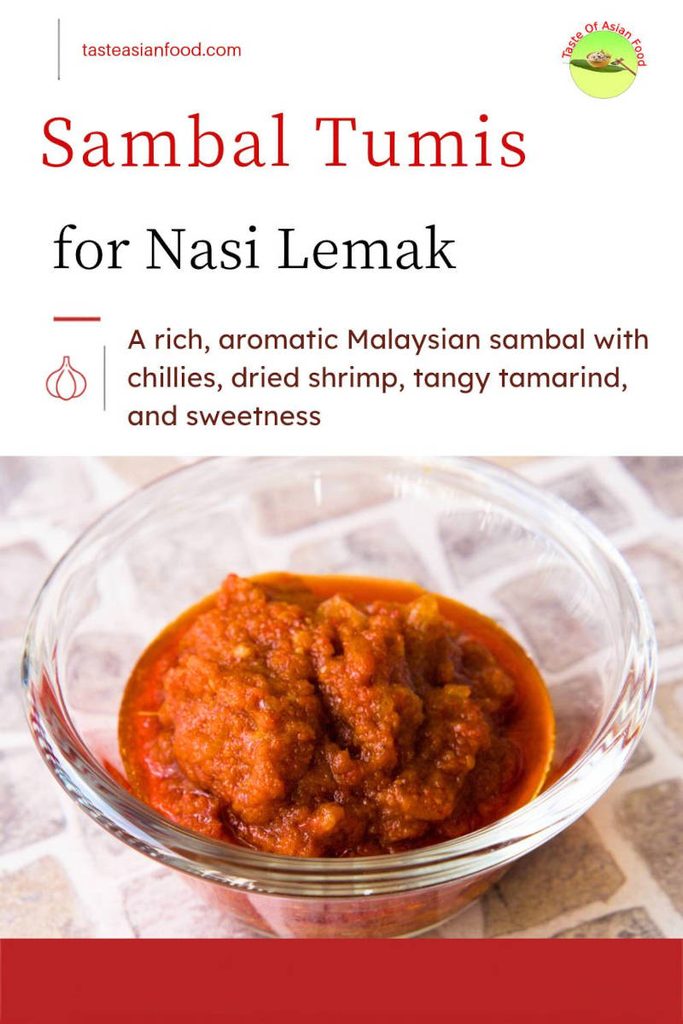
You can serve this sambal with nasi lemak, but don’t limit it to that. It also goes well with many other Malaysian dishes.
Content
Note: Click any item to jump straight to that part of the post.
Note: This post may contain affiliate links. Please read my privacy policy for more info. I may receive commissions for purchases made through links in this post. As an Amazon Associate, I earn from qualifying purchases.
Why This Recipe Works
- Two types of chillies for better flavor: I use fresh red chillies for the main chilli flavor and dried chillies to add depth. Combining the two gives the sambal a fuller flavor.
- Dried shrimp adds savory depth: Dried shrimp gives the sambal an extra layer of savory flavor. You can leave it out if you prefer a vegetarian version, although the sambal will have a different flavor.
- Onions cooked in two stages: Most of the onions are blended with garlic to form the base of the sambal. I reserve the rest and add them near the end of cooking. The blended onions give the sambal body, while the sliced onions add a little texture.
- Oil instead of water when blending: I use cooking oil to help blend the onion and garlic mixture and the chilli paste. This avoids adding extra water, which would take longer to cook off.
- Slow cooking develops the flavor: Cooking the sambal over medium-low heat for about 25 to 30 minutes allows the moisture to evaporate gradually. The paste becomes darker, thicker, and more fragrant as it cooks.
- Convenient to prepare ahead: You can make a batch of sambal tumis, let it cool, and divide it into small portions for freezing. This makes it easy to have some ready whenever you want to serve it.
Ingredients Breakdown
- Onions and garlic: I prefer Indian onions with slightly bluish skin for this sambal. They provide the base flavor and body of the chilli paste. Garlic adds another layer of flavor.
- Fresh and dried red chillies: I use both types of chillies. Fresh red chillies provide the main chilli flavor, while dried chillies add depth. You can adjust the heat by removing the seeds, especially from the fresh chillies.
- Dried shrimp: Dried shrimp adds savory depth to the sambal. It is optional, so you can leave it out if you prefer a vegetarian version.
- Cooking oil: Oil is used both to blend the ingredients and to cook the sambal. I use it instead of water when blending because adding water would increase the cooking time as the moisture needs to evaporate.
- Tamarind pulp (asam jawa): Tamarind gives the sambal its sourness, which balances the sweetness of the palm sugar.
- Palm sugar and salt: Palm sugar provides sweetness, while salt brings the flavors together. You can use brown sugar instead of palm sugar, although the sambal will not have quite the same distinctive flavor.
How to Prepare Everything Before Cooking Sambal Tumis
Prepare all the ingredients before you start cooking. This makes the process easier, especially because the onion paste and chilli paste are cooked in stages.
Prepare the Onions and Garlic
Peel the onions and slice them thinly. Divide them into two portions. Use about two-thirds for blending with the garlic, and reserve the remaining one-third as sliced onions to add near the end of cooking.
Peel the garlic from one medium bulb. Put the larger portion of onions and the garlic into a blender. Add about half of the measured cooking oil and blend for 1 to 2 minutes until smooth.
Set the onion and garlic paste aside. Do not wash the blender, as you will use it again for the chilli paste.
Prepare the Dried Chillies
Cut the dried chillies into short sections and remove as many seeds as possible. Place them in a pot of boiling water and blanch for 5 to 10 minutes until softened. This also helps remove their pungent smell.
Use kitchen tongs to lift the softened chillies out of the water. Avoid pouring the entire pot through a strainer, as the seeds settle at the bottom and may end up mixed with the chillies again.
Prepare the Fresh Chillies and Dried Shrimp
Remove the seeds and pith from the fresh red chillies, then cut them into short sections.
Soak the dried shrimp in hot water for 10 to 15 minutes until softened. Drain and discard the soaking water.
Blend the Chilli Paste
Put the softened dried chillies, fresh chillies, and soaked dried shrimp into the blender. Add the remaining cooking oil and blend for 3 to 5 minutes until completely smooth.
A smooth paste gives the finished sambal a better texture. Any coarse pieces left at this stage will remain noticeable in the cooked sambal.
Prepare the Tamarind Extract
Mix the tamarind pulp with ¼ cup of hot water. Let it sit for 5 to 10 minutes to soften, then use the tamarind extract during cooking.
Measure the palm sugar and salt so they are ready to add later.
The complete ingredient quantities and measurements are provided in the recipe card below.
Step-by-Step Cooking Instructions
1. Cook the Onion and Garlic Paste
Transfer the blended onion and garlic paste to a wok. Heat over medium heat and cook without adding any more oil. You can also use a heavy-bottomed skillet or pan.
Cook until the paste reduces in volume, becomes slightly darker, and smells fragrant. Stir occasionally to prevent it from sticking to the bottom.
2. Add the Chilli Paste and Cook Slowly
Once the onion and garlic paste has cooked down and become fragrant, add the blended chilli paste. The mixture will turn reddish as the two pastes combine.
Reduce the heat to medium-low and cook for 25 to 30 minutes. Stir occasionally, scraping the bottom of the wok to prevent the paste from sticking.
Avoid cooking over high heat. The paste becomes thicker as the moisture evaporates, making it more likely to stick to the bottom and burn.
3. Add the Tamarind, Palm Sugar, and Salt
Add the prepared tamarind extract, palm sugar, and salt. Stir well until everything is evenly combined.
Taste the sambal and adjust the seasoning if necessary. You can add a little more palm sugar if you prefer it sweeter, or tamarind if you want a more pronounced sour taste.
4. Finish the Sambal
After about 25 to 30 minutes of cooking, the sambal should have reduced in volume, become darker in color, and thickened.
At this point, you have two options:
- For storage: Stop cooking at this stage. Let the sambal cool, then divide it into small freezer-safe containers. You can add the reserved sliced onions when you reheat the portion for serving.
- For immediate serving: Add the reserved sliced onions and cook over low heat for another 5 to 10 minutes, until the onions no longer taste raw.
Serve the sambal tumis with nasi lemak or other Malaysian dishes.
A Few Tips From My Kitchen
Choose the right onions
I prefer Indian onions with slightly bluish skin for this sambal tumis recipe. Use two medium-sized onions, or about 300g in total.
Don’t add water when blending
I use cooking oil to blend both the onion and garlic mixture and the chilli paste. Adding water would introduce extra moisture that needs to evaporate during cooking, making the process longer.
Adjust the heat by removing the chilli seeds:
Remove the seeds and pith from the fresh chillies, and as many seeds as possible from the dried chillies. You can adjust how much you remove depending on how spicy you like your sambal.
Blend until completely smooth
I prefer a smooth sambal paste because coarse pieces of chilli and other ingredients remain noticeable in the finished sambal. Take the time to blend the mixture thoroughly.
Common Mistakes to Avoid
Blending the paste too coarsely
Blend the onion mixture and chilli paste until completely smooth. Coarse pieces of chilli and other ingredients will remain noticeable in the finished sambal.
Cooking over excessively high heat
Sambal tumis needs time to cook slowly. If the heat is too high, the paste can stick to the bottom of the wok and burn, especially as it becomes thicker. Keep the heat at medium-low and stir occasionally.
Pouring the dried chilli soaking water through a strainer
Avoid pouring the entire pot of soaking water through a strainer to collect the softened chillies. The seeds settle at the bottom and may end up mixed with the chillies again. Instead, lift the chillies out with tongs.
Not tasting and adjusting the seasoning
Tamarind provides sourness, while palm sugar adds sweetness. Taste the sambal after adding these ingredients and adjust the balance to suit your preference.
Variations
Vegetarian Sambal Tumis
You can omit the dried shrimp if you prefer a vegetarian version. The sambal will still have its chilli, onion, garlic, and tamarind flavors, although it will have less savory depth.
Milder Nasi Lemak Sambal
To reduce the heat, remove the seeds from both the fresh and dried chillies. You can also reduce the amount of chillies, but this will change the original recipe’s flavor.
Brown Sugar Instead of Palm Sugar
If palm sugar is not available, you can use brown sugar as a substitute. It provides similar sweetness, although the sambal will lose some of the distinctive flavor that palm sugar contributes.
More Recipes to Try
If you enjoy Malaysian cooking, here are three more recipes from Taste of Asian Food worth trying:
- Nasi Lemak Recipe: Learn how to prepare Malaysia’s much-loved coconut rice dish, traditionally served with sambal and a selection of accompaniments.
- Malaysian Chicken Rendang: A rich and aromatic chicken dish cooked with spices, coconut milk, and kerisik.
- Stir-fried Belacan with Kangkung: A popular Malaysian vegetable dish featuring water spinach stir-fried with belacan for its distinctive savory flavor.
Quick Takeaways
This sambal tumis is smooth and thick, with a good balance of chilli heat, tamarind sourness, and palm sugar sweetness. I like serving it with nasi lemak, but it is versatile enough to accompany many other Malaysian dishes.
Sambal Tumis Recipe
Make this Malaysian sambal tumis recipe with fresh and dried chillies, dried shrimp, tamarind, and palm sugar. A rich, thick sambal for nasi lemak and more.
Ingredients
- 300g onions (about 2 medium onions)
- 50g garlic (about 1 medium bulb)
- 150ml cooking oil
- 150g fresh red chillies
- 25g dried red chillies
- 20g dried shrimp
- 20g palm sugar
- 1 large tablespoon tamarind pulp (asam jawa)
- 1/2 tablespoon salt
- 1/4 cup hot water for the tamarind extract
Instructions
- Peel and thinly slice the onions. Divide them into two portions. Use about two-thirds for blending and reserve the remaining one-third for later. Peel the garlic.
- Blend the larger portion of onions and garlic with about half of the cooking oil for 1 to 2 minutes until smooth.
- Cut the dried chillies into short sections, remove as many seeds as possible, and blanch in boiling water for 5 to 10 minutes. Lift them out with tongs.
- Remove the seeds and pith from the fresh chillies. Soak the dried shrimp in hot water for 10 to 15 minutes, then drain and discard the soaking water.
- Blend the softened dried chillies, fresh chillies, and dried shrimp with the remaining oil for 3 to 5 minutes until completely smooth.
- Mix the tamarind pulp with 1/4 cup of hot water. Leave for 5 to 10 minutes to make the tamarind extract.
- Transfer the onion and garlic paste to a wok. Cook over medium heat until it reduces in volume, becomes slightly darker, and smells fragrant.
- Add the chilli paste and cook over medium-low heat for 25 to 30 minutes. Stir occasionally and scrape the bottom of the wok to prevent sticking and burning.
- Add the tamarind extract, palm sugar, and salt. Stir well and taste. Adjust the sweetness and sourness to your preference.
- For storage, stop cooking at this stage. Let the sambal cool before dividing it into small freezer-safe containers.
- For immediate serving, add the reserved sliced onions and cook over low heat for another 5 to 10 minutes, until the onions no longer taste raw. Serve with nasi lemak or other Malaysian dishes.
Recommended Products
As an Amazon Associate and member of other affiliate programs, I earn from qualifying purchases.


Nutrition Information:
Yield: 8 Serving Size: 1Amount Per Serving: Calories: 118Total Fat: 2gSaturated Fat: 0gUnsaturated Fat: 2gCholesterol: 5mgSodium: 475mgCarbohydrates: 25gFiber: 2gSugar: 14gProtein: 3g
This data was provided and calculated by Nutritionix on 11/21/2026