
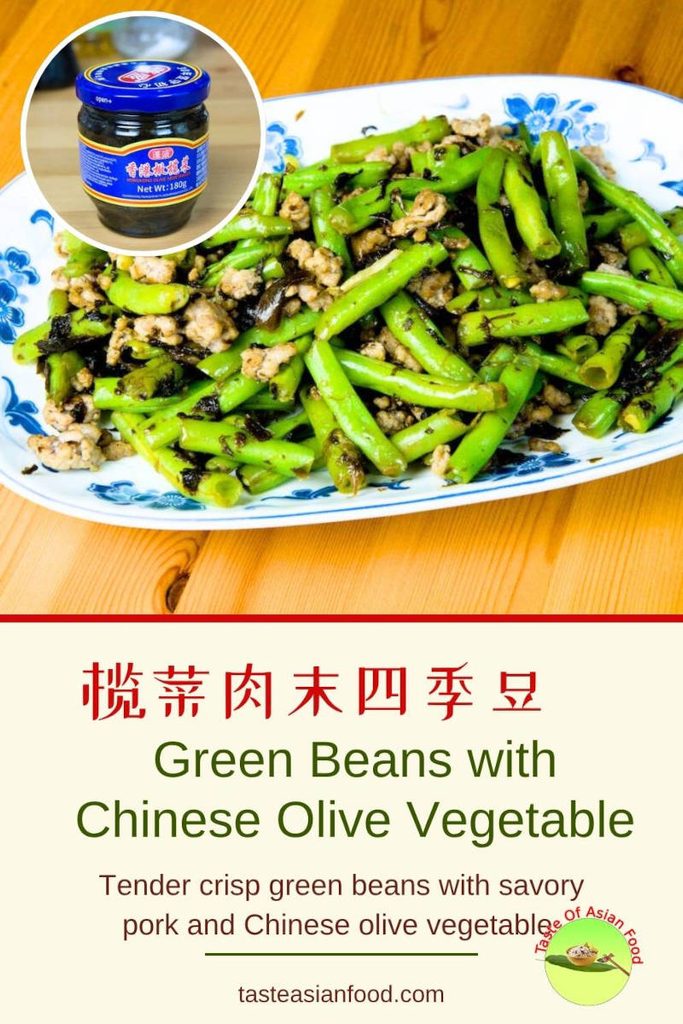
If you like green beans with a savory, slightly salty flavor but prefer a dish without chili, try this simple Green Beans with Minced Pork and Chinese Olive Vegetable.
Green beans with minced pork and Chinese olive vegetable is a Southern Chinese style dish made with green beans, minced pork, garlic, and Chinese olive vegetable. In Chinese, it is known as 榄菜肉末四季豆 (gǎnlǎn cài ròumò sìjìdòu). The beans stay tender crisp, the pork adds a savory, meaty texture, and the Chinese olive vegetable provides most of the distinctive flavor.
This is different from the Sichuan-style dry-fried green beans known as 干煸四季豆. This version uses Chinese olive vegetable as the main flavor ingredient, and I blanch the green beans before stir frying them.
Content
Note: Click any item to jump straight to that part of the post.
Note: This post may contain affiliate links. Please read my privacy policy for more info. I may receive commissions for purchases made through links in this post. As an Amazon Associate, I earn from qualifying purchases.
Why This Recipe Works
- The Chinese olive vegetable does most of the seasoning: It has a distinctive savory, slightly salty flavor, so you only need a small amount to give the dish its character. The other seasonings are kept light so that flavor remains noticeable.
- The green beans stay tender crisp: I blanch the beans before stir frying them, which gives me better control over their doneness. The final stir fry only needs to be brief.
- The pork has more flavor: Cooking the minced pork slowly over low heat allows some of the fat to render and gives the meat a slightly browned, more fragrant texture. You can cook it just until done if you prefer softer pork.
- The final stir fry is quick: Once the beans have been blanched and the pork is cooked, everything comes together quickly in the wok.
- You do not need many strong seasonings: Green beans, minced pork, and Chinese olive vegetable provide most of what this dish needs. Garlic, light soy sauce, white pepper, and sesame oil simply support those main flavors.
What Is Chinese Olive Vegetable?
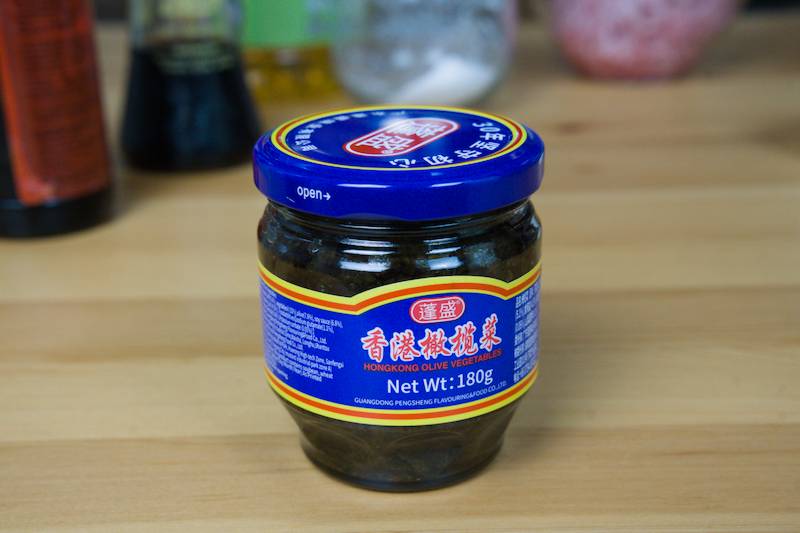
Chinese olive vegetable, or 榄菜 (lǎn cài), is a preserved condiment made mainly from Chinese olives and mustard greens. It has a savory, slightly salty flavor and a somewhat pasty texture.
It is not the same as the table olives commonly eaten in Western cooking. Chinese olive vegetable is prepared as a preserved condiment and is used in Chinese cooking to add a distinctive savory flavor to dishes such as stir fried vegetables and minced pork.
Different brands can vary in their ingredients, texture, and saltiness. For this recipe, I recommend tasting the olive vegetable before adding extra salt so the finished dish does not become too salty.
Ingredients Breakdown
- Green beans: These are the main vegetable in the dish. I like them tender crisp, which is why I blanch them before the final stir fry.
- Ground pork: Adds the savory, meaty part of the dish. I prefer pork with about one quarter to one third fat rather than very lean meat because it stays more tender and develops better flavor when cooked slowly.
- Chinese olive vegetable: This is the ingredient that gives the dish its distinctive flavor. It is savory and slightly salty, so you do not need to use a large amount.
- Fresh garlic: Adds fragrance when sautéed before the green beans and Chinese olive vegetable go into the wok.
- Seasonings: Light soy sauce, salt, ground white pepper, and sesame oil provide the remaining seasoning. Since the Chinese olive vegetable can already be quite salty, use the salt carefully.
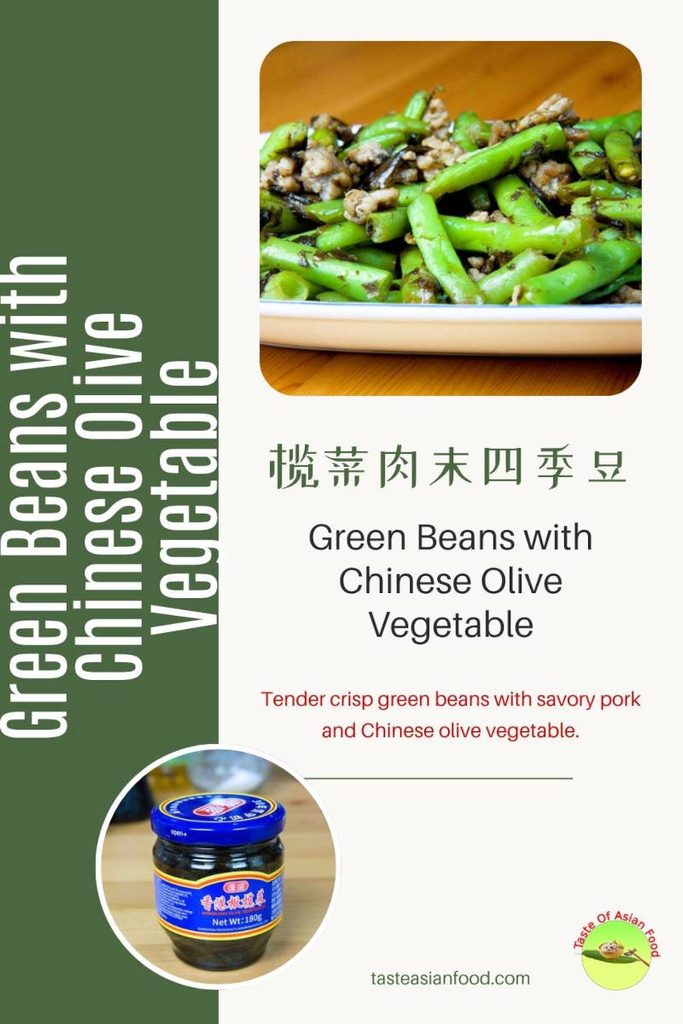
How to Prepare Everything Before Cooking
Green beans
Snap off both ends of each green bean by hand rather than cutting them with a knife. As you pull off the ends, you can also remove the fibrous string running along the side of the bean.
Cut the beans into pieces about 2 inches long. French beans, snake beans, or long beans can also be used if that is what you have available.
Chinese olive vegetable
Chinese olive vegetable, or 榄菜, is ready to use from the jar. Measure out the required amount before you start cooking so it is ready to go into the wok when needed.
It is a preserved condiment made mainly from Chinese olives and mustard greens. The texture can be slightly pasty, and different brands can vary in both ingredients and saltiness.
Garlic
Finely chop the garlic and keep it ready beside the wok. Add it early in the stir-frying process, so having it prepared beforehand makes cooking easier.
Ground pork
If you are buying pork from a butcher, you can ask them to mince it for you. I prefer pork with about one quarter to one third fat rather than very lean meat.
Have the minced pork ready beside the wok so you can season and cook it as soon as the oil is heated.
The complete ingredient quantities and measurements are provided in the recipe card below.
Step-by-Step Cooking Instructions
- Blanch the green beans. Bring a pot of water to a rolling boil and add the salt. Add the prepared green beans and blanch for about 2 minutes, or until they are tender crisp and fully cooked. Remove them with a slotted spoon and drain well. Set aside.
- Cook the minced pork. Heat the cooking oil in a wok over low heat. Add the ground pork and season with the ground white pepper. Cook patiently over low heat for about 3 to 4 minutes, stirring occasionally, until the pork starts to render its fat and turns slightly brown. It should smell fragrant rather than simply being cooked through. If you are short on time, you can stir fry the pork just until cooked, but it will be softer and less fragrant.
- Sauté the garlic and Chinese olive vegetable. Remove the cooked pork from the wok and add the remaining cooking oil. Add the chopped garlic and sauté over medium-low heat until aromatic. Add the Chinese olive vegetable and continue sautéing briefly over low heat to bring out its flavor.
- Stir fry everything together. Turn up the heat and add the drained green beans. Stir fry briefly so the beans remain bright green and become evenly coated. Add the light soy sauce, return the minced pork to the wok, and stir fry everything together. Taste and adjust the seasoning if necessary, keeping in mind that the Chinese olive vegetable is already salty.
- Finish with sesame oil. Drizzle the sesame oil over the beans and pork and give everything a quick toss. The green beans with minced pork and Chinese olive vegetable are now ready to serve.
A Few Tips From My Kitchen
Use minced pork with some fat
I prefer minced pork with about one quarter to one third fat. I found that very lean pork can become quite tough, especially when I cook it longer to develop a slightly browned and fragrant texture.
Choose the pork texture you prefer
There are two ways I like to cook the minced pork. If I have a little more time, I cook it slowly for about 3 to 4 minutes so some of the fat renders and the meat becomes slightly drier and more fragrant. When I am short on time, I simply stir fry it until cooked through. The pork stays softer and meatier this way.
Check the Chinese olive vegetable
Chinese olive vegetable can vary from one brand to another, both in its ingredients and saltiness. I always taste the dish before adding more salt. It is easy to make this dish too salty if you season it too heavily.
Do not skip the bean strings
The fibrous string along the side of some green beans can be surprisingly tough. I prefer to snap off the ends by hand and pull the string away at the same time. It only takes a little extra effort, but the beans are much more pleasant to eat.
Blanch when possible
Blanching gives me better control over the doneness of the green beans. If I am in a hurry, I can stir fry the beans directly with some water until tender crisp, but I find it easier to overcook them this way.
Common Mistakes to Avoid
- Leaving the bean strings on: The fibrous string along the side of some green beans can remain tough after cooking. Take a moment to remove it when preparing the beans.
- Overcooking the green beans: Cooking the beans for too long can make them soft and dull in color. Blanch them briefly and keep the final stir fry short.
- Adding too much salt: Chinese olive vegetable is already salty, and the saltiness can vary between brands. Taste the dish before adding more salt so you do not overpower its distinctive flavor.
- Using very lean pork: Very lean minced pork can become tough, especially when cooked until slightly browned. Pork with some fat stays more tender and develops more flavor as the fat renders.
- Using too much seasoning: This dish does not need many strong seasonings. Too much soy sauce or salt can mask the distinctive taste of the Chinese olive vegetable.
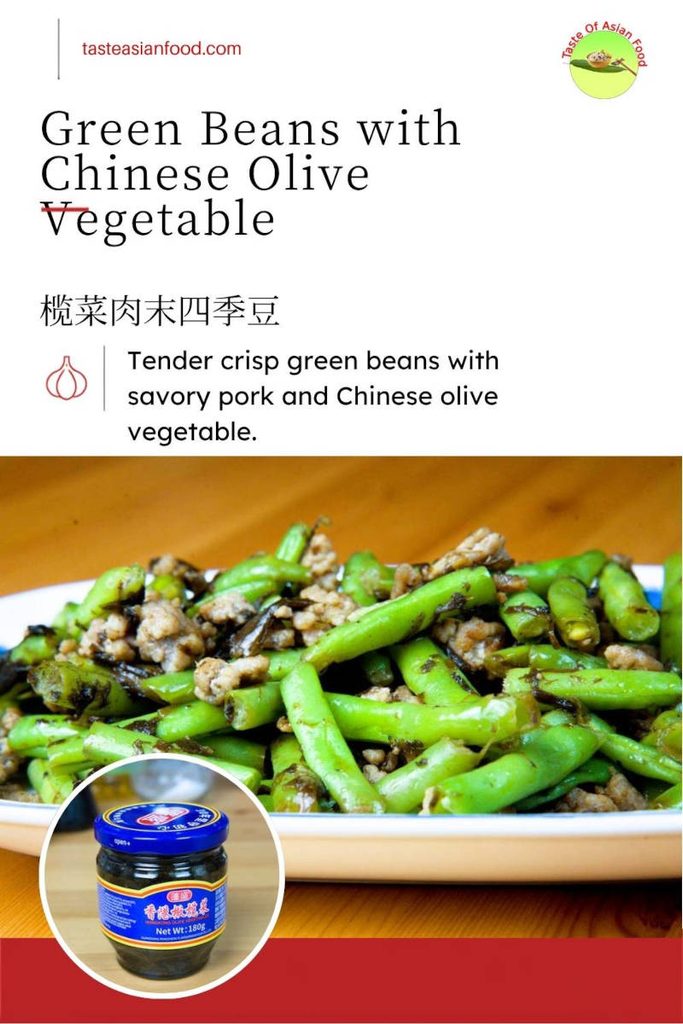
Variations
- Use French beans: French beans can be used in place of the green beans. The cooking approach remains the same, so blanch them first and then stir fry briefly.
- Try snake beans or long beans: Snake beans and long beans are another option if you prefer their shape and texture. Cut them into manageable lengths before blanching.
- Change the pork texture: For softer, meatier pork, cook it just until done. For a slightly drier and more fragrant texture, cook it longer over low heat until it begins to brown and render some fat.
- Adjust the seasoning: Different brands of Chinese olive vegetable can vary in saltiness. Taste the dish before adding more salt and keep the seasoning light so the flavor of the olive vegetable remains noticeable.
More Recipes to Try
If you enjoy the savory flavor of this green bean and minced pork stir fry, here are a few more Chinese recipes from TasteAsianFood that you may like.
Chinese Cabbage Stir Fry
This is another quick vegetable stir fry that uses simple seasoning and works well as part of an everyday Chinese meal.
Cantonese Steamed Fish
If you prefer something lighter, try my Cantonese steamed fish with ginger, scallions, and light soy sauce. The flavor is much more delicate than this green bean stir-fry, but it pairs well with rice and vegetables.
Hakka Pork Belly with Preserved Mustard Greens
If you enjoy the savory flavor of preserved vegetables, you may also want to try Mei Cai Kou Rou. This Hakka pork belly dish uses preserved mustard greens for its deep savory flavor, although the cooking method and texture are quite different from this quick stir fry.
Quick Takeaways
This is a simple green bean stir fry that gets most of its flavor from three main ingredients: green beans, minced pork, and Chinese olive vegetable.
What I find makes the biggest difference is removing the fibrous strings from the beans, blanching them briefly, and using minced pork with some fat. Take your time with the pork if you want a slightly drier and more fragrant texture, and be careful with the salt because Chinese olive vegetable can already be quite salty.
That is really all you need for this easy, non-spicy green bean dish.

Green Beans with Minced Pork and Chinese Olive Vegetable
- Green beans with minced pork and Chinese olive vegetable make a savory stir fry with tender crisp beans, fragrant pork, garlic, and sesame oil.
Ingredients
- 250g green beans
- 150g ground pork
- 2 tbsp Chinese olive vegetable (榄菜)
- 4 cloves garlic, finely chopped
- 1 tbsp cooking oil
- 1 tbsp light soy sauce
- 1/2 tsp salt
- 1/4 tsp ground white pepper
- 2 tbsp cooking oil for frying
- 1 tsp sesame oil
Instructions
- Prepare the green beansSnap off both ends of the green beans by hand and pull away the fibrous string along the side. Cut the beans into about 2 inch lengths.
- Blanch the green beansBring a pot of water to a rolling boil. Add the salt, then add the green beans and blanch for about 2 minutes, or until tender crisp and fully cooked. Remove with a slotted spoon and drain well.
- Cook the minced porkHeat the cooking oil in a wok over low heat. Add the ground pork and white pepper. Cook for about 3 to 4 minutes, stirring occasionally, until the pork starts to render its fat and turns slightly brown and fragrant. Remove the pork from the wok and set aside.
- Stir fry the aromatics and beansAdd the remaining cooking oil to the wok. Sauté the chopped garlic over medium low heat until aromatic. Add the Chinese olive vegetable and sauté briefly over low heat to bring out its flavor. Turn up the heat and add the drained green beans. Stir fry briefly, then add the light soy sauce.
- Finish the dishReturn the minced pork to the wok and stir fry everything together. Taste and adjust the seasoning with the remaining salt as needed, keeping in mind that the Chinese olive vegetable is already salty. Drizzle with sesame oil, toss briefly, and serve.
Recommended Products
As an Amazon Associate and member of other affiliate programs, I earn from qualifying purchases.

Nutrition Information:
Yield: 3 Serving Size: 1Amount Per Serving: Calories: 326Total Fat: 27gSaturated Fat: 5gUnsaturated Fat: 22gCholesterol: 46mgSodium: 718mgCarbohydrates: 8gFiber: 3gSugar: 3gProtein: 15g
This data was provided and calculated by Nutritionix on 3/9/2026
Hey, this is KP Kwan!
If you have any questions or ideas on how to improve this recipe, please share them in the comments. I’ll read through all the comments and do my best to provide my feedback.