
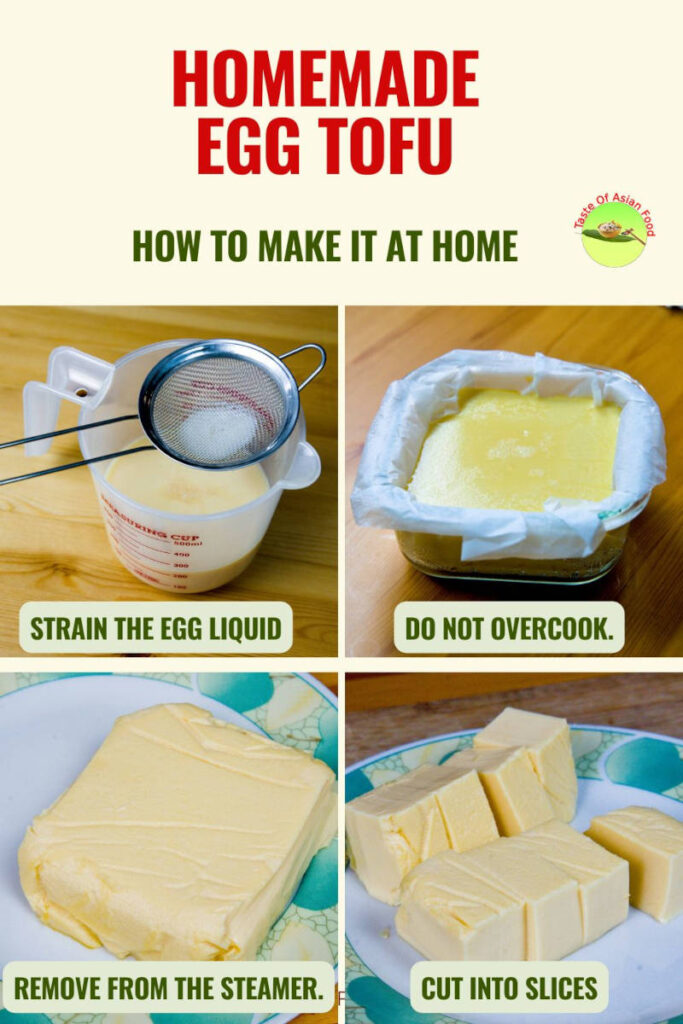
Have you ever tried making egg tofu at home?
This homemade egg tofu recipe is the easiest way to make silky steamed egg tofu at home without using specialty coagulants. Instead of starting from dried soybeans, it only requires store-bought soy milk and a few eggs to create smooth, silky tofu with minimal effort.
Commercially sold tofu is usually made with coagulants, mostly nigari (magnesium chloride) or gypsum (calcium sulfate). While effective, these ingredients can be difficult to purchase in small quantities and are not always readily available to home cooks.
That is why this egg tofu recipe is such a practical alternative. Eggs are inexpensive, easy to find, and set the soy milk into a delicate tofu with a rich flavor and silky texture. Simply whisk the eggs with soy milk, steam the mixture, and you’ll have homemade egg tofu ready to enjoy.
In this recipe, I will show you how to make a slightly firmer version that is sturdy enough for pan frying. I will also share a more practical method that avoids using cling wrap or plastic wrap when lining the pan for steaming, which some people prefer to avoid for health reasons.
So grab a carton of unsweetened soy milk and a few eggs. Let’s make homemade egg tofu the easy way, right in your kitchen.
Content
Note: Click any item to jump straight to that part of the post.
Note: This post may contain affiliate links. Please read my privacy policy for more info. I may receive commissions for purchases made through links in this post. As an Amazon Associate, I earn from qualifying purchases.
Why This Recipe Works
1. No specialty coagulants required
Traditional tofu is typically made using coagulants like nigari or gypsum. While these ingredients yield excellent results, they can be difficult to find, particularly in small quantities suitable for home cooking. This homemade egg tofu recipe addresses that issue by using eggs as the coagulant, eliminating the need to search for specialty ingredients.
2. Store-bought soy milk keeps it simple
Making tofu from scratch involves soaking, grinding, cooking the soybeans, and straining the soy pulp. It is a time-consuming process. By using store-bought unsweetened soy milk, you can skip the labor-intensive preparation and enjoy homemade egg tofu with far less effort.
3. A firmer texture that’s perfect for pan-frying
Many egg tofu recipes produce a very soft texture. This version uses a slightly higher proportion of eggs (three eggs with 240 ml (1 cup) of soy milk). The result is a firmer egg tofu that holds its shape well, slices neatly, and develops a beautiful golden crust when pan-fried. Despite the firmer texture, the interior remains silky smooth and tender.
4. Parchment paper makes unmolding easy
Removing delicate egg tofu from the mold can be challenging. While some recipes suggest using plastic wrap or cling film, there are growing concerns about microplastic release, which has become a topic of discussion in health circles. Parchment paper offers a simple alternative. It prevents sticking, makes lifting the tofu much easier, and helps keep the finished block intact.
Aluminum foil can also be used, but it is not perfect either, as it is single-use and less environmentally friendly. The only minor drawback of parchment paper is that it can wrinkle, so the tofu edges may not come out perfectly sharp. However, this is generally not an issue for home cooking.
Ingredients Breakdown
Unsweetened soy milk
Use plain, unsweetened soy milk with no added flavoring or sugar. This is important for achieving the right flavor in homemade egg tofu. Some commercial soy milk products contain added sugar, flavoring, or stabilizers, which can affect how well the tofu sets and may alter the intended flavor. Always check the label before buying.
Eggs
Eggs help the soy milk firm up into a smooth, sliceable tofu once steamed. For the best texture, use eggs at room temperature, as they mix more evenly with the soy milk and help create a smoother custard base.
Salt (or stock)
A small pinch of salt is enough to enhance the natural flavor of the egg tofu. If you prefer a deeper savory taste, you can substitute the salt with a small amount of chicken stock or vegetable stock. This adds extra umami without overpowering the delicate flavor of the tofu.
Step-by-Step Cooking Instructions
Follow these simple steps to make smooth, silky homemade egg tofu using soy milk and eggs. This method ensures a firm yet tender texture that is perfect for steaming or pan-frying.
Step 1: Prepare the steamer
First, bring a pot or wok of water to a boil and place a trivet inside to create a steaming station. If you have a dedicated steamer, feel free to use it. However, a wok works just as well and is the common method used in many Cantonese households. Make sure there is enough water in the pot so it will not run dry during the steaming process.
Step 2: Prepare the egg and soy milk mixture
Crack the eggs into a mixing bowl and whisk gently for about 30 seconds, just enough to break up the yolks and combine them with the whites. Avoid whisking vigorously, as it will create excessive bubbles that affect the smooth texture of the finished tofu.
Next, measure the soy milk and add it to the eggs, along with about ¼ teaspoon of salt for seasoning. Stir until everything is well combined, then pour the mixture through a fine mesh strainer to remove any lumps or impurities.
Step 3: Prepare the steaming dish
Choose a suitable heat-resistant container for steaming the tofu. Since this is a home recipe, any heat-safe dish will work. I use a heat-safe glass dish for this recipe.
There are several ways to prevent the tofu from sticking to the container. In restaurants, the mold is often lined with plastic sheets or plastic wrap because they create a smooth surface and produce tofu with very neat edges. While this method is effective, many home cooks prefer to avoid using plastic during steaming. For that reason, parchment paper is used instead. Although it may not produce perfectly sharp edges, it makes the tofu easy to remove and works very well for home cooking.
Step 4: Steam the tofu
Pour the egg and soy milk mixture into the prepared dish through the strainer once more. If there are any bubbles on the surface, remove them with the tip of a paper towel.
Once the water is boiling, place the dish on the trivet and make sure it sits level. Cover it with a larger plate to prevent condensation from dripping onto the surface during steaming.
Reduce the heat to the lowest setting and steam gently. The cooking time will vary depending on the amount of the mixture and the intensity of the heat. For this recipe, I have steamed it over the lowest heat for about 25 minutes.
To test whether the tofu is ready, insert a wooden skewer or toothpick into the center. If it comes out clean, the tofu is fully cooked. If the center is still slightly runny, continue steaming and check again after a minute or two. Briefly opening the lid to check the tofu will not affect the final result.
Step 5: Rest and remove the tofu
After cooking, turn off the heat and let it rest, covered, for another 3 minutes. This resting period allows the tofu to finish setting gently.
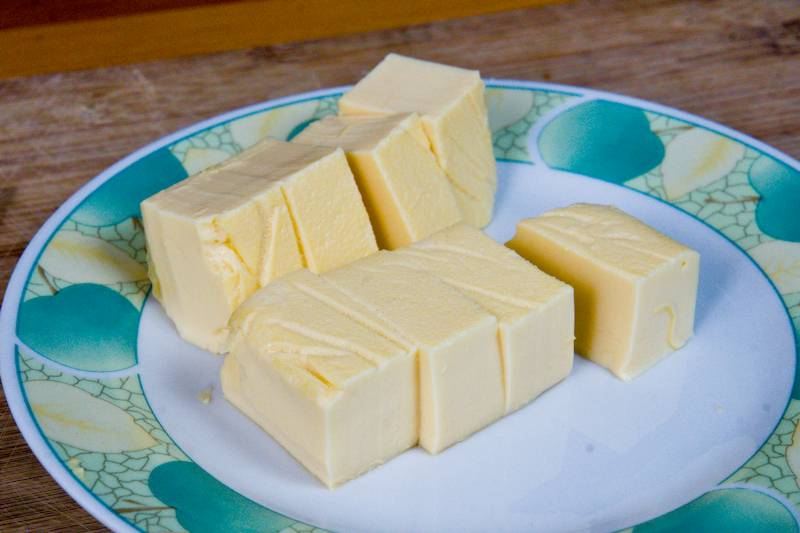
Remove the dish from the steamer and let it cool until it is warm rather than hot. Then carefully lift the tofu out of the dish using the parchment paper and transfer it to a plate or cutting board. At this point, the egg tofu is ready to be chilled and sliced. This steamed egg tofu recipe is perfect for pan-frying, soups, or enjoying on its own with soy sauce.
The complete ingredient quantities and measurements are provided in the recipe card below.
Tips and Frequently Asked Questions for Egg Tofu Recipe
Here are some useful tips and answers to common questions about making homemade egg tofu.
What is the best soy milk for egg tofu?
Use plain, unsweetened soy milk for the best results. This is essential for a successful egg tofu recipe because sweetened or flavored soy milk may contain added sugar, flavorings, or stabilizers that affect flavor.
Can I use homemade soy milk for egg tofu?
Yes, homemade soy milk works well for this egg tofu recipe. Just make sure it is unsweetened and not too thin or watery.
Why is my egg tofu falling apart?
This happens when the ratio of soy milk to eggs is too high. If the mixture is too diluted, the tofu will not set properly. For a firmer texture, reduce the soy milk slightly or increase the number of eggs.
Why does my egg tofu have bubbles or holes on the surface?
Bubbles or holes usually form when the egg mixture is over-whisked, not strained properly, or when condensation from the steamer drips onto the surface. To prevent this, gently whisk the mixture, strain it through a fine sieve, and ensure the dish is properly covered during steaming to prevent water droplets from falling onto the tofu.
Why is the surface of my egg tofu uneven and crater-like?
This occurs when the steaming temperature is too high or the tofu is steamed for too long. High heat can cause the surface to bubble and collapse, leading to an uneven, crater-like texture.
To prevent this, use gentle heat once the water comes to a boil and steam at the lowest heat on the stove. Check the doneness. Once the tofu is done, leave it covered for another 3 minutes. This resting period allows the tofu to finish setting gently.
Should I chill egg tofu before removing it from the dish?
Yes. Refrigerating it for at least 1 hour helps it firm up, making it easier to slice cleanly without breaking.
How do I store leftover egg tofu?
Store leftover egg tofu in an airtight container in the refrigerator. Add a small amount of water to keep it moist.
It will keep well for up to 2 days. Freezing is not recommended, as it will change the texture and make the tofu spongy.
Can I make this egg tofu recipe vegan?
No. This recipe relies on eggs to set the soy milk into a firm tofu-like texture. For a vegan version, traditional tofu coagulants such as nigari or gypsum are required instead of eggs.
Why did my egg tofu stick to the baking paper?
This usually happens if the parchment paper is not truly non-stick or if the tofu is not fully cooled before unmolding. Use high-quality non-stick baking paper and allow the tofu to chill completely before removing it from the dish.
Homemade Egg Tofu Recipe 玉子豆腐
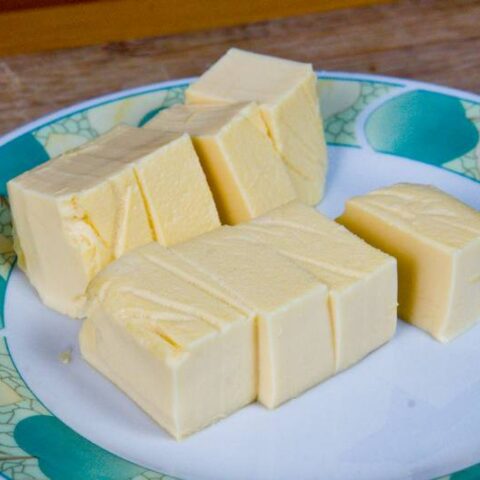
This steamed egg tofu recipe uses eggs and soy milk to create a silky, delicate tofu that's easy to make at home. Perfect for pan-frying, soups, and Asian-style dishes.
Ingredients
- 3 large eggs
- 240 ml unsweetened soy milk
- 1/4 tsp salt
Instructions
- Bring water to a boil in a pot or wok and place a trivet inside for steaming.
- Gently whisk the eggs. Add the soy milk and salt, then stir until combined.
- Strain the mixture through a fine mesh strainer.
- Line a heat-safe dish with parchment paper and pour in the mixture. Strain once more if desired.
- Remove any surface bubbles with the tip of a paper towel.
- Cover the dish with a larger plate to prevent condensation from dripping onto the tofu.
- Place the dish on the trivet, reduce the heat to low, and steam for 20–25 minutes, or until set.
- Insert a toothpick into the center. If it comes out clean, the tofu is done.
- Turn off the heat and let the tofu rest, covered, for 3 minutes.
- Remove from the steamer and cool until warm.
- Lift out the tofu using the parchment paper and transfer to a plate or cutting board.
- Chill before slicing, or use immediately in your favorite dishes.
Recommended Products
As an Amazon Associate and member of other affiliate programs, I earn from qualifying purchases.



Nutrition Information:
Yield: 1 Serving Size: 1Amount Per Serving: Calories: 310Total Fat: 18gSaturated Fat: 5gUnsaturated Fat: 13gCholesterol: 564mgSodium: 875mgCarbohydrates: 9gFiber: 1gSugar: 7gProtein: 26g
This data was provided and calculated by Nutritionix on 14/6/2026
can I use coconut or goat milk
In theory, you can use goat milk or coconut milk, but traditional tofu is actually made only with soy milk. I think it should come out well, but it is a creative version and not traditional.