
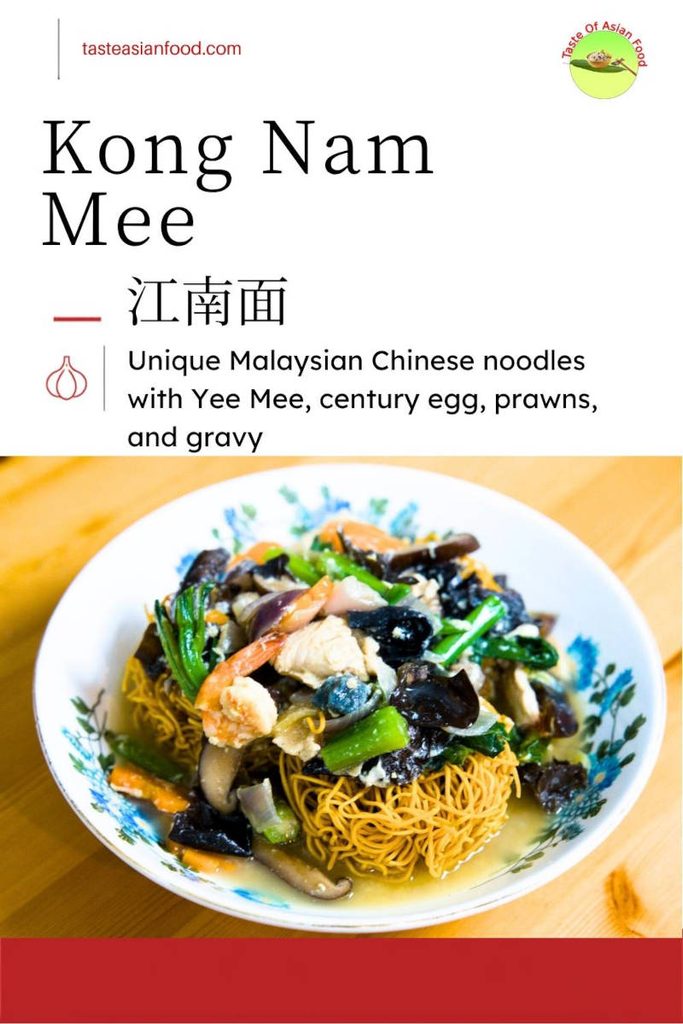
Jiangnan Mian, or Kong Nam Mee, is one of the most unusual Malaysian Chinese noodle dishes I have come across. What makes it stand out is the combination of century egg, thinly sliced ginger, and wood ear mushrooms. I rarely see these ingredients used together in other noodle dishes. Add chicken, prawns, vegetables, and a savory gravy poured over Yee Mee, and you have a noodle dish with a character of its own.
The name Jiangnan Mian (江南面) means “Jiangnan noodles,” referring to Jiangnan, the region south of the lower Yangtze River in China. The version I’m sharing here is the Malaysian Chinese version I know, based on the Kong Nam Mee I have eaten at a Malaysian Chinese restaurant.
There are different ways to make this dish, and there is no single fixed combination of ingredients. I particularly like using Yee Mee because it is already cooked and lightly fried, so there is no need to blanch it. The hot gravy gradually softens the noodles while they still retain some of their crisp, chewy texture.
Content
Note: Click any item to jump straight to that part of the post.
Note: This post may contain affiliate links. Please read my privacy policy for more info. I may receive commissions for purchases made through links in this post. As an Amazon Associate, I earn from qualifying purchases.
Why This Recipe Works
- Interesting ingredients: Century egg, ginger, and wood ear mushrooms give this noodle dish a character that you don’t often find in other Chinese noodle recipes.
- Crispy Yee Mee: Since Yee Mee is already lightly fried, you can use it straight from the package without blanching or cooking it first. The hot gravy softens the noodles while they still retain some of their original crunch, especially when served immediately.
- Quick to cook: Once everything is sliced and ready, the chicken, prawns, vegetables, and gravy come together quickly in one pan.
- Very forgiving: There is no rigid formula for the ingredients, so you can adjust the protein, vegetables, and broth based on what you have available.
- Easy at home: Most of the work is preparing the ingredients. Once everything is ready, the cooking itself is straightforward and doesn’t require complicated techniques.
Ingredients for Kong Nam Mee
- Key ingredients: Century egg, wood ear mushroom, and ginger give this noodle dish its distinctive character.
- Yee Mee: Lightly fried noodles that soften when the hot gravy is poured over them while retaining some crispness.
- Chicken and prawns: The main proteins, adding savory flavor and substance to the dish.
- Shiitake mushrooms: Dried shiitake mushrooms add a deeper mushroom aroma to the gravy.
- Choi sum: Adds vegetables and a fresh bite to balance the noodles and gravy.
- Carrot and onion: Carrot adds a little natural sweetness, while onion provides fragrance during stir-frying.
- Green onion: Adds freshness and aroma to the finished gravy.
- Seasoning: Oyster sauce and light soy sauce provide the main savory seasoning, while sesame oil adds aroma at the end.
- Chicken stock: Forms the liquid base of the gravy and brings all the ingredients together.
How to Prepare Everything Before Cooking
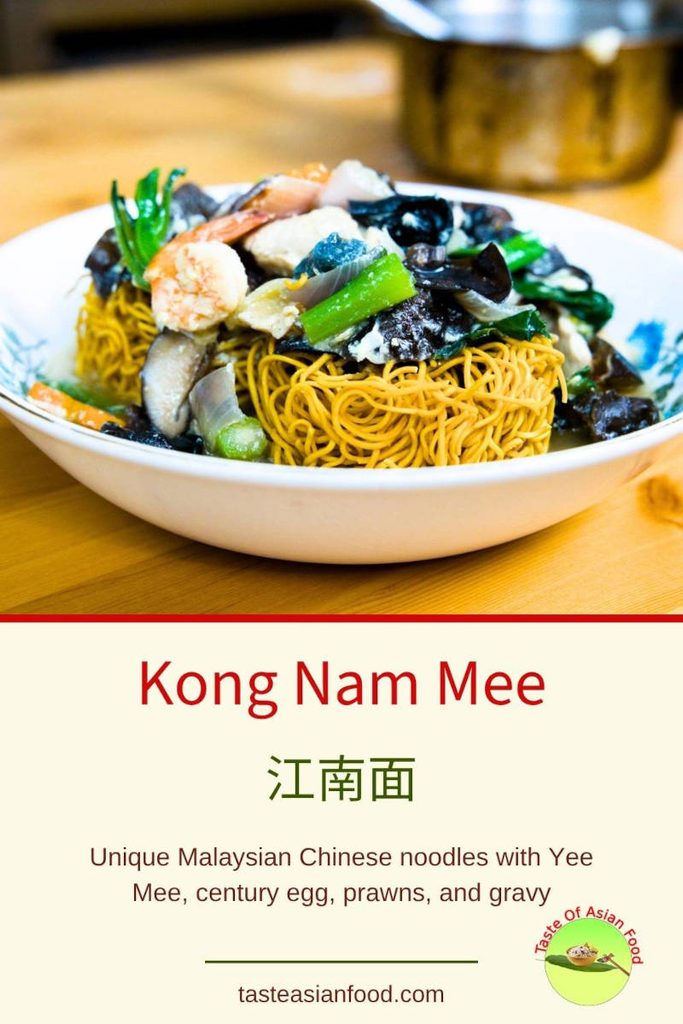
This recipe comes together quite quickly once you start cooking, so I recommend preparing everything before turning on the pan. Soak the dried shiitake mushrooms and wood ear mushrooms until they are soft, then rinse them well. Slice the shiitake mushrooms and wood ear mushrooms into bite-size pieces.
Thinly slice the chicken and carrot. Peel and devein the prawns, remove the heads, and leave the tails attached. I like keeping the tails because they make the finished dish look more presentable.
Cut the onion into approximately 2 cm pieces. Cut the choi sum and green onions into short sections, and slice the ginger thinly. Cut the century egg into wedges.
For the gravy, have the chicken stock, oyster sauce, light soy sauce, and white pepper measured and ready. Beat the egg in a small bowl. Mix the cornstarch with the cold water to make the slurry, and give it a quick stir again just before adding it to the gravy.
Most importantly, keep the Yee Mee aside and do not blanch or cook it. The Yee Mee I use is already cooked and lightly fried, so it goes directly onto the serving plates before the hot gravy is poured over it.
The complete ingredient quantities and measurements are provided in the recipe card below.
Step-by-Step Cooking Instructions– Kong Nam Mee
1. Stir-fry the aromatics, chicken, and prawns
Heat a pan over medium-high heat and add 2 tablespoons of vegetable oil. Add the sliced ginger and onion and stir-fry until fragrant and the onion starts to soften.
Add the sliced chicken and stir-fry until it is almost cooked. Add the prawns and continue stir-frying until they start to turn pink. They do not need to be completely cooked at this stage because they will continue cooking in the gravy.
2. Add the mushrooms and vegetables
Add the sliced shiitake mushrooms, wood ear mushrooms, and carrot. Stir-fry briefly, then add the choi sum and green onion. Continue stir-frying until the vegetables are slightly softened but still have some texture.
3. Make and thicken the gravy
Pour in the chicken stock and add the oyster sauce, light soy sauce, and white pepper. Bring everything to a boil, then simmer for about 2–3 minutes.
Add the century egg and gently mix it with the other ingredients, being careful not to break it up too much. Stir the cornstarch slurry again, then gradually add it to the simmering gravy while stirring until the gravy is lightly thickened.
4. Add the egg and sesame oil
Slowly drizzle the beaten egg into the simmering gravy while stirring gently. The egg will cook into soft strands throughout the gravy.
Turn off the heat and stir in 2 teaspoons of sesame oil.
5. Pour the gravy over the Yee Mee
Place the Yee Mee directly onto the serving plates. Ladle the hot gravy and all the chicken, prawns, mushrooms, vegetables, and century egg over the noodles.
Serve immediately while the Yee Mee still has some of its crisp, chewy texture.
A Few Tips From My Kitchen
Use Yee Mee: I prefer Yee Mee because the noodles are already cooked and lightly fried. They soften as they absorb the gravy while still retaining some crunch, and you also save the extra step of cooking the noodles separately.
Other noodles work: You don’t have to use Yee Mee. Some versions use raw noodles, sometimes called Jiangnan raw noodles (江南生面), such as fresh egg noodles. If you use another type of noodle, check the package instructions to see whether it needs to be cooked first.
Keep it flexible: I found this noodle dish very forgiving. You don’t need to follow a rigid combination of meat and vegetables. As long as you have some protein, vegetables, and aromatics, you have plenty of room to adjust the ingredients to suit what you have.
Don’t skip the century egg: I particularly like including century egg. It gives the noodles a distinctive appearance and flavor, and it is also something I commonly see in the Malaysian Chinese versions of this dish.
Let the gravy cook them: The chicken and prawns don’t need to be completely cooked through during the initial stir-fry. They continue cooking after the broth is added, so there is no need to spend too much time cooking them at the beginning.
Change the broth: Chicken stock is what I use in this recipe, but you can use another type of broth. The dish is quite forgiving, so the broth can be adjusted according to what you have available.
Common Mistakes to Avoid
Skipping the broth: The broth forms the base of the gravy, so don’t leave it out. Use a good-quality homemade or ready-made chicken broth to give the gravy a proper savory base.
Not enough liquid: The broth can evaporate fairly quickly while the ingredients are cooking. Keep an eye on the amount of liquid in the pan and be prepared to add a little more if necessary. You need enough gravy left in the wok before adding the cornstarch slurry and beaten egg.
Not tasting the gravy: Give the gravy a taste before serving and adjust the seasoning if necessary. Yee Mee itself is not particularly salty, so I prefer the gravy to be seasoned slightly on the saltier side. Add a little more light soy sauce or salt if needed.
Variations of Kong Nam Mee
- Change the broth: Use another type of broth instead of chicken stock. For a vegetarian version, vegetable broth works well.
- Use pork or beef: Replace the chicken with thinly sliced pork or beef if you prefer a different protein.
- Make it vegetarian: Omit the chicken and prawns and use firm tofu instead. Use vegetable broth to keep the dish vegetarian.
- Skip the beaten egg: You can leave out the beaten egg if you don’t prefer egg in the gravy. Adjust the amount of cornstarch as needed to achieve the consistency you prefer.
More Recipes to Try
- Yi Mein (Yee Mee / 伊面) – If you enjoy the Yee Mee used in this Jiangnan Mian, my Yi Mein recipe is a natural one to try next. It uses the same type of already-cooked, fried Cantonese egg noodles, together with chicken, shrimp, choy sum, and a savory gravy.
- Wat Tan Hor (滑蛋河) – Wat Tan Hor is another Malaysian Chinese noodle dish with a thick egg gravy poured over the noodles. It uses flat rice noodles with meat, prawns, and vegetables, so the cooking style is different but the gravy-based approach is similar.
- Zha Jiang Mian (炸酱面) – For something different, try my Zha Jiang Mian, a Beijing-style noodle dish served with a savory fermented bean sauce, minced pork, and crunchy vegetables. Unlike Jiangnan Mian, it doesn’t use a broth-based gravy, so it gives you a completely different way to enjoy Chinese noodles.
Quick Takeaways
Jiangnan Mian is a flexible Malaysian Chinese noodle dish that is easy to make at home. I like this version with Yee Mee, chicken, prawns, century egg, and wood ear mushrooms. The key is to place the Yee Mee directly on the serving plate without cooking it, then pour the hot gravy and toppings over it and serve immediately while the noodles still have some crispness.
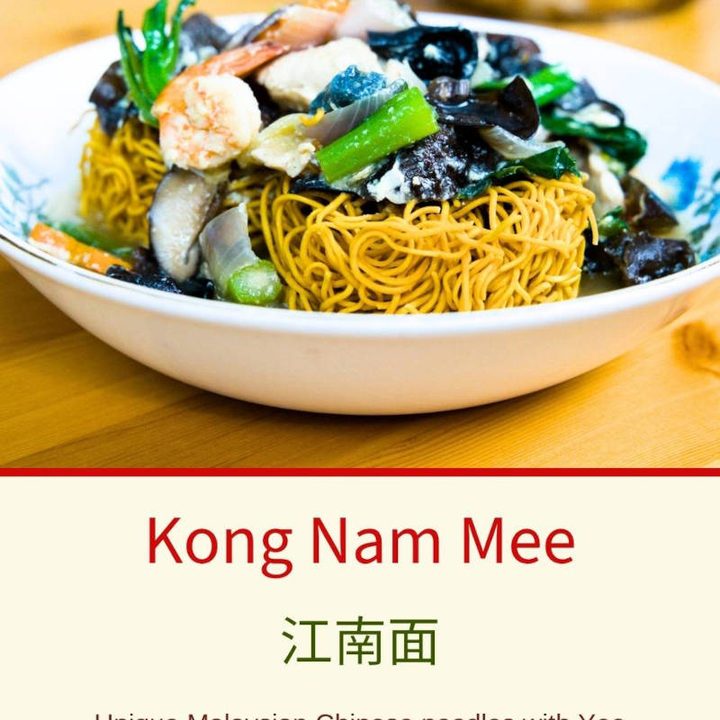
Kong Nam Mee Recipe 江南面
This Kong Nam Mee recipe is a Malaysian Chinese take on Jiangnan Mian, made with Yee Mee, chicken, prawns, vegetables and flavorful gravy.
Ingredients
- 260 g Yee Mee
- 80 g chicken, thinly sliced
- Prawns/shrimp, quantity to be confirmed
- 1 century egg, cut into wedges
- 3 dried shiitake mushrooms, rehydrated and sliced
- 5 g dried wood ear mushroom, soaked and sliced
- 70 g carrot, thinly sliced
- 100 g choi sum, cut into short sections
- 1 medium onion, cut into approximately 2 cm pieces
- 10 thin slices ginger
- 2 stalks green onion, cut into short sections
- 2 tbsp vegetable oil
For the Gravy
- 400 ml chicken stock
- 2 tbsp oyster sauce
- 1 tbsp light soy sauce
- ¼ tsp white pepper
- 1 tsp cornstarch
- 1 tbsp cold water
- 1 egg, beaten
- 2 tsp sesame oil
Instructions
Prepare the Yee Mee: Place 130 g Yee Mee directly onto serving plates. Do not blanch or cook the noodles, as they are already cooked and lightly fried.
Stir-fry the aromatics and protein: Heat 2 tbsp vegetable oil in a wok over medium-high heat. Add the ginger and onion and stir-fry until fragrant and the onion starts to soften. Add the chicken and stir-fry until almost cooked, then add the prawns and cook until they start to turn pink.
Add the vegetables and gravy: Add the shiitake mushrooms, wood ear mushroom, carrot, choi sum, and green onion. Stir-fry briefly. Add the chicken stock, oyster sauce, light soy sauce, and white pepper. Bring to a boil and simmer for 2–3 minutes.
Thicken and finish the gravy: Add the century egg and gently mix with the other ingredients. Stir the cornstarch slurry, then gradually add it to the simmering gravy while stirring until lightly thickened. Slowly drizzle in the beaten egg and stir gently to form soft egg strands. Turn off the heat and stir in 2 tsp sesame oil.
Serve: Ladle the hot gravy and all the toppings over the Yee Mee. Serve immediately while the noodles are still slightly crisp and chewy.
Recommended Products
As an Amazon Associate and member of other affiliate programs, I earn from qualifying purchases.
-
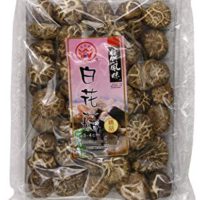 Havista Dried Premium Flower Shiitake Mushrooms, 6 Ounce
 -
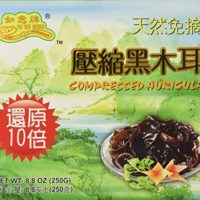 Premium Dried All Natural Compressed Chinese Auricularia Black Fungus Mushroom (Black Wood Ear Mushroom) - 8.8 Oz -- 10 Times Volume Yield After Soaking
 -
 Pre-Seasoned Cast Iron Skillet 2-Piece Set (10-Inch and 12-Inch) Oven Safe Cookware - 2 Heat-Resistant Holders - Indoor and Outdoor Use - Grill, Stovetop, Induction Safe
Nutrition Information:
Yield: 2 Serving Size: 1Amount Per Serving: Calories: 469Total Fat: 32gSaturated Fat: 5gUnsaturated Fat: 27gCholesterol: 355mgSodium: 1363mgCarbohydrates: 27gFiber: 4gSugar: 8gProtein: 20g
This data was provided and calculated by Nutritionix on 9/18/2026