
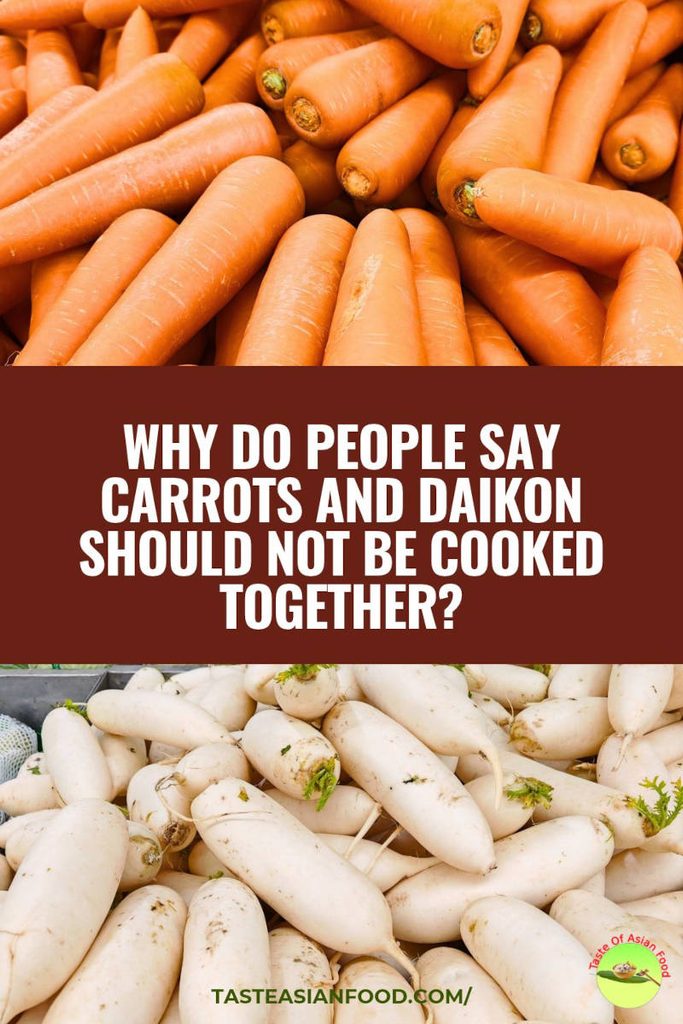
If you make Chinese vegetable soup, you may have heard that carrots and daikon should not be cooked together.
In fact, this is exactly what happened with my own Chinese vegetable soup recipe. A few readers pointed out that I was combining carrots and daikon in the same pot and asked whether this was actually OK.
That made me curious.
Is it really a problem to make carrot and daikon soup?
Or is there some truth behind the warning that carrots can destroy the vitamin C in daikon?
I decided to look at the research.
Content
Note: Click any item to jump straight to that part of the post.
- Quick answer
- Why do people say carrots and daikon should not be cooked together?
- Does carrot really destroy the vitamin C in daikon?
- What is ascorbic acid oxidase?
- Does cooking deactivate the enzyme in carrots?
- Does cooking reduce vitamin C?
- Is carrot and daikon soup safe to eat?
- Can you eat carrots and daikon together?
- So, should you make carrot and daikon soup?
- My Conclusion
- Watch the video
Note: This post may contain affiliate links. Please read my privacy policy for more info. I may receive commissions for purchases made through links in this post. As an Amazon Associate, I earn from qualifying purchases.
Quick answer
Yes, you can make carrot and daikon soup.
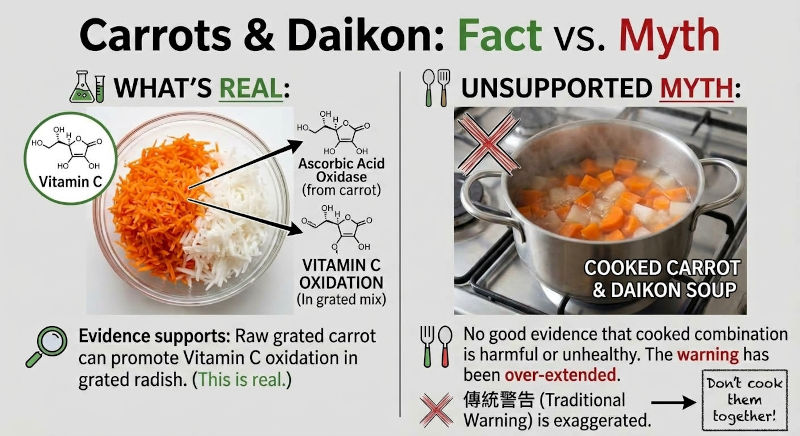
There is a scientific reason behind the traditional warning. Raw, grated carrot contains an enzyme called ascorbic acid oxidase, which can promote the oxidation and loss of vitamin C in grated daikon.
However, the research does not show that eating cooked carrots and daikon together is harmful.
The important difference is that most of the direct research on the carrot-daikon combination involves raw, grated vegetables. Heat also reduces the activity of the enzyme in carrots.
So the statement:
“Carrots can affect the vitamin C in raw grated daikon.”
is very different from:
“You should never cook carrots and daikon together.”
Those are not the same thing.
Let’s take a closer look.
Why do people say carrots and daikon should not be cooked together?
The explanation usually goes something like this.
Carrots contain an enzyme called ascorbic acid oxidase.
Daikon, also known as white radish, contains vitamin C.
So the traditional argument is that when carrot and daikon are combined, the enzyme from the carrot will act on the vitamin C in the daikon.
It sounds quite convincing.
But there is an obvious question:
Does this actually happen?
Surprisingly, there is some scientific evidence behind the idea.
Does carrot really destroy the vitamin C in daikon?
Not exactly.
A Japanese study published in 1960 examined ascorbic acid oxidase in several vegetables, including carrot and radish.
The researchers compared grated vegetables and found an interesting difference.
Grated radish by itself lost relatively little vitamin C during the period studied. But when grated carrot was mixed with grated radish, the vitamin C decreased much more rapidly.[1]
So I would not say that the entire carrot-and-daikon warning is simply a myth.
There really is a biochemical reaction that can happen.
Raw, grated carrot can promote the oxidation and loss of vitamin C in grated radish or daikon.
But there is an important detail that often gets missed.
Those experiments involved raw, grated vegetables.
That is very different from making a pot of carrot and daikon soup.
What is ascorbic acid oxidase?
If you have never heard of it before, the name sounds much more complicated than it really is.
Ascorbic acid oxidase is an enzyme found naturally in some plants, including carrots.
Ascorbic acid is simply the chemical name for vitamin C.
When plant tissue is cut, grated, or crushed, enzymes and other compounds that were separated inside the intact cells can come into contact with each other.
Ascorbic acid oxidase can then promote the oxidation of vitamin C.
This is why the old warning has a real scientific basis.
However, saying that the enzyme simply “destroys” vitamin C is an oversimplification.
The enzyme first oxidizes ascorbic acid into dehydroascorbic acid. Further chemical breakdown can then occur.
So I think it is more accurate to say that the enzyme promotes vitamin C oxidation and can contribute to vitamin C loss.
Does cooking deactivate the enzyme in carrots?
This is probably the most important part of the story.
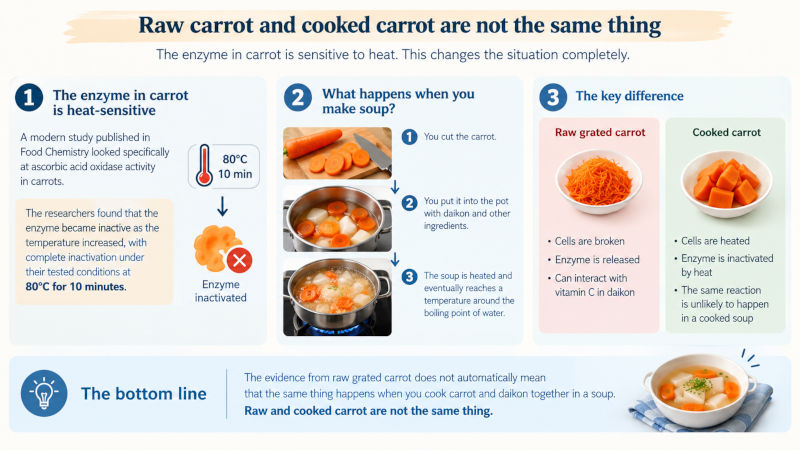
Heat reduces the activity of ascorbic acid oxidase in carrots.
A modern study published in Food Chemistry specifically investigated the activity and heat stability of this enzyme in carrots.[2]
The researchers found that enzyme activity decreased as the temperature increased. Under their experimental conditions, the enzyme was completely inactivated at 80°C for 10 minutes.
That changes the picture considerably.
Think about what happens when you make soup.
You cut the carrot, put it into the pot with the daikon and other ingredients, add water, and start cooking.
As the temperature rises, the carrot is no longer a raw vegetable sitting alongside raw daikon.
It has been heated.
And the enzyme responsible for the reaction is sensitive to heat.
This means that research showing an interaction between raw grated carrot and raw grated daikon cannot automatically be applied to a cooked carrot and daikon soup.
That distinction is important.
Does cooking reduce vitamin C?
Yes.
And this is another part of the story that is sometimes overlooked.
Vitamin C is a water-soluble vitamin and is sensitive to heat and cooking.[3]
How much vitamin C is lost depends on the vegetable, cooking temperature, cooking time, and cooking method.
A study comparing different cooking methods found that vitamin C retention varied considerably among vegetables. In general, boiling resulted in greater vitamin losses than some shorter or gentler cooking methods.[4]
This means that if your main concern is getting as much vitamin C as possible from your vegetables, the more useful question may be:
How am I cooking the vegetables, and for how long?
rather than simply:
Can I cook carrots and daikon together?
Even without carrots, cooking can reduce the vitamin C content of vegetables.
So it would be misleading to blame the carrot for all vitamin C loss during cooking.
Is carrot and daikon soup safe to eat?
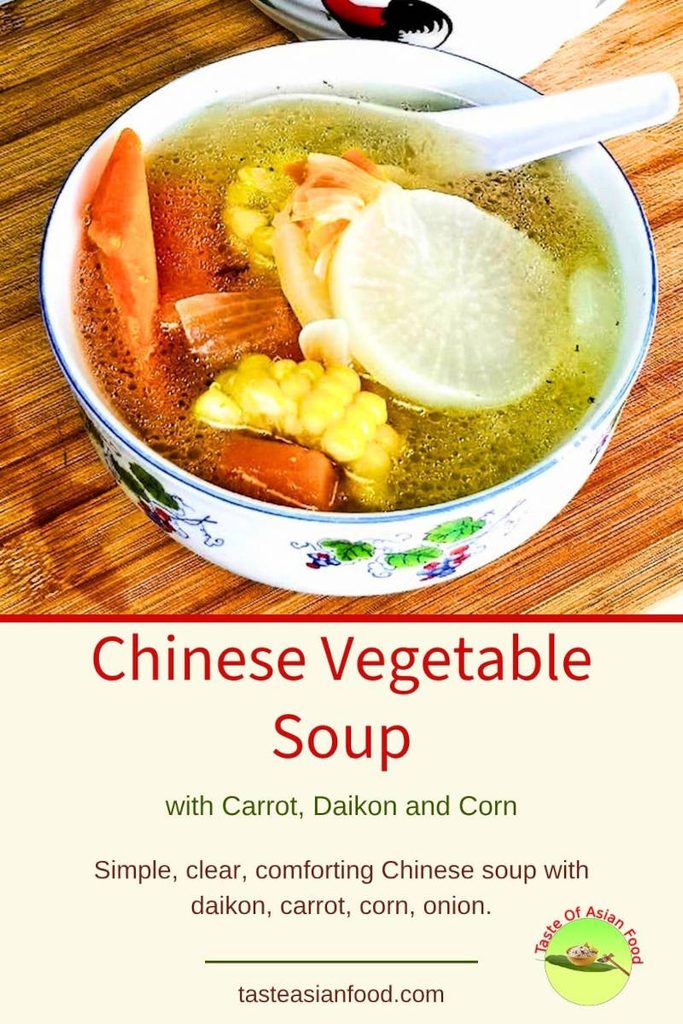
There is no good evidence that a normal cooked carrot and daikon soup is harmful because the two vegetables are combined.
This is an important distinction.
The research does show that raw, grated carrot can promote vitamin C oxidation in grated radish or daikon.
But I could not find good modern research showing that eating a normal cooked carrot and daikon soup is harmful because of this interaction.
In other words, there is a difference between:
Vitamin C loss
and
a food combination being dangerous.
A reduction in vitamin C does not automatically mean that the food itself is unsafe to eat.
That is why I would be cautious about turning the traditional warning into a statement that carrot and daikon are an unhealthy or dangerous combination.
Can you eat carrots and daikon together?
Yes. There is no good evidence that healthy people need to avoid eating carrots and daikon together.
You can eat them raw or cooked, although the vitamin C interaction discussed in the research is particularly relevant to raw, grated carrot and radish.
When you cook them together in a soup, heat changes the enzyme activity in the carrot.
And as we have already seen, cooking itself can also affect vitamin C.
So the evidence does not support the idea that carrots and daikon become harmful simply because they are eaten together.
So, should you make carrot and daikon soup?
Yes.
If you enjoy carrot and daikon soup, I see no good scientific reason to stop making it simply because of this warning.
In fact, this is exactly why I wanted to investigate the subject.
When readers pointed out that my Chinese vegetable soup contained both vegetables, I could have simply ignored the comments.
Instead, I wanted to know whether there was actually something behind the claim.
And there is.
But it is not the whole story.
Raw grated carrot can promote vitamin C loss in grated daikon.
That is supported by research.
But cooking changes the situation because heat reduces the activity of the enzyme in carrots.
And cooking itself can reduce vitamin C, whether carrot is present or not.
Most importantly, I could not find good modern research showing that a normal cooked carrot and daikon soup is harmful because the two vegetables are combined.
My conclusion
So, can you make carrot and daikon soup?
Yes.
There is some science behind the traditional warning, but it has been exaggerated. Raw grated carrot can affect vitamin C in grated daikon, but that does not mean cooked carrots and daikon should not be eaten together.
So, can you make carrot and daikon soup?
Yes.
There is some science behind the traditional warning, but it has been exaggerated. Raw grated carrot can affect vitamin C in grated daikon, but that does not mean cooked carrots and daikon should not be eaten together.
I’ll continue making my carrot and daikon soup—and enjoying it.
Watch the video
About the author
Written by KP Kwan
Food writer at Taste of Asian Food, registered pharmacist.
Reviewed by Choong Kwan
Clinical and Sports Nutritionist.
This article was written by KP Kwan and reviewed by Choong Kwan for accuracy and clarity. The reviewer did not write the article.
Disclaimer
This article is for general informational purposes only and is not medical or professional dietary advice. If you have concerns about MSG or your health, please consult a qualified healthcare professional.
References
[1] Yabuki Y. “On the Ascorbic Acid Oxidase in Vegetable.” Research Bulletin of Nakamura Gakuen University. 1960.
This study examined ascorbic acid oxidase in vegetables including carrot and radish, with direct observations on grated carrot and radish mixtures.
Original research record — CiNii Research
Nakamura Gakuen University repository
[2] Leong SY, Oey I. “Effect of endogenous ascorbic acid oxidase activity and stability on vitamin C in carrots (Daucus carota subsp. sativus) during thermal treatment.” Food Chemistry. 2012;134(4):2075–2085. doi:10.1016/j.foodchem.2012.04.002.
Publisher page — ScienceDirect
[3] National Institutes of Health, Office of Dietary Supplements. “Vitamin C: Fact Sheet for Health Professionals.”
This fact sheet provides information about vitamin C, including its water-soluble nature and sensitivity to heat and cooking.
NIH Office of Dietary Supplements — Vitamin C Fact Sheet
[4] Lee S, Choi Y, Jeong HS, Lee J, Sung J. “Effect of different cooking methods on the content of vitamins and true retention in selected vegetables.” Food Science and Biotechnology. 2018;27(2):333–342. doi:10.1007/s10068-017-0281-1.
[5] Hayashi H. “Vitamin C included in ‘momiji oroshi’ (grated radish and carrot together).” Science of Cookery. 1990;23(4):361–366.
This Japanese study specifically examined vitamin C in momiji oroshi, the combination of grated radish and carrot.
[6] Chinese Medical Association. “食物相克,是真的存在吗?” 2022.
This article discusses traditional food incompatibility claims and notes that many such claims do not have reliable scientific evidence.