
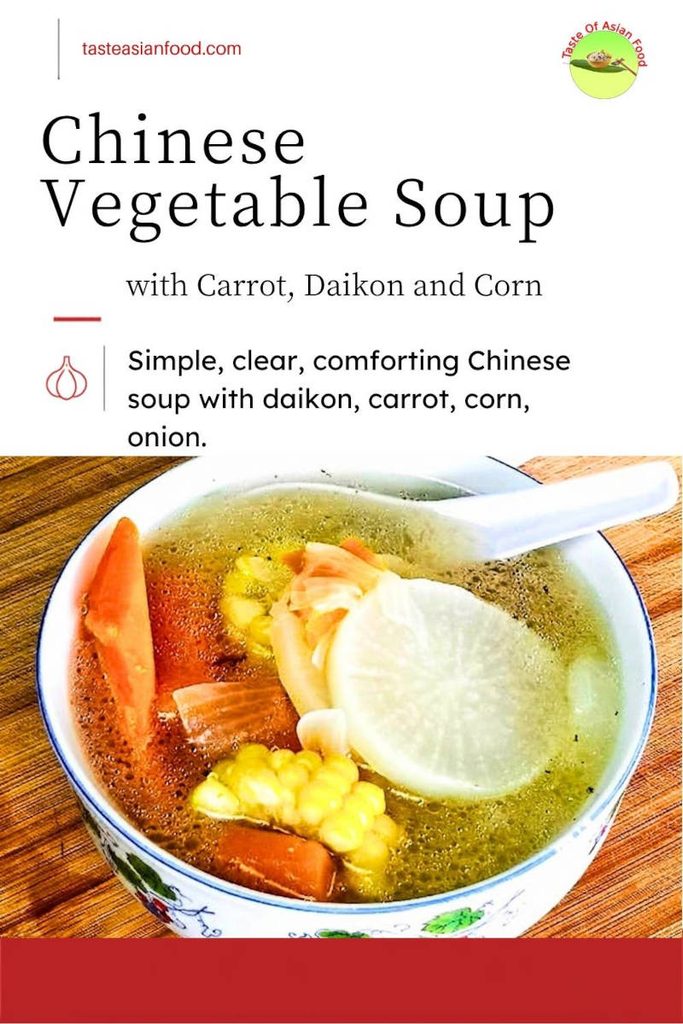
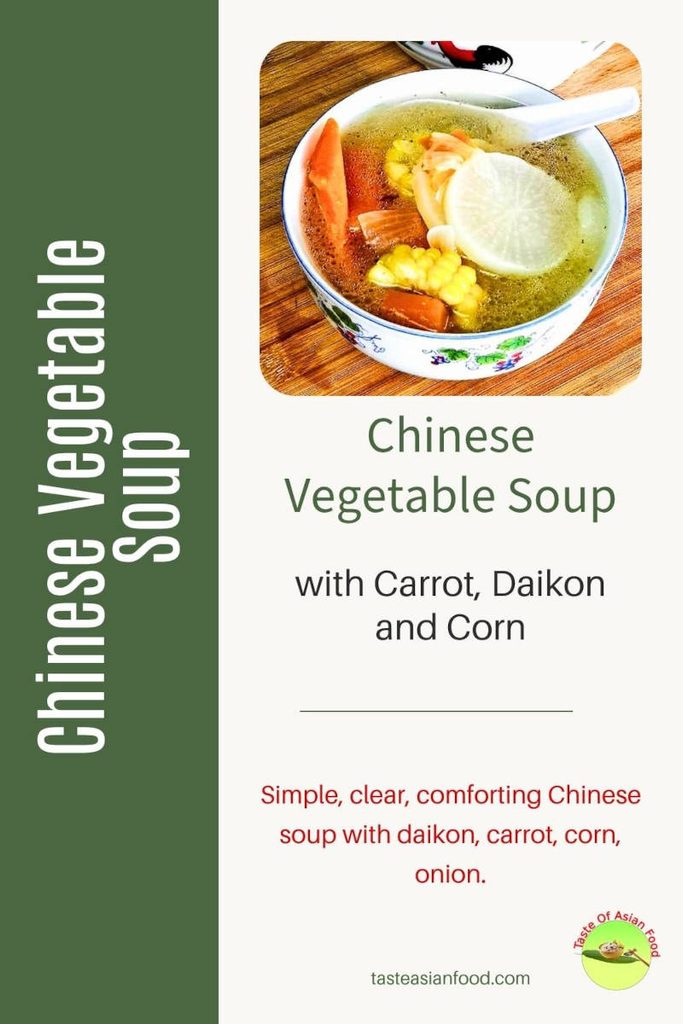
This Chinese vegetable soup is one of the simple soups I grew up eating at home. My mother used to make it, and I still cook my own version today. It is a clear soup made with chicken broth, daikon, carrot, sweet corn, and onion.
What I like about this soup is that each ingredient has a purpose. The chicken bones provide the savory base, while the carrot and sweet corn add natural sweetness. The daikon has a clean taste with a subtle bitterness that balances the sweetness, while the onion adds another layer of sweetness and retains some texture when added later.
The colors are also part of the appeal. The orange carrot, white daikon, yellow corn, and onion stand out nicely in the clear broth.
I’ll show you how I prepare the chicken broth from scratch, how I cut and cook the vegetables so they stay intact, and a few simple tips I’ve found useful when making this soup at home.
Content
Note: Click any item to jump straight to that part of the post.
Note: This post may contain affiliate links. Please read my privacy policy for more info. I may receive commissions for purchases made through links in this post. As an Amazon Associate, I earn from qualifying purchases.
Why This Recipe Works
- Balanced flavor: The chicken broth gives the soup its savory base, while the carrot, sweet corn, and onion add natural sweetness. The clean, slightly bitter taste of daikon keeps the soup from becoming overly sweet.
- Simple ingredients: There are only a few main ingredients, and each one brings something different to the soup. You do not need a long list of seasonings to make a flavorful bowl.
- Good texture: Cutting the carrot and daikon into fairly large, similar-sized pieces helps them become tender at about the same time while still holding their shape.
- Fresh sweetness: Sweet corn adds a natural sweetness to the broth. Adding it at the beginning of the vegetable-cooking stage gives it enough time to release its flavor into the soup.
- Clear and colorful: The clear chicken broth lets the orange carrot, white daikon, yellow corn, and onion stand out. It is a simple soup, but the colors make it look good in the bowl.
- Flexible for home cooking: You can use chicken carcasses for the broth or substitute pork bones. Potatoes or tomatoes can also be added when you want a more substantial soup.
Ingredients Breakdown
- Sweet corn: Adds natural sweetness and fresh corn flavor to the broth. Add it early in the vegetable-cooking stage so its flavor has time to infuse into the soup.
- Carrot: Brings natural sweetness, a mild earthy flavor, and bright orange color. Cut it into pieces similar in size to the daikon.
- Daikon radish: Gives the soup a clean, mildly peppery flavor and a contrasting white color. It is also commonly called white radish or Chinese radish.
- Onion: Adds sweetness and a little more texture to the soup. I prefer adding it later so the pieces remain more intact.
- Chicken bones: Form the savory base of the soup. The main recipe uses two chicken carcasses, although pork bones can be used instead.
- Salt and pepper: These finish the soup with simple seasoning. Add the salt near the end so you can adjust the final taste more easily.

How to Prepare Everything Before Cooking
Prepare the chicken bones: Clean the chicken carcasses well under running water to remove any debris and blood. Cut the carcasses into large pieces with a cleaver so they fit more easily into the stockpot. Have enough cold water ready to submerge the bones.
Prepare the vegetables: Cut the carrot and daikon into fairly large pieces of similar size. Cut the sweet corn into 5 to 6 portions and the onion into small pieces.
Have the strainer ready: Keep a fine-mesh sieve nearby for removing the scum that rises to the surface while the chicken bones simmer and for straining the finished broth. Skimming is mainly for a clearer-looking soup, while straining removes small bone fragments and other debris.
Plan the cooking order: The chicken bones are cooked first to make the broth. Once the broth has been strained, add the carrot, daikon, and sweet corn first, followed by the onion.
The complete ingredient quantities and measurements are provided in the recipe card below.
Step-by-Step Cooking Instructions – Daikon and Carrot Soup
- Prepare the chicken broth. Put the cleaned and chopped chicken carcasses into a large pot and add enough cold water to submerge the bones. Bring to a boil and skim off the scum that rises to the surface with a fine-mesh sieve. Lower the heat and simmer gently for 45 minutes. You can continue removing the scum from time to time if you want a clearer broth.
- Strain the broth. After 45 minutes, remove the chicken bones with a pair of tongs and strain the broth through a fine-mesh sieve. This removes any small bone fragments and other debris, leaving a clean broth for the soup.
- Cook the carrot, daikon, and corn. Bring the strained chicken broth to a boil again. Add the carrot, daikon, and sweet corn, then reduce the heat and simmer for 30 minutes, or until the carrot and daikon are tender but still hold their shape.
- Add the onion. Add the onion and continue simmering for another 10 minutes. Adding it at this stage allows the onion to retain more of its shape and texture rather than becoming too soft.
- Season and serve. Season the soup with 1½ teaspoons of salt and ¼ teaspoon of white pepper, adjusting the seasoning to taste. Adding the salt at this stage gives you better control over the final flavor, especially if some of the liquid has evaporated during cooking. Serve the soup hot.
A Few Tips From My Kitchen
Cut them evenly: I prefer to cut the carrot and daikon into fairly large pieces of roughly the same size. This gives me vegetables that become tender without falling apart.
Start with the corn: I always add the sweet corn together with the carrot and daikon rather than waiting until the end. It has enough time to release its flavor into the broth during the simmer.
Don’t overdo the water: It is tempting to add extra water when making soup, but too much can leave you with a weak broth. Use enough water to submerge the chicken bones without unnecessarily diluting the flavor.
Skim for clarity: I don’t consider removing every bit of scum essential for the taste of the soup. Many home cooks don’t bother, and the difference in flavor is small. I skim it when I want the broth to look particularly clear.
Season at the end: I find it easier to get the seasoning right when the salt goes in near the end. Some liquid evaporates during simmering, so seasoning too early can leave the soup saltier than intended.
Choose your onion texture: I add the onion later because I like the pieces to remain recognizable and retain some texture. If you prefer softer onion, you can cook it for longer.
Common Mistakes to Avoid
Adding too much water: Too much water can dilute the broth and leave it tasting weak. Use enough to submerge the chicken bones without adding more than necessary.
Cutting the vegetables too small: Small pieces can become too soft during the 30-minute simmer. Larger pieces hold their shape better and give you a nicer texture.
Boiling the vegetables too hard: A vigorous boil can cause the carrot and daikon to break apart. Once the broth comes back to a boil after adding the vegetables, reduce the heat and let them simmer gently.
Skipping the final straining: Removing the chicken bones is not enough. Small bone fragments and other debris can remain in the broth, so strain it through a fine-mesh sieve before adding the vegetables.
Adding salt too early: The soup can lose some water during cooking, which concentrates the salt. Season near the end so you have better control over the final taste.
Variations
- Add potatoes: Add potatoes if you want to make the soup more substantial and filling.
- Add tomatoes: Tomatoes give the broth a mild tangy flavor that makes the soup taste a little different from the original version.
- Use pork ribs: You can use pork ribs instead of chicken bones. The ribs provide both the broth and meat, making the soup more suitable as a complete meal.
- Add black peppercorns: If you enjoy a stronger pepper flavor, add some black peppercorns while making the broth.
More Recipes to Try
Chinese Pork Chops with Five-Spice Powder
These pan-fried pork chops are seasoned with five-spice powder and black pepper. They are savory and aromatic, and go well with rice and a light soup.
Pan-Fried Tofu with Meat Sauce
Golden pan-fried tofu topped with a savory Sichuan-style meat sauce makes a satisfying dish to serve with rice and clear soup.
Vegetable Stir-Fry
A simple vegetable stir-fry is an easy side dish when you want something colorful and fresh without making the meal complicated.
Quick Takeaways
Chinese vegetable soup is one of those simple homemade soups that does not need many ingredients to be satisfying. For me, the key is keeping the broth clear and light while cutting the vegetables into fairly large pieces so they stay intact as they cook.
It is an easy soup to prepare for a family meal when you want something warm and comforting without making anything complicated.

Chinese vegetable soup (with carrot and radish)
In this recipe, I will explain how to prepare my favorite home-cooked radish soup.
This radish soup has been regular for my family, which previously was cooked by my mother and recently myself.
Ingredients
- 1 sweet corn
- 1 medium-sized carrot
- 1 medium-sized onion
- 200g of radish
- Chicken bone from 2 chicken carcasses (or use pork bone)
- 1 1/2 tsp of salt
- 1/4 tsp of white pepper
- water sufficient to submerge the bone
Instructions
- Prepare the chicken bones: Clean the chicken carcasses under running water to remove any debris and blood. Cut the carcasses into large pieces with a cleaver.
- Make the chicken broth: Place the chicken bones in a pot and add enough cold water to submerge them. Bring to a boil and remove the scum from the surface with a fine-mesh sieve.
- Simmer the broth: Lower the heat and simmer the chicken bones for 45 minutes. Remove any scum that rises to the surface during cooking if you want a clearer broth.
- Strain the broth: Remove the chicken bones with tongs. Strain the broth through a fine-mesh sieve to remove small bone fragments and other debris.
- Prepare the vegetables: Cut the sweet corn into 5 to 6 portions. Cut the carrot and daikon into fairly large pieces of similar size. Cut the onion into small pieces.
- Cook the main vegetables: Bring the strained broth to a boil. Add the carrot, daikon, and sweet corn. Reduce the heat and simmer for 30 minutes, or until the vegetables are tender but still hold their shape.
- Add the onion: Add the onion and simmer for another 10 minutes.
- Season and serve: Add 1½ tsp salt and ¼ tsp white pepper, adjusting the seasoning to taste. Serve hot.
Recommended Products
As an Amazon Associate and member of other affiliate programs, I earn from qualifying purchases.


Nutrition Information:
Yield: 2 Serving Size: 1Amount Per Serving: Calories: 369Total Fat: 18gSaturated Fat: 5gTrans Fat: 0gUnsaturated Fat: 11gCholesterol: 120mgSodium: 1894mgCarbohydrates: 20gFiber: 4gSugar: 7gProtein: 34g
You didn’t add the tomatoes or potatoes, but okay, it would look differently (reddish in color). I like this soup because it is simple, and nutritious. The size of the carrot slices seem quite large, and so do the sliced radish (daikon) pieces.
Hi Elizabeth,
I did not use tomatoes and potatoes this time, but sometimes I add both and omit the sweet corn just like what my mom used to do. Cut the way that you like, as long as it tastes good. Cheers!
KP Kwan
Hi, this is KP Kwan. I am happy to see you in this comment area, as you have read through my recipe. I am pleased to reply to any questions and comments as soon as possible.