The all-purpose Asian stir-fry sauce prepared with various ingredients in the right proportion is the key to the wonderful flavor of stir-frying dishes. In this article, I will discuss the various seasoning ingredients used to constitute different stir-fry sauces for most Chinese cuisine.
Before I begin, I want to point out that some components of stir-fry sauces are also called sauce by themselves, for example, oyster sauce and light soy sauce.
Below are the five best stir-fry sauces on this blog:
1. Sauce for stir-fried eggplant, Sichuan style
This stir-fry sauce is originally used to stir-fry eggplants, Szechuan-style. It is also suitable for stir-frying other vegetables and minced meat.
2 tablespoons vegetable oil for frying
2 tablespoons chili bean paste or soybean paste for less spicy
1/2 teaspoon Sichuan peppercorn (optional)
1 tablespoon oyster sauce
1 tablespoon black vinegar
¼ teaspoon sugar
1 tablespoon Shaoxing wine (Optional)
The amount of this sauce is enough for 500 grams of eggplants plus one hundred 150 grams of minced meat.
2. Sauce to stir-fry Thai vegetables
This stir-fry sauce consists of golden mountain sauce and fish sauce which is the characteristic flavor of Thai stir-fries.
2 tbsp Golden Mountain sauce
2 tbsp fish sauce
2 tbsp oyster sauce
2 tsp sugar
2 tbsp water
This sauce is enough for 700 grams of Thai mixed vegetables.
3. Sauce for stir-frying beef noodles
This stir-fry sauce is my favorite sauce for any stir-fry noodles. I use it to stir-fry 250 grams of noodles plus 250 grams of beef. You can scale up or down the quantity accordingly.
1.5 tbsp oyster sauce
1 tbsp light soy sauce
1/2 tsp dark soy sauce
2 tsp sugar
1/4 tsp ground black pepper
2 tbsp water
4. The Thai minced pork stir-fry sauce
This sauce is typical for the Thai minced pork recipe Pad Kra Pao. The Thai bird’s eyes chilies are normally added to give it a hot and spicy flavor. The quantity below is for 400g of minced pork.
2 tbsp fish sauce
1.5 tbsp oyster sauce
1.5 tbsp light soy sauce
2 tsp dark soy sauce
2 tbsp sugar
Water
5. The teriyaki sauce
This teriyaki sauce is typical for Japanese stir-fries. You can use it to prepare either pork, chicken, or beef. I used the quantity below to stir-fry 500 grams of chicken breast meat.
3 tablespoons Japanese soy sauce
3 tablespoon mirin
3 tablespoon sake
1.5 tablespoon brown sugar
3 cloves of garlic, bashed
3 thick slices of ginger
2 tbsp water
The common ingredients of the stir-fried sauce
1. Soy sauce
There are two types of Chinese soy sauce, light soy sauce and dark soy sauce. The flavor of soy sauce varies from one brand to another. The best soy sauces are typically imported from Hong Kong, Japan, and China.
- The light soy sauce can be used as a dipping sauce for spring rolls or dim sum. It can also be part of the component for a stir-fry sauce.
- Dark soy sauce is normally used to marinate meat and to season noodle dishes, fried rice, and other stir-frying dishes. Dark soy sauce gives the dish a richer color and thicker texture.
2. Plum sauce
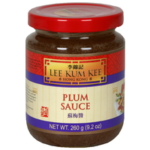
Plum sauce is a viscous, thick, gooey, light brown, sweet, and sour condiment. It is used in Chinese cuisine as a dip and as part of the marinade’s ingredients. Some plum sauce mixtures are cheese salad and sweet and sour chicken.
3. Oyster sauce
Oyster sauce is the second most popular sauce in Chinese cooking after soy sauce. It enhances the flavor of most dishes. It is a sauce that adds a savory flavor to any dish. This sauce is a staple for most Chinese home-style cooking. It is not fishy, taste universal, and is suitable for marinating and stir-frying poultry, meat, noodle, and rice. It is an essential element for stir-fried vegetables and a major component of the gravy for noodles. ( Lo Mien). Oyster sauce is also used as a topping for blanching vegetables.
Oyster sauce is also a major component of Thai and Cambodian cuisine. It imparts a fantastic aroma and flavor to any dish.
Since many Chinese are vegetarian, a vegetarian version of oyster source is also available. It is made with mushroom extract and has a flavor very close to the original oyster sauce.
4. Fish sauce
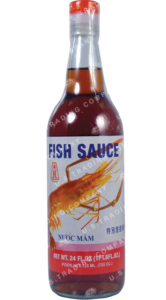
Fish sauce is the cornerstone of Vietnamese cooking. This amber-red sauce is very salty, and a little goes a long way. It is used as a condiment in many Asian cuisines.
This sauce can add depth to the flavor of any dish. It can be diluted with other ingredients to form a dipping sauce, be part of the ingredient of stir-fry sauce, and marinate meat. It is also used to prepare the sauce for Thai steamed fish along with shallot, chili, tamarind, and lime. Some Chinese also use fish sauce in their cooking, although soy sauce is more popular in the Chinese community.
5. Sesame oil
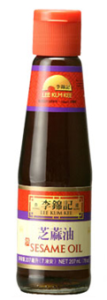
Sesame Oil is a flavorful, dark, and aromatic oil. It has a strong, distinctive, slightly sweet, nutty flavor due to toasting the seeds during production. Sesame seed oil is an integral component of Asian food.
It is not for use as a cooking oil as the flavor is too intense and has a low smoking point. It is generally used for Chinese cooking, such as marinade and frying. It is also used as a flavoring agent in the final stages of cooking, for example, sprinkled a few drips at the end of a bowl of soup noodles. The flavor is strong. Therefore, “a little goes a long way” describes sesame oil perfectly.
Sesame oil is a vegetable oil derived from sesame seeds. It is often used as a flavoring agent in Chinese, Japanese, Korean, and other Southeast Asian cuisines.
6. Ketchup
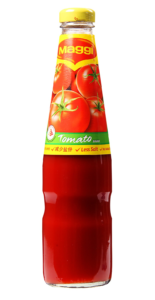
Ketchup normally refers to tomato ketchup, with is synonymous with tomato sauce. It contains not just tomato, vinegar, and other seasonings. Tomato ketchup is used in fast food dishes such as hot dogs, hamburgers, and a large variety of Asian food.
Many gravies for Asian dishes contain tomato ketchup. For example, sweet and sour sauce of Chinese origin and ayam masak merah (Malay style tomato curry chicken) use plenty of tomato ketchup in the recipes. It is also used as a dipping sauce in the Indonesian and Chinese communities.
7. Five-spice powder
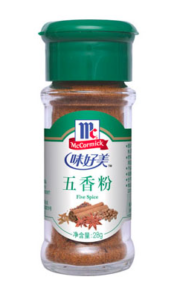
Five spices powder consists of ground peppercorns, star anise, cloves, fennel and cinnamon, and sometimes coriander powder. It is a versatile spice mix that is suitable to season a variety of meat and poultry. The composition of each brand of five spices powder may not be the same. The difference can be either the ratio of the spices or, in some cases, a different combination apart from the above-mentioned. For instance, some manufacturers include cardamom, Szechuan peppercorn, and nutmeg in the spice mix.
The five-spice powder adds a spicy kick to marinades and dry rubs for meat and poultry. It goes particularly well with stew pork – a traditional pork belly dish called “Five Flower Pork.” It is also used in a minute amount in the famous barbecue pork bun called Char Siu Bao. Some other common usage of five spices powder is to marinate fried chicken.
8. Worcestershire sauce
Worcestershire is not the traditional ingredient for Asian cuisine but has gained popularity as it is compatible with most other Asian ingredients. Lamb marinated with Worcestershire sauce, oyster sauce, soy sauce, and tomato ketchup has a fantastic flavor. You can also use it with oyster sauce and sugar to coat the prawns in the dish called Cantonese pan-fried prawns.
Stir-fry sauces from different Asian countries

- China is where the technique of stir-frying originated. Therefore, most of the popular stir-fried dishes and the respective stir-fry sauces originated in China. The basic elements that most Chinese cuisines are light soy sauce, dark soy sauce, sesame oil, and oyster sauce. For example, sweet and sour chicken contains various ingredients in the sauce.
- Thai stir-fry sauce usually contains fish sauce in combination with light soy sauce. Thai sauces are different from Chinese sauces as they combine sweetness, saltiness, sourness, and spiciness. Classic Thai sauce includes bird’s eye chili, lime juice, sugar, and tamarind.
- As for Malaysian Chinese cuisine, it incorporates local ingredients such as chili and coconut with excellent stir-fried techniques from China. An example is Kam Heong stir fry sauce for crabs and other seafood. Local ingredients such as dry shrimp and curry leaves are the local ingredients used to cook with the traditional Chinese cooking method.
- Teriyaki is a Japanese stir fry sauce containing light soy sauce, mirin (sweetened rice wine), sugar, and honey or sugar. All the ingredients are combined and boiled until reduced to the desired consistency.
Make A Batch Of Your Own Stir Fry Sauce
However, the choice is yours as it can be interchanged. Try to experiment with all these combinations and settle on the one you prefer. You can make a bigger batch to keep for your next stir-fry dish.
If you visit any Asian restaurant, you may notice some chefs never premix sauces, as I mentioned here. Instead, they have all the components of the sauce (soy sauce, sesame oil, oyster sauce, salt, sugar, etc.) placed in individual containers beside the stove. They will pick all the components with a small spoon, place them in a ladle, and constitute the sauce whenever needed. Whilst this method has the advantage of letting the person cook have full control of what components (and how much) to be included, it also has its intrinsic pitfalls – the possibility of omitting some components or unintentionally including the wrong quantity. This commonly happens as the quantity for each component is relatively small (some are perhaps 1/4 of 1/8 teaspoon), and the types of components can be more than five at times. Therefore, unless you are already proficient with the characteristic of each component, you may want to stick to the three stir-fry sauces in this section.

Dear Mr Kwan ,
Is Lim again. Need your advise on below matters on primix.
For Fried Rice there was No need to heat up the mixture premix solution.
However on the Vegetables premix. When I tried to heat up .it became lumpy. What can go wrong. I did use a digital weighing scale to measure, was quite sure that the weight for each component was right.
Too high heat ?
Please advise. Mr Kwan.
THANKS.
Hi Lim,
The lumpy problem is mainly due to the cornflour in the recipe.
You can mix the cornflour with the water until there are no lumps. Then only you add the cornflour/ water mixture ( also called cornflour slurry) to other ingredients. You should get a smooth sauce by taking this step.
There is a section about cornflour slurry in my article ‘How to stir-fry the authentic Asian way:
https://tasteasianfood.com/beef-stir-fry/#11
Thanks,
KP Kwan
[…] (Get the Stir Fry Sauce recipe here) […]
Halo Mr Kwan .
Thanks for sharing the stir fried premix recipe which I find very helpful and interesting.
My question is about the amount or strength to use for our stir-fried.
For example 2 cup of cook rice how many tablespoon or teaspoon to use.
If there is a guild line for 1 or 2 cup or for noodle half kg. We can add or lower down the strength proportionately.
Please adude. Much THANKS
Dear Lim,
Thanks for your comment.
As regards to how much sauce is required, here is the guideline.
I normally use one tablespoon (about 15ml) of the sauces in this posts for every 100g of rice or noodle. Say for example if you have a plate of cooked rice which is 200g, I will use 2 tablespoons (about 30g) of sauce. The amount of sauce used is 15% of the weight of the rice / noodles / vegetables etc.
It depends on how big the bowl you use so I rather use weight in this reply. It is worth to get a digital weighing machine for your kitchen. I use it all the time.
Hope this helps,
Cheers!
Dear Mr Kwan.
Thanks for your quick response. Really Appreciate that you find the time to reply share and to guide.
I will also use the common sense that is to taste a bit b4 serve and to adjust.
Once again Much THANKS !!
You’re welcome 🙂
[…] soy and Worcestershire sauce in this recipe is strong enough which has a unique flavor that sets apart […]
great information. I love eating asian food out, but it never tastes as good when I try to make it at home, because I have never had any idea what to use in the sauces and the bottles of pre-made sauces just are not the same.
I look forward to trying out your information
lm
Glad to hear that it is useful to you. You can get more information on stir-fry from another post: https://tasteasianfood.com/beef-stir-fry/.
Wish you success in cooking 🙂