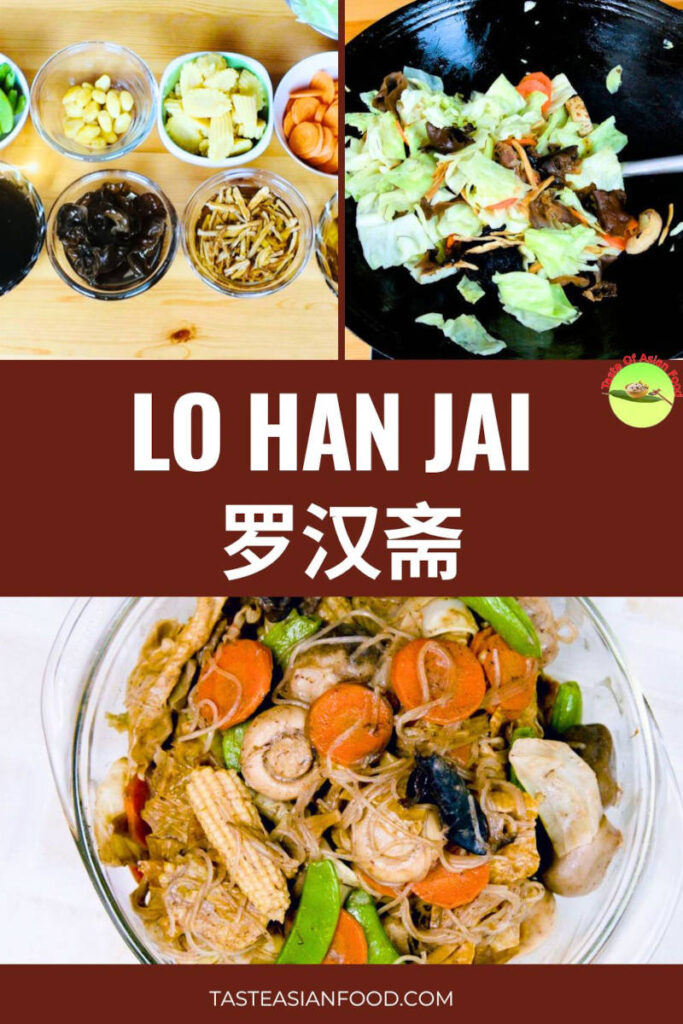
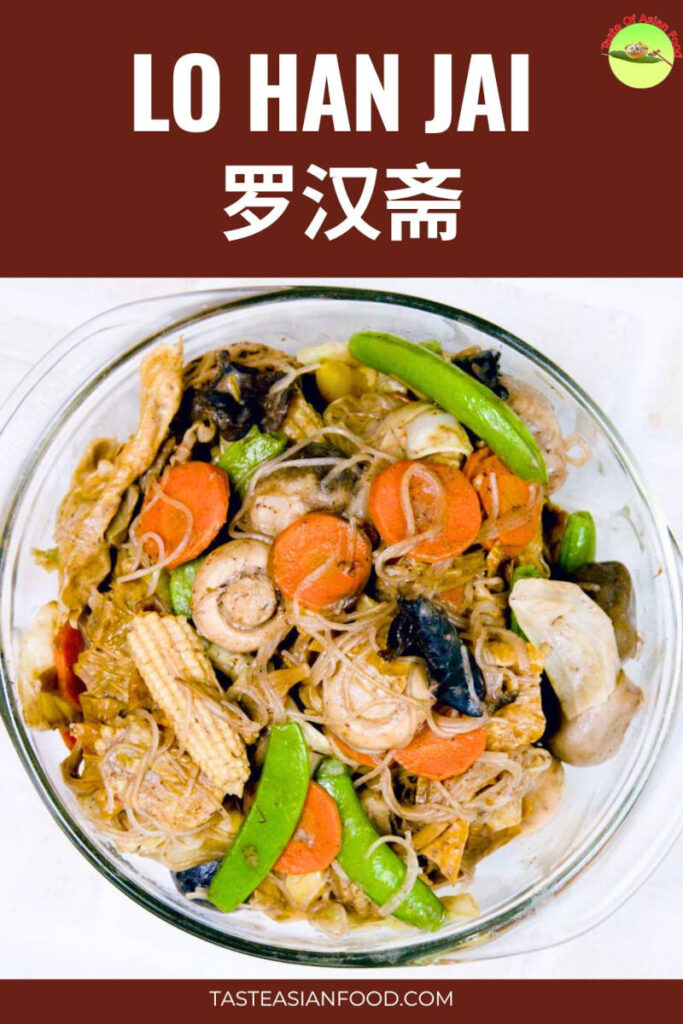
Loh Han Jai 罗汉斋 is one of those dishes that quietly appear on the table every Chinese New Year. It is often there without much explanation, yet it carries more meaning than many festive dishes combined.
I grew up seeing Loh Han Jai served on the first day of Chinese New Year. After a reunion dinner filled with rich meats and heavy flavors, this dish always felt calming. Light but deeply savory. Gentle, yet layered.
Over the years, as I began cooking it myself and talking with older family members, I realized Loh Han Jai is not just a vegetarian dish. It reflects restraint, balance, and respect for ingredients, values that are deeply rooted in traditional Chinese cooking.
This version stays close to traditional Cantonese-style Loh Han Jai, using a mix of dried ingredients, fresh vegetables, and slow, gentle braising, a recipe you can easily recreate at home.
Note: This post may contain affiliate links. Please read my privacy policy for more info. I may receive commissions for purchases made through links in this post. As an Amazon Associate, I earn from qualifying purchases.
What is Loh Han Jai
Loh Han Jai 罗汉斋 is a traditional Chinese vegetarian dish rooted in Buddhist temple cooking. The word Loh Han refers to the Arhats, enlightened disciples of the Buddha, while Jai refers to vegetarian or purified food.
Historically, Loh Han Jai was prepared in monasteries where monks followed strict vegetarian diets. Without meat, flavor had to come from dried mushrooms, fermented bean curds, vegetables, and careful cooking techniques. Over time, the dish moved from temples into home kitchens, especially in Cantonese communities.
Today, Loh Han Jai is commonly eaten during Chinese New Year, particularly on the first day, as a way to begin the year with compassion and balance. Its name 罗汉斋 reminds us of the Arhats, Buddhist disciples who inspired this nourishing, vegetarian dish.
Does Loh Han Jai Really Have 18 Ingredients?
You may have heard that Loh Han Jai must contain 18 ingredients to represent the 18 Arhats. This belief is widely shared, but it is symbolic rather than a strict rule.
There is no historical record of a fixed ingredient list. Instead, the number 18 represents abundance, harmony, and completeness. Traditional versions often use many ingredients, sometimes close to 18, but rarely identical from one household to another.
Rather than counting ingredients, it is more important to focus on balance. A good Loh Han Jai features a mix of soft, chewy, silky, and crisp textures, along with a deep, savory flavor built from dried ingredients.
Note: I’ve shared a Loh Han Jai recipe before, but this year I used a more elaborate mix of ingredients for Chinese New Year, including snow peas, extra mushrooms, and ginkgo nuts. If the list feels long, feel free to use fewer ingredients and follow the same method. The dish will still turn out well.
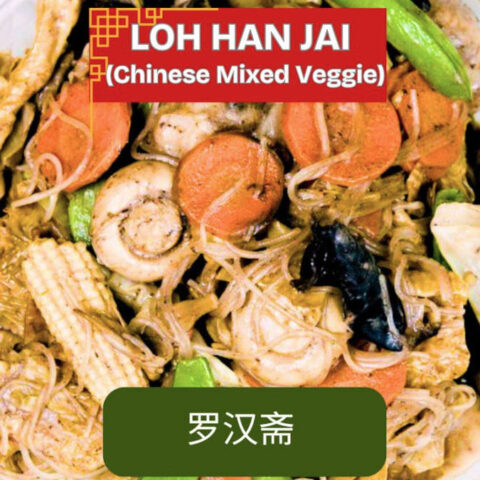
Loh Han Jai Recipe 罗汉斋
Celebrate Chinese New Year with this flavorful Loh Han Jai recipe. A colorful mix of mushrooms, snow peas, bean curd, and ginkgo nuts, braised to perfection. Easy, festive, and deeply savory.
Ingredients
Dried and preserved ingredients
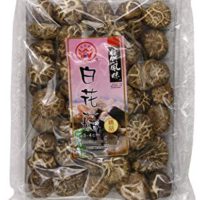
- 3 large dried shiitake mushrooms, about 20 to 25 g dried
- 15 g dried lily flowers
- 7 g wood ear fungus
- 2 g fat choy
- 60 g dried bean curd sheet
Fresh and packaged vegetables
- 350 g cabbage
- 140 g carrots
- 350 g canned baby corn
- 100 g snow peas
- 12 canned straw mushrooms, drained
- 12 canned button mushrooms, drained
- 20 ginkgo nuts, peeled
- 45 g mung bean vermicelli
Seasoning and cooking ingredients
- Sufficient oil to deep-fry the dried bean curd sheet
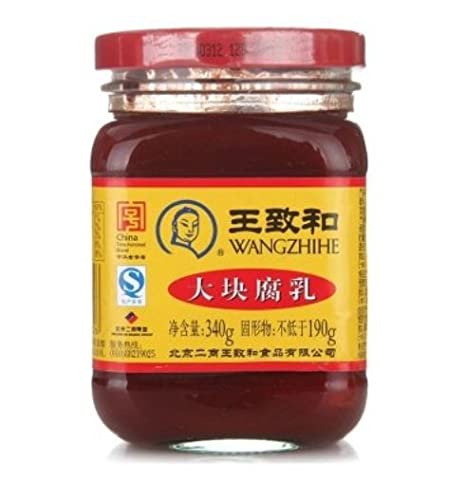
- 80 g white fermented bean curd, mashed
- 80 g red fermented bean curd, mashed
Instructions
1. Soak and prepare all dried ingredients
Place the dried shiitake mushrooms in a bowl and cover with water. As they tend to float, place a small bowl filled with water on top to keep them submerged. Soak until fully softened, at least an hour (longer soaking yields a better texture and flavour).
Once soft, gently squeeze out the excess water. Remove and discard the tough stems, then slice into thick pieces. Reserve the soaking liquid for braising.
In separate bowls, soak the dried lily flowers and dried wood ear fungus in water until fully expanded, about 20 minutes. Trim off any hard base from the wood ear fungus and tear it into bite-sized pieces.
Rinse the fat choy gently several times to remove sand. Soak briefly for about 5 minutes, then squeeze lightly to remove excess water.
Soak the mung bean vermicelli in water until softened, about 10 minutes. Drain and cut into 4-inch lengths. Set aside.
2. Fry the dried bean curd sheet
Cut the dried bean curd sheet into approximately 2-inch squares using kitchen scissors.
Heat enough oil in a small pot or wok to about 180°C. Deep-fry the bean curd sheets for a few seconds until it blistered and puffed. Remove immediately and drain on paper towels. Set aside.
3. Prepare all fresh and canned vegetables
Cut the cabbage into 2-inch squares. Slice the carrots into thin rounds. Cut the baby corn lengthwise into 2-3 sections. Remove the tough strings from both sides of the snow peas.
Drain the canned straw mushrooms and button mushrooms thoroughly. Set aside together with the ginkgo nuts. (Read the section below to find out why I use canned mushrooms instead of fresh ones.)
4. Start braising the vegetables
Heat some oil in a large wok or deep pan over medium heat.
Add the cabbage and stir-fry for 5–7 minutes until it begins to soften and reduce in volume. You may need to add a little water if the cabbage becomes too dry during cooking.
Add the carrot slices, shiitake mushrooms, wood ear fungus, lily flowers, and fat choy. Stir gently to mix everything evenly and cook for 2–3 minutes so the dried ingredients turn soft.
5. Add fermented bean curd and liquid
Add the mashed white fermented bean curd and red fermented bean curd. Stir gently until fragrant and evenly distributed.
Pour in enough water using the reserved mushroom soaking liquid first, then add additional water. Bring to a gentle simmer and braise for 5 minutes.
6. Layer bean curd sheet and vermicelli
Place the fried bean curd sheets on top of the vegetables to prevent sticking and allow gradual absorption of the sauce.
Spread the softened mung bean vermicelli evenly over the bean curd sheets. Cover and let them soften and absorb the broth over low-medium heat for about 2 minutes.
7. Add remaining vegetables
Add the straw mushrooms, button mushrooms, baby corn, and ginkgo nuts. Simmer gently for about 1 minute so they absorb the sauce.
Add the snow peas last and cook for another 1 minute, just until tender but still bright green.
8. Final adjustment and serve
Taste the vegetables and adjust the seasoning if needed. The sauce should be thick rather than soupy. Remove from heat and serve hot.
Notes
- Serve Loh Han Jai hot or warm with plain steamed rice.
- This dish also tastes excellent after a few hours or the next day, once the flavours have settled.
Recommended Products
As an Amazon Associate and member of other affiliate programs, I earn from qualifying purchases.

Nutrition Information:
Yield: 3 Serving Size: 1Amount Per Serving:Calories: 1609Total Fat: 114gSaturated Fat: 18gUnsaturated Fat: 95gSodium: 5511mgCarbohydrates: 105gFiber: 38gSugar: 17gProtein: 79g
This data was provided and calculated by Nutritionix on 06/01/2026
Why I Use Canned Mushrooms
For authentic Loh Han Jai here in Malaysia, canned mushrooms are my go-to. Raw mushrooms are porous and can get soft or fall apart during the long braise, but canned ones hold up beautifully. The high-heat sterilization changes their texture, giving that classic “bouncy” snap that contrasts perfectly with softer ingredients like glass noodles or bean curd skin. Using canned mushrooms is my little trick for keeping the dish tasting just like my family has always enjoyed it.
Troubleshooting and FAQ
Why do I use both white and red fermented bean curd in Loh Han Jai?
White fermented bean curd adds a sharp, salty umami, while red fermented bean curd is milder and earthier. Using both creates a balanced, rich flavor that enhances the vegetables without overpowering them.
Why does my Loh Han Jai taste bland?
Most likely, there isn’t enough fermented bean curd to fully flavor the vegetables. You can either increase the amount or adjust with a little salt and light soy sauce.
Can I prepare Loh Han Jai in advance?
Yes. Loh Han Jai often tastes better after resting. Reheat gently before serving.
Can I change the vegetables?
Loh Han Jai doesn’t have a fixed ingredient list. It’s all about balance rather than exact components. This version is a bit elaborate because it’s made for Chinese New Year lunch, but if you’re making it on a regular day, feel free to skip a few ingredients and cook it the same way. The flavors and textures will still come together beautifully.
Related Recipes You May Enjoy
If you enjoyed this Loh Han Jai recipe, you may also be interested in other dishes that I have previously shared on my food blog:
- Lap Mei Fan: A comforting claypot-style rice dish cooked with preserved Chinese sausages and cured meats, commonly enjoyed during Chinese New Year for its rich aroma and festive appeal.
- Eggplant and Mushroom Stir-Fry: A simple yet flavorful vegetable stir-fry where eggplant and mushrooms are cooked until tender and glossy, perfect as an everyday plant-forward dish.
- Braised Shiitake Mushrooms with Broccoli: A classic Cantonese dish featuring shiitake mushrooms gently braised in a savory sauce and paired with crisp broccoli.
Hi, this is KP Kwan. I’m delighted to see you here in the comment section after reading my recipe. I’ll be happy to answer any questions or comments as soon as possible.