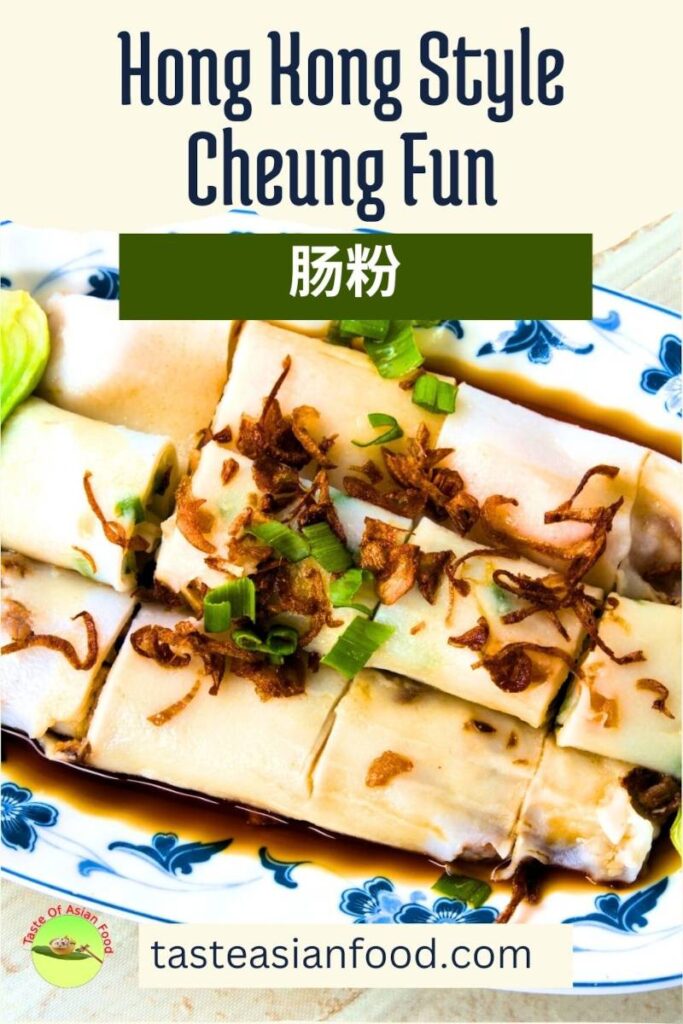
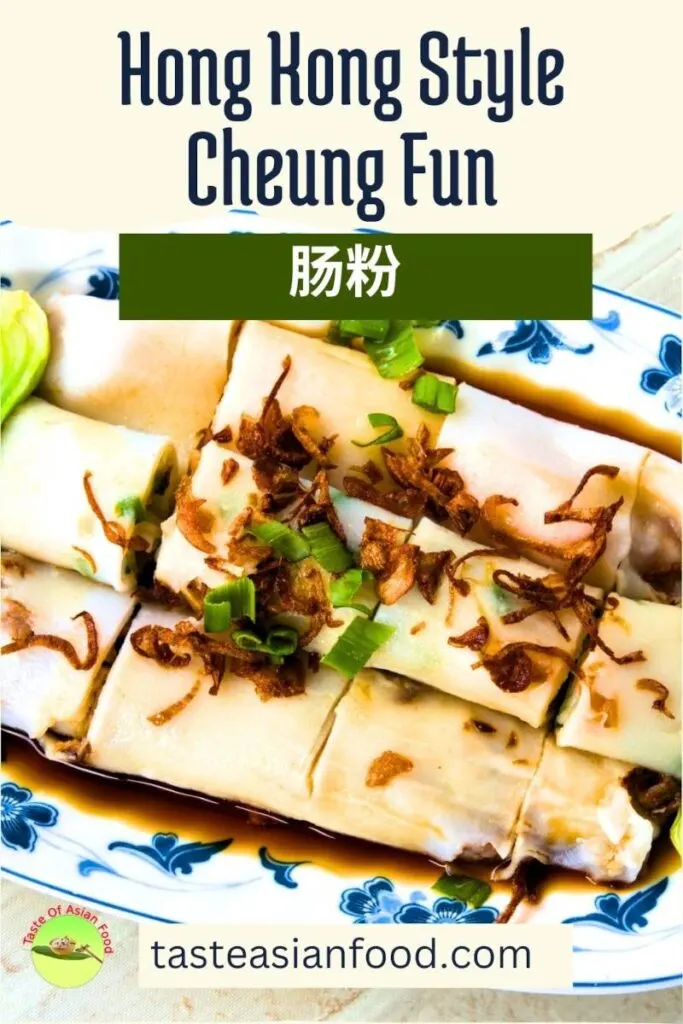
Whenever I have Dim Sum at a Dim Sum restaurant, I almost always order Cheung Fun 肠粉 (also known as Chee Cheong Fun, rice noodle rolls). It’s such a simple dish, yet its charm and flavor go far beyond its humble appearance.
These semi-translucent rice rolls, filled with different ingredients and finished with a drizzle of savory sauce, offer an irresistible combination of mouthfeel, flavor, and silky-smooth texture. Each bite feels like a little symphony playing on my taste buds, with everything unfolding in perfect harmony. It’s truly a pleasure I never get tired of.
Note: This post may contain affiliate links. Please read my privacy policy for more info. I may receive commissions for purchases made through links in this post. As an Amazon Associate, I earn from qualifying purchases.
How to Make Cheung Fun
I will divide the process of making Cheung Fun into a few sections.
1. Prepare the Filling
I’m making Cheung Fun with three types of ingredients: fresh shrimp, barbecue pork, and a scallion/dried shrimp combo.
a. Fresh Shrimp
- For the fresh shrimp version, devein the shrimp and remove the shell and head. Then mix in a little baking soda and salt, and let it sit for about 10 minutes. This helps the shrimp become more plump and crunchy.
- After marinating, rinse the shrimp a few times to wash off the baking soda and salt, then pat them dry. If the shrimp are too large, cut them into smaller pieces so they can be rolled inside the noodle easily without tearing the rice sheets.
b. Barbecue Pork (Char Siu)
- For the second filling, I’m using barbecue pork. You can buy ready-made Char Siu from the market or make your own. If you prefer the homemade version, I have an article on how to make Char Siu using an air fryer.
- Just cut the Char Siu into small pieces, and that’s all you need for this filling.
c. Scallion & Dried Shrimp
- The third version uses scallions and dried shrimp. Separate the white and green parts of the scallions. Slice the green part into thin rings for the filling, while keeping the white part for the sauce later.
- Next, rinse the dried shrimp and soak them for 10–15 minutes. After soaking, sauté them lightly with a bit of oil to remove any unwanted seafood smell.
- Lastly, if the dried shrimp are too large, just give them a quick chop.
2. Make the Cheung Fun Sauce
Now let’s prepare the sauce. It’s made with light soy sauce, dark soy sauce, oyster sauce, salt, sugar, scallion, and ginger.
- Add everything into a small pot, then pour in some water. Heat it over medium heat to extract the flavor from the scallion and ginger while allowing the sauce to reduce.
- Once it has reduced to the right level of saltiness, remove it from the heat and strain it through a wire-mesh strainer. And that’s it, the sauce is ready.
3. Cook the Cheung Fun
Now comes the final part: cooking the Cheung Fun. This part needs a bit more explanation.
a. The equipment
If you’ve ever noticed how they make Cheung Fun in restaurants, you’ll see that they place a large piece of cotton cloth over a big steaming tray. Then they ladle the batter onto the cloth, steam it, and use a scraper to lift and roll the Cheung Fun right off the cloth once it’s ready.
However, getting these items just for making Cheung Fun at home isn’t practical. So instead, we use an alternative method by steaming the Cheung Fun in a square pan (in my case, I actually use my cake pan!). The tray is small enough to fit into a home steamer. I use a large stainless-steel wok as my steamer.
The only challenge is that the batter tends to stick to the tray since we’re not using the cotton cloth. To prevent this, I used a nonstick sheet pan before, and today, because I’m using a stainless-steel cake pan, I need to apply some oil before pouring the batter in.
b. The batter
To prepare the Cheung Fun batter, simply mix rice flour (regular rice flour, not glutinous rice flour), wheat starch, salt, and water. Combine everything well in a large mixing bowl. (Note: If wheat starch is not available, you can substitute it with tapioca starch. However, the texture will be slightly more chewy. Cornstarch is not recommended, as it makes the Cheung Fun brittle and less elastic.)
Since the texture of Cheung Fun depends heavily on the ratio of these ingredients, I’ve tested many different combinations and eventually settled on the one I’m using now. It produces a texture closest to what is served at Dim Sum restaurants, soft, smooth, and just the right amount of elasticity.
c. Steam and roll the Cheung Fun:
- First, lightly grease the pan with oil to prevent sticking, then set up the steamer using a large stainless-steel wok.
- Give the rice batter a quick stir before pouring it into the pan. Otherwise, the flour and starch will settle at the bottom. Pour just enough batter to cover the base of the pan.
- Add your filling of choice: shrimp, barbecue pork, or scallion (green onions) with dried shrimp.
- Steam over high heat with the lid on for about 2 minutes. The Cheung Fun is ready when it turns slightly translucent. Let it sit for 1–2 minutes to cool and firm up a little, which makes it easier to roll without tearing.
- Then, use a dough scraper to lift and roll the Cheung Fun so the filling is neatly wrapped inside.
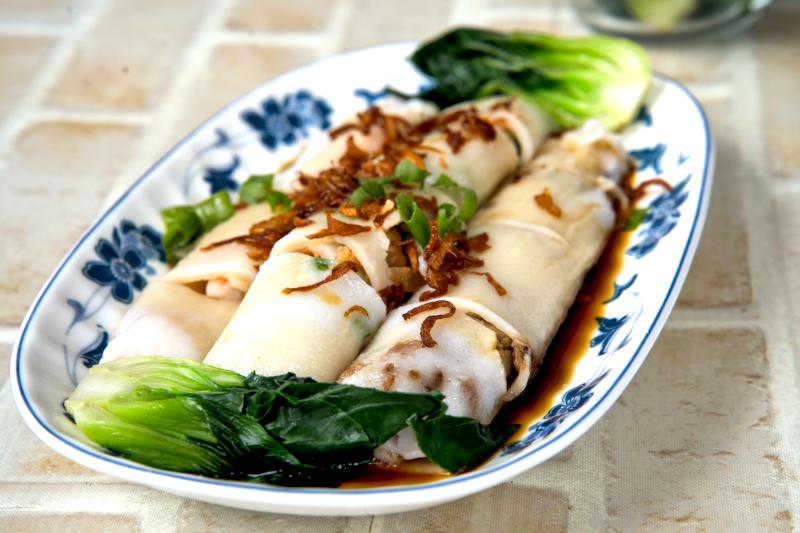
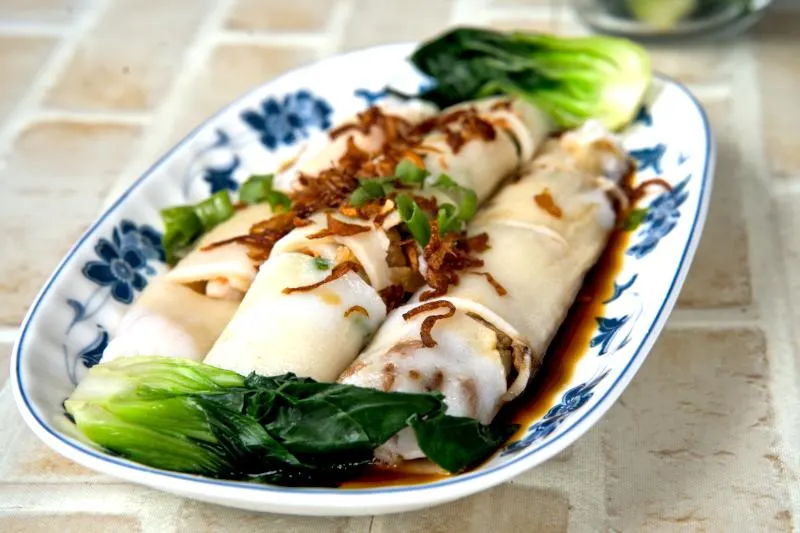
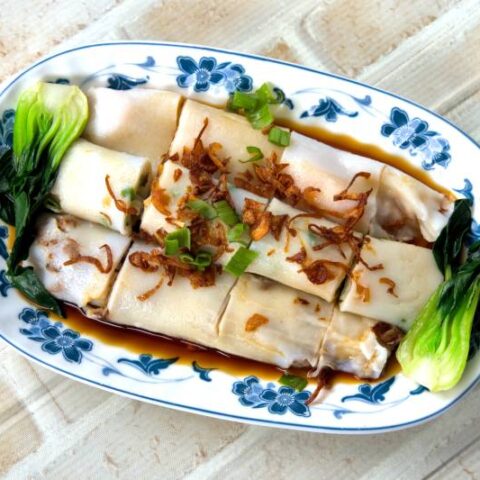
- Transfer the rice noodle rolls to a serving plate, cut them into sections, drizzle the sauce over them, and sprinkle some fried shallots on top. Serve with a side of baby bok choy.
Note on the Shrimp Version
- If the fresh shrimp are too large, they may fall out of the Cheung Fun during rolling or even tear the rice sheet. One solution is to cut the shrimp into smaller pieces to make them easier to handle.
- Another method is to steam the shrimp until cooked, and make the plain Cheung Fun separately. After the plain Cheung Fun has steamed and cooled slightly, place the cooked shrimp on the sheet while it’s still in the pan and roll it up. This method makes rolling much easier and greatly reduces the chances of the Cheung Fun breaking.
Hong Kong Cheung Fun Recipe
Homemade Cheung Fun made easy! Follow this simple recipe to make silky, flavorful dim sum rolls with shrimp, Char Siu, and scallions.
Ingredients
Batter: (A)
- 200g rice flour
- 40g wheat starch
- 1 tsp of salt
- 800 ml of water
Filling: (B)
- 800g shrimp, shelled
- 3 tbsp scallion, cut into small rings
- 2 tbsp dried shrimps
- 100g char siu
Sauce: (C)
- 3 tbsp light soy sauce
- 1 tsp dark soy sauce
- 1 tbsp oyster sauce
- 1/4 tsp salt
- 1.5 tbsp sugar
- 1 stalk scallion (white part)
- 3 slices of ginger
- 3/4 cup water
Instructions
Prepare the filling:
- Marinate shrimp briefly with salt and baking soda, rinse, and pat dry.
- Slice the Char Siu into small pieces.
- Soak dried shrimp for 10–15 minutes, then sauté lightly.
- Slice scallions as needed.
Make the sauce:
- Combine all sauce ingredients in a small pot.
- Simmer with scallion white part and ginger until slightly reduced.
- Strain and set aside.
Prepare the batter:
- Mix rice flour, wheat starch, salt, and water until smooth.
- Stir before each use, as starch may settle.
Steam the Cheung Fun:
- Grease a square cake pan or small steaming tray.
- Pour a thin layer of batter to cover the bottom.
- Add your filling of choice.
- Steam over high heat for 2 minutes or until translucent.
- Let cool for 1–2 minutes before rolling.
5. Roll and serve:
- Use a scraper to lift and roll the Cheung Fun.
- Place on a plate, cut into sections, drizzle with sauce, and top with fried shallots if desired.
Notes
For large shrimp, steam separately and add after the wrapper is cooked to prevent tearing.
Recommended Products
As an Amazon Associate and member of other affiliate programs, I earn from qualifying purchases.
-
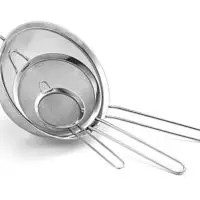 Cuisinart CTG-00-3MS Set of 3 Fine Mesh Stainless Steel Strainers
 -
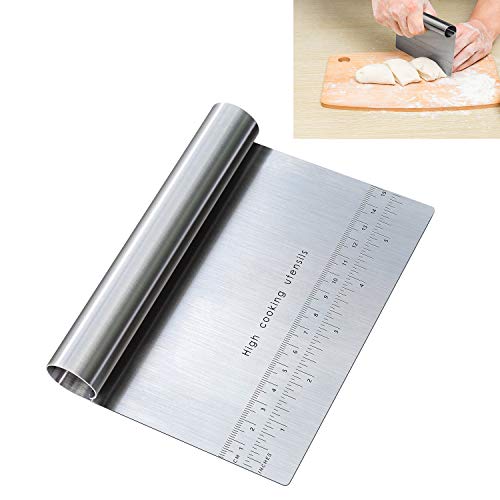 Pro Dough Pastry Scraper/Cutter/Chopper Stainless Steel Mirror Polished with Measuring Scale Multipurpose- Cake, Pizza Cutter - Pastry Bread Separator Scale Knife (1)
 -
 Cooks Standard 02591 Flat Bottom with Lid 11-Inch Hard Anodized Nonstick Wok Stir Fry Pan, Black
Nutrition Information:
Yield: 8 Serving Size: 1Amount Per Serving: Calories: 266Total Fat: 3gSaturated Fat: 1gUnsaturated Fat: 2gCholesterol: 227mgSodium: 1798mgCarbohydrates: 30gFiber: 1gSugar: 4gProtein: 29g
This data was provided and calculated by Nutritionix on 9/12/2025
- I’ve spent quite some time testing different recipes and methods to figure out the best way to make Cheung Fun at home. My original article was very detailed, but I think it’s more helpful to filter out all the testing notes and focus on how to actually make the Cheung Fun itself. That’s why I rewrote this new blog post, placing more emphasis on the core process.
- Note: There are different types of Cheung Fun depending on the region. The one in this recipe is Hong Kong–style Cheung Fun.
More Dim Sum You’ll Love
Since you enjoy Cheung Fun, you might also love to try these other classic dim sum dishes from this blog:
- Shumai — Juicy pork‑and‑shrimp dumplings steamed to perfection, a must‑try if you love hearty, savory bites.
- Turnip Cake (Lo Bak Go) — Crispy on the outside yet tender and flavourful inside; a wonderful contrast if you like the soft texture of Cheung Fun,
- Bean Curd Skin Roll — With a savoury filling of shrimp, pork, mushrooms, and bamboo shoots wrapped in bean‑curd skin, a tasty deep-fried/steamed treat that’s beloved in dim sum houses.
KP
Sunday 14th of December 2025
Hi, this is KP Kwan. I’m delighted to see you here in the comment section after reading my recipe. I’ll be happy to answer any questions or comments as soon as possible.