Drunken Chicken (醉鸡) is a traditional Cantonese cold dish often served during Chinese New Year and festive banquets. Despite its name, the dish is not overly alcoholic. Instead, it carries a gentle aroma of Shaoxing wine that slowly permeates tender, steamed chicken after an overnight soak.
This dish is prized for its clean flavor, silky texture, and refreshing finish, making it the perfect contrast to rich celebratory dishes like braised pork or fried foods.
This recipe is part of my Chinese New Year recipe collection, where balance and symbolism are just as important as flavor.

Note: This post may contain affiliate links. Please read my privacy policy for more info. I may receive commissions for purchases made through links in this post. As an Amazon Associate, I earn from qualifying purchases.
Why Use Whole Chicken Legs Instead of Breast
This recipe specifically uses skin-on, deboned whole chicken legs, not chicken breast.
There are several advantages:
- Better flavor: Chicken legs are dark meat and naturally more flavorful.
- Ideal shape: The flattened leg forms a neat rectangle that rolls evenly.
- Superior texture: The skin adds smoothness and visual appeal to the finished roll.
- Juicier result: The meat stays moist even after chilling.
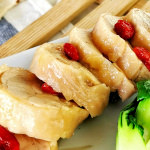

Drunken chicken
You might have been served the drunken chicken rolls during any Chinese banquet that you attended. It is boneless chicken meat rolled up and cut into slices and has a strong alcohol flavor.
The flavor is heavenly, especially if you use dong guai and red dates to prepare the soaking liquid. After the flavor of wine, stock, and herbs absorbed into the meat on the next day, you can anticipate that intense flavor while you take a bite with the accompanying gravy.
Ingredients
Ingredients A
- 2 chicken whole legs, skin-on, deboned
- 1 tsp (5g) salt
- 1 tbsp Shaoxing wine
Ingredients B
- 300ml water
- Chicken bones from the deboned legs
- 8g dong quai (Angelica Sinensis, 当归)
- 15g ginger, sliced
- 3 red dates
- 2 bay leaves
- 1 star anise
- 1 tsp salt
- 1 tsp sugar
- 10g goji berries
- 400 ml Shaoxing wine
Others C
- Aluminum foil for wrapping the chicken
- A container just large enough to submerge the chicken roll
Instructions
1. Prepare and Flatten the Chicken Legs
- Debone the whole chicken legs (your chicken vendor can help and pack the bones separately).
- Place the chicken skin side down on a cutting board.
- Make a few shallow cuts on the thicker parts of the meat.
- Use the flat side of a cleaver blade to gently flatten the chicken until it has an even thickness.
This step ensures the chicken rolls evenly and cooks uniformly.
2. Season and Marinate
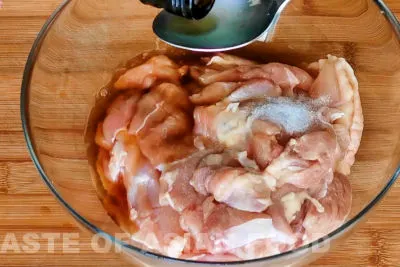
- Rub the chicken evenly with salt and Shaoxing wine.
- Set aside to marinate for at least 1 hour.
This light seasoning enhances flavor without overpowering the soaking liquid later.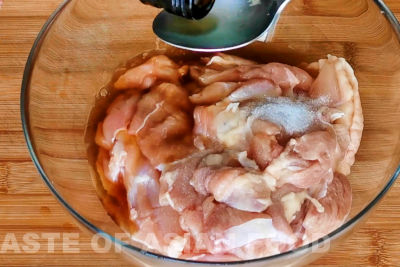
3. Roll and Wrap the Chicken
Method A: Aluminum Foil (Recommended)
- Cut a piece of aluminum foil about 30 cm (1 foot) long.
- Place the chicken on the foil, skin side down, shaping it into a rectangle.
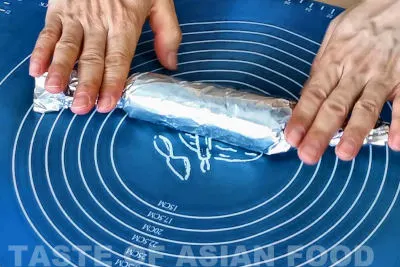
- Roll it up tightly like a Swiss roll.
- Twist both ends of the foil to form a candy-shaped roll.
Rolling tightly is important — a loose roll may open after cooking.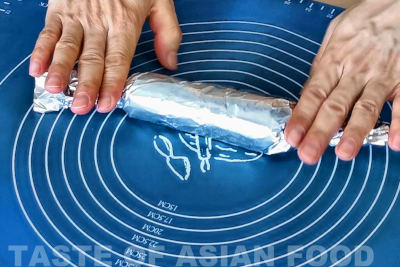
Method B: Kitchen Twine (Alternative)
- Roll the chicken tightly and secure with kitchen twine.
- This avoids foil but may not hold the shape as firmly.
4. Steam the Chicken Roll
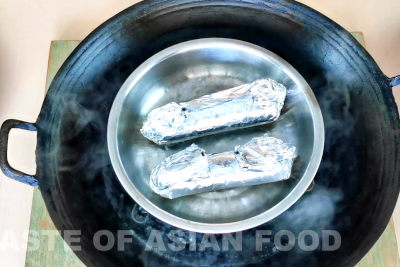
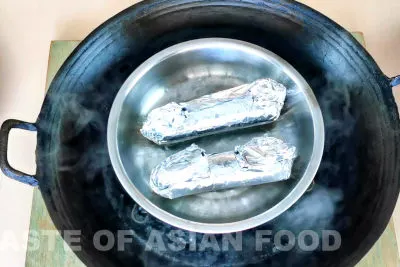
- Place the wrapped or tied chicken roll in a steamer.
- Steam over medium heat for about 25 minutes.
Cooking time may vary depending on whether the chicken is at room temperature or chilled.
To check doneness:
- Pierce the center with a skewer — no blood should ooze out
- Or insert a thermometer — the chicken is done at 70°C
5. Shock in Ice Water
- Prepare a bowl of ice water.
- Transfer the cooked chicken roll directly into the ice bath.
This step:
- Stops cooking immediately
- Prevents overcooking
- Helps tighten the roll
- Retains juiciness
Once cold, unwrap the chicken carefully.
Save the juices released inside the foil (or on the steaming plate if tied with twine) — add them to the soaking liquid later for extra flavor.
Prepare the Soaking Liquid (Marinade)
6. Make the Chicken Stock Base
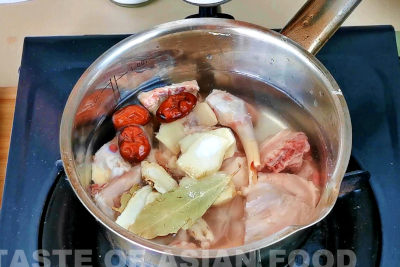
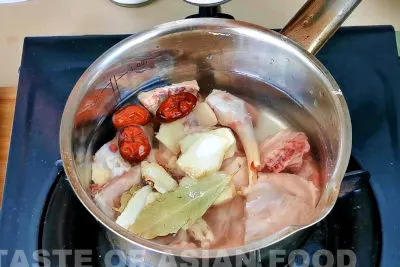
- Add water and chicken bones to a small pot.
- Add dong quai, ginger, red dates, bay leaves, and star anise.
- Bring to a boil, then season with salt and sugar.
- Lower the heat, cover, and simmer for 30 minutes.
After simmering:
- The liquid should be noticeably reduced.
- Strain through a cloth bag or fine strainer.
- Reduce further if needed — you want a concentrated stock, just enough to submerge the chicken.
Keep in mind you will later add an equal amount of Shaoxing wine.
- Chill the strained stock completely in the refrigerator.
7. Combine Stock and Wine
- Once the stock is cold, mix it with an equal portion of Shaoxing wine.
- Adjust the wine ratio to taste — stronger or milder depending on preference.
- Add goji berries at this stage only.
Do not boil goji berries — they turn bitter when overheated.
8. Soak the Chicken Overnight
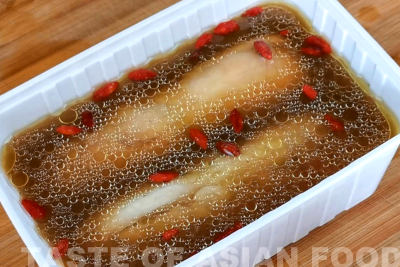
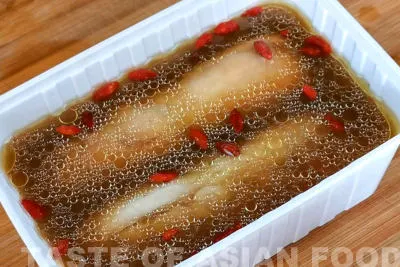
- Transfer the soaking liquid to a container just large enough to hold the chicken roll.
- Add the unwrapped chicken roll, ensuring it is fully submerged.
- Refrigerate overnight to allow the chicken to absorb the flavor evenly.
To Serve
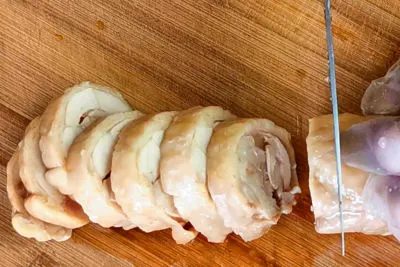
- Slice the chicken roll into ½ cm (¼-inch) thick pieces.
- Arrange on a serving plate.
- Drizzle with some soaking liquid.
- Garnish with goji berries.
Serve cold as an appetizer.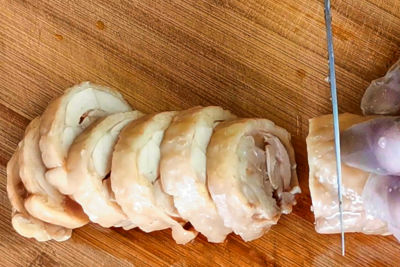
Notes
- Dong quai may only be available at Chinese herbal shops.
- Red dates and goji berries are easier to find at Asian grocers.
- If you can’t get all the herbs, don’t worry:
- Well-seasoned chicken stock + Shaoxing wine is the essential base.
- Herbs enhance aroma but are not mandatory.
Nutrition Information:
Yield: 20 Serving Size: 1Amount Per Serving: Calories: 70Total Fat: 3gSaturated Fat: 1gTrans Fat: 0gUnsaturated Fat: 2gCholesterol: 20mgSodium: 134mgCarbohydrates: 2gFiber: 0gSugar: 1gProtein: 5g
This data was provided and calculated by Nutritionix on 5/17/2020
Why This Method Works
- Cooling before soaking preserves the alcohol aroma
- Overnight marination ensures even flavor penetration
- Steaming keeps the meat tender and clean-tasting
- Cold serving enhances fragrance and mouthfeel
This is why Drunken Chicken is considered a refined banquet dish, not a casual one.
Storage Tips
- Keeps well in the refrigerator for up to 3 days
- Always keep the chicken submerged to prevent drying
- Do not freeze — texture will suffer
Related Chinese New Year dishes
This dish pairs beautifully with:
Link back to the Chinese New Year Recipes Hub
Chinese New Year recipes -16 foods that brings prosperity
Thursday 22nd of January 2026
[…] Drunken Chicken Rolls — Tender chicken infused with aromatic rice wine for festive celebrations. Get the Chicken Rolls recipe → […]
Kevin Chen
Thursday 23rd of July 2020
Hi KP, Since it took so long to prepare this wonderful dish , may I know if it can be done, say 6 rolls in one go and keep them for latter use. What is the best way to keep the rolls for later consumption? Freezing it?
KP Kwan
Friday 24th of July 2020
Hi Kevin, I have never try to freeze it before, but if I do, I will attempt by the following way: - Prepare the chicken until the step of wrapping up with aluminum foil. - Keep them in the freezer. - when I want to consume it, remove it in advance until it returns to room temperature, then steam as usual and continue the other steps.
I don't think the cooked chicken is suitable to freeze, so I will stop short of freezing the raw chicken. Thanks, KP Kwan
May
Wednesday 20th of May 2020
Hi KP Kwan, if I use yellow wine to cook this, do I need to boil the wine or can I use it direct from the bottle?
Also, do I have to remove the aluminium foil before soaking into the ice water? I’m worried that if I soak with the foil , the chicken essence will be diluted or lost.
KP Kwan
Wednesday 20th of May 2020
Hi May, 1. I suggest using yellow wine without boiling to get a better flavor, which means direct from the bottle. 2. It is very hot to remove the aluminum foil after steaming. If you can handle the heat, remove the foil first is safer so that you will not lose the chicken essence. Otherwise, use a larger foil like me, and roll the chicken more than a layer. I work for me so far without leaking. KP Kwan
richard edwards
Wednesday 20th of May 2020
I must be missing something... the photos seem to show some "edible" wrapping about the rool of chicken... there was a brief mention of the skin earlier, but it does not seem to compute nor balance with the quantities... all of the other preparation is clear, concise, and I am sure we can accomplish it (eventually if not the first time).... we could wrap it in corn husks like a tamale and thereby have individual servinings, but that is not your concept or presentation... HELP... we are anxiously wanting to add this to our Asian Collection of Favorites... sincerely
KP Kwan
Wednesday 20th of May 2020
Hi Richard, I hope I am getting it right of what you are unsure of. The chicken is rolled up, with the skin facing the outside of the roll. The image shows the skin is on the surface of the chicken slices, which is a bit shining due to the reflection. To get that, I use skin-on boneless chicken thigh meat. Since there is some fat in the chicken stock while boiling with other herbs, the fat will congeal after chilling in the refrigerator, and you will expect it is a bit jelly-like texture sticking on the surface after removing from the fridge. I hope this information is useful :) Cheers! KP Kwan
KP Kwan
Tuesday 19th of May 2020
Hi, this is KP Kwan. I am happy to see you in this comment area, as you have read through my recipe. I am pleased to reply to any questions and comments as soon as possible.