
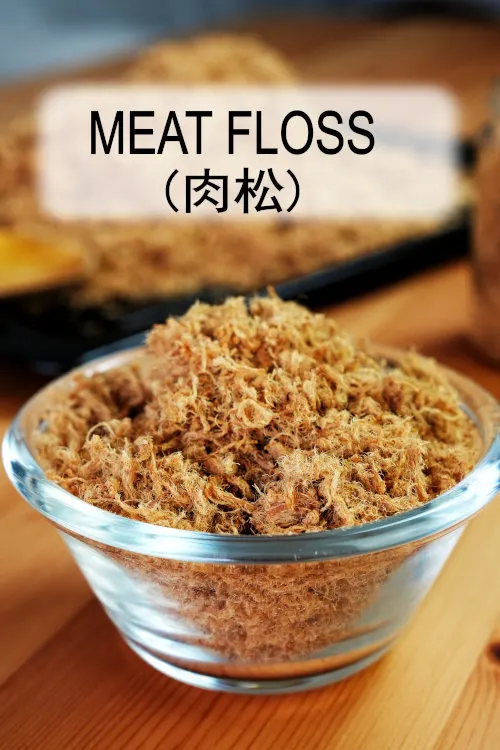
I have always loved meat floss. Its light, fluffy texture and savory-sweet flavor make it one of those foods that’s hard to stop eating once you start. While I often enjoy it straight from the jar, it’s just as good sprinkled over a bowl of congee, tucked into a soft bun, or even used as a filling for sandwiches.
Known as rousong (肉松) in Chinese, meat floss is made by slowly simmering lean pork until it’s tender enough to shred, then drying it over low heat until it becomes light and cottony. Although the process takes a little time, it isn’t difficult, and the result is far superior to most store-bought versions.
In this recipe, I’ll show you how I make Cantonese-style pork floss using basic seasonings like soy sauce, oyster sauce, sugar, star anise, and cinnamon.
Content
Note: Click any item to jump straight to that part of the post.
- Why This Recipe Works
- Ingredients Required
- How to Prepare Everything Before Cooking
- Step-by-Step Cooking Instructions
- A Few Tips From My Kitchen
- Common Mistakes to Avoid
- Variations
- More Thai Recipes to Try
Note: This post may contain affiliate links. Please read my privacy policy for more info. I may receive commissions for purchases made through links in this post. As an Amazon Associate, I earn from qualifying purchases.
Why This Recipe Works
- Fluffy, cottony texture – The slow simmering and drying process transforms the shredded pork texture into soft, delicate strands.
- Well-balanced flavor – The meat is slowly simmered with light soy sauce, oyster sauce, sugar, star anise, and cinnamon. This allows the flavors to penetrate the meat as it becomes tender.
- Simple pantry ingredients – You don’t need complicated ingredients or special equipment to make homemade meat floss. A few basic Chinese seasonings are enough to create the authentic flavor.
- Long-lasting and convenient – Once the meat is dried properly, it keeps well in an airtight container.
- Extremely versatile – Meat floss is more than just a snack. Its savory-sweet flavor is suitable as a topping for congee, buns, tofu, rice, sandwiches, and many other everyday dishes.
Ingredients Breakdown
- Pork tenderloin – The lean meat that creates the light, fluffy texture of homemade meat floss. Choosing a cut with very little fat helps the strands dry properly and become cottony.
- Light soy sauce – Provides the primary savory seasoning and imparts the classic Chinese flavor to the pork.
- Oyster sauce – Adds extra depth and umami, making the meat floss taste richer and more rounded.
- Dark soy sauce – Used in a small amount to add color and a deeper soy aroma.
- Sugar – Balances the salty seasonings and gives meat floss a mild sweetness.
- Salt – Enhances the overall flavor.
- Star anise – Adds a warm, fragrant spice that is commonly used in Chinese braised dishes.
- Cinnamon stick – Provides a gentle sweetness and aromatic background note that complements the pork.
How to Prepare Meat Floss Before Cooking
Pork
Pork tenderloin is ideal because it contains very little fat, which helps create the light and fluffy texture. Cut the pork into 1 to 2-inch pieces so it cooks evenly and becomes tender more quickly. If you use another cut of pork, remove any skin and excess fat before cooking, as too much fat can prevent the meat floss from drying properly.
Seasonings
Measure out the light soy sauce, oyster sauce, dark soy sauce, sugar, and salt before cooking. This recipe seasons the pork while it simmers. This allows the meat to absorb the flavors gradually as it becomes tender.
Star Anise and Cinnamon
Get ready the star anise and cinnamon stick before starting. These two simple spices provide the warm, fragrant aroma commonly found in Chinese braised dishes.
Shredding Tools
Prepare a plastic bag, rolling pin, wooden spatula, and a large skillet or wok. Once the pork is cooked and cooled slightly, the rolling pin helps break down the meat fibers, making it much easier to separate the pork into fine strands by hand. Having these tools ready will make the shredding process much smoother.
Drying Setup
Choose a large skillet or wok with enough space to spread out the shredded pork. The drying stage works best when the meat has room to move around, allowing moisture to evaporate while you stir and separate the meat floss.
The complete ingredient quantities and measurements are provided in the recipe card below.
Step-by-Step Cooking Instructions
1. Simmer the pork until tender
Bring enough water to a boil in a stockpot so that all the pork pieces can be fully submerged. Add the light soy sauce, oyster sauce, dark soy sauce, sugar, salt, star anise, and cinnamon stick according to the recipe measurements.
Add the pork pieces to the seasoned liquid and bring it back to a boil. Once boiling, reduce the heat to low and allow the pork to simmer gently until it becomes very tender. Depending on the amount of liquid and the heat level, this usually takes about 45 to 60 minutes.
The pork needs to become soft enough that the fibers can easily separate. If the liquid evaporates before the pork is tender, add a little more water and continue simmering. Once the pork is fully cooked, remove the star anise and cinnamon stick.
Use a wooden spatula to break the pork into smaller pieces while it is still in the pot. This helps shorten the shredding process later. Continue cooking until the remaining liquid has completely evaporated, then remove the pork and let it cool slightly.
2. Break the pork into fine strands
Once the pork is cool enough to handle, transfer it to a clean plastic bag. Gently bash the meat with a rolling pin to loosen and break down the muscle fibers.
This step makes the shredding process much easier. Instead of pulling apart large pieces of meat by hand, the softened fibers will separate more readily into smaller strands.
Remove the pork from the bag and continue shredding it by hand into fine pieces. The smaller and more evenly separated the strands are, the lighter and fluffier the final meat floss will become.
3. Dry the shredded pork over low heat
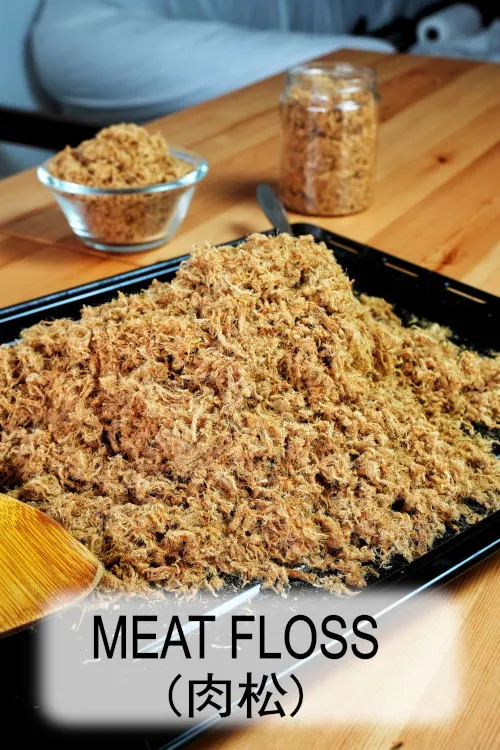
Transfer the shredded pork into a large skillet or wok. Dry the meat over very low heat, stirring continuously to prevent it from sticking or burning at the bottom.
The purpose of this stage is not to stir-fry the pork, but to slowly remove moisture. As the meat dries, continue separating the strands with your hands or a wooden spatula to help create the soft, fluffy texture that defines meat floss.
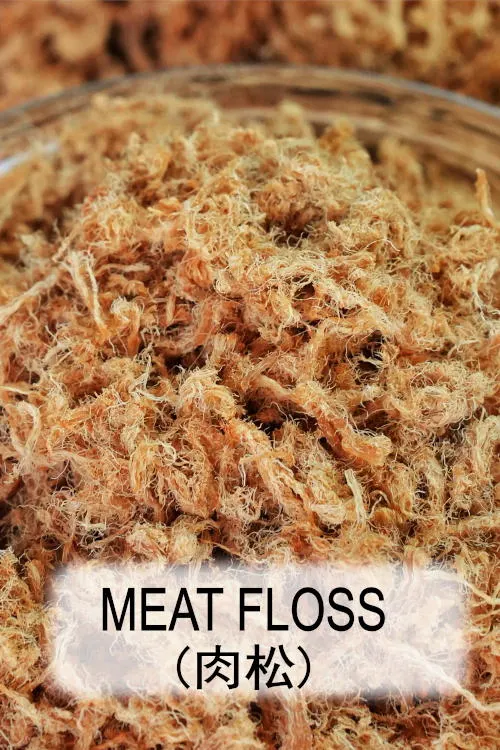
The drying process takes patience. Keep the heat low and continue stirring until the pork becomes light and loose. The finished meat floss should feel dry to the touch, springy, and cottony, with no noticeable moisture remaining.
Tip: If the pan becomes too hot even at the lowest setting, briefly remove it from the stove and return it once it has cooled slightly. The ideal temperature allows you to handle the meat while continuing to separate the strands.
4. Cool and store the meat floss
Once the meat floss is dry and fluffy, remove it from the pan and allow it to cool completely.
Transfer the cooled meat floss into an airtight container and store it at room temperature. Properly dried meat floss can keep for about three months. For longer storage, place it in a freezer-safe container and freeze until needed.
A Few Tips From My Kitchen
Keep it simple
I prefer to keep the seasoning simple with classic Cantonese flavors from soy sauce, sugar, star anise, and cinnamon. The goal is to enhance the pork rather than cover up its natural flavor.
Skip unnecessary steps
Some cooks prefer to blanch the pork first with ingredients like ginger, spring onion, and rice wine to remove any porky smell before starting the actual cooking process. I usually skip this step because I choose fresh pork that does not have any unpleasant odor. This also means the natural flavor of the pork is preserved.
Season while simmering
Some recipes cook the meat first and add the seasonings later during the drying stage. While this method works, I prefer simmering the pork directly in the seasoned liquid. The cooking liquid contains plenty of flavor, and allowing the pork to absorb it slowly produces a more deeply seasoned meat floss.
Let the color develop
You may notice that some homemade meat floss recipes have a slightly reddish color from added paprika. I prefer allowing the pork to slowly develop its own natural golden-brown color through the cooking and drying process.
Be patient with drying
The final drying stage is a slow process, but rushing it will affect the result. Low heat and patience are what transform shredded pork into the light, fluffy strands.
Common Mistakes to Avoid
- Using fatty pork – Meat floss depends on lean meat to achieve its light, fluffy texture. Too much fat can make the strands feel greasy and prevent them from drying properly. Pork tenderloin works well because it has very little fat and produces a cleaner, softer floss.
- Stopping the drying process too early – If the pork still contains moisture, it will feel heavy rather than fluffy and will not keep well during storage.
- Using high heat – The drying stage is about slowly removing moisture, not frying the pork. High heat can cause the meat to brown or burn before the fibers have a chance to become light and cottony.
- Not breaking the meat into small enough strands – Large pieces of shredded pork will not develop the delicate texture needed for light and fluffy meat floss.
- Adding oil during drying – Meat floss does not need oil because the goal is to dry the pork, not stir-fry it. Adding oil can make the finished product heavier and less fluffy.
- Storing it while still warm – Warm meat floss can create condensation inside the container, adding moisture back into the product. Always allow it to cool completely before storing to maintain its texture and shelf life.
Variations
- Chicken floss – Chicken breast is a popular alternative for those who do not eat pork. The cooking and drying method remains the same.
- Beef floss – Lean beef can also be used to create a different version of rousong with a deeper, richer flavor. Choose a cut with minimal fat (e.g., beef eye of round) to achieve the best texture.
- Spicy meat floss – Add dried chilies during the cooking process if you enjoy some heat. Malaysian serunding is another example of a spiced, shredded meat version with a richer chili and aromatic flavor.
- Extra fragrant version – Some recipes include additional spices such as five-spice powder or other Chinese aromatics.
More Recipes to Try
- Bak Kwa (Chinese Pork Jerky) – Unlike the light and fluffy texture of meat floss, bak kwa has a sweet, savory, and slightly chewy texture, making it a delicious contrast while exploring another classic Chinese snack.
- Yi Mein (Cantonese Longevity Noodles) – The springy Cantonese noodles, savory sauce, and aromatic ingredients make this a satisfying meal where you can easily add extra toppings for texture and flavor.
- Bak Kut Teh (Chinese Herbal Pork Rib Soup) – For a complete Malaysian Chinese meal, try serving meat floss alongside a bowl of Bak Kut Teh. The rich, aromatic pork rib soup provides a warm and hearty contrast to the light, fluffy texture of rousong, especially when enjoyed with steamed rice.
Quick Takeaways
Making homemade meat floss takes some patience, but the result is well worth the effort. The secret to good rousong is starting with lean meat, allowing the pork to become tender before shredding, and drying it slowly until it reaches that signature light and fluffy texture.
Keep a jar ready, and you can instantly add extra flavor and texture to everyday dishes, from congee and buns to rice, tofu, and sandwiches.
Once you make your own batch, you may find that this simple Chinese snack becomes a regular favorite in your kitchen.
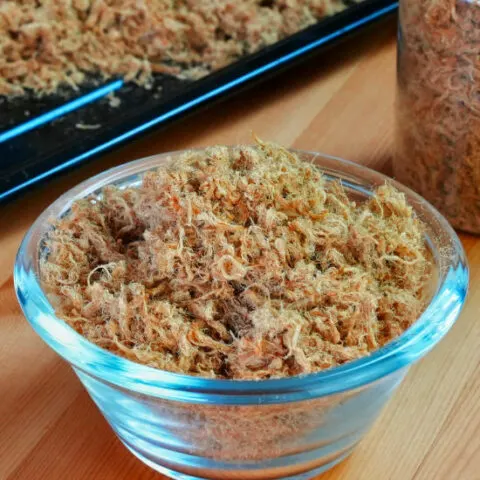
Meat floss- How to make rousong (Chinese-style pork floss)
The articles show you how to make meat floss (rousong 肉松), the traditional Chinese snack to be eaten alone or with buns, salad, and tofu.
Ingredients
- 500ml water
- 5 tbsp light soy sauce
- 2 tbsp oyster sauce
- 1/2 tsp dark soy sauce
- 1 star anise
- 1 cinnamon stick
- 60g sugar
- 1.5 tsp salt
- 900g pork tenderloin
Instructions
- Bring enough water to a boil to submerge all the pork pieces.
- Add the light soy sauce, oyster sauce, dark soy sauce, sugar, and salt to the water.
- Add the star anise and cinnamon stick.
- Cut the pork tenderloin into 1–2 inch pieces and simmer with the liquid.
- Remove the star anise and cinnamon stick from the pork.
- Break up the pork into smaller pieces using a wooden spatula. This step helps shorten the time needed for the pork to become soft and tender.
- Once the pork is tender and easily breakable, continue cooking until the liquid evaporates. Remove the pork and allow it to cool.
- Transfer the pork into a plastic bag and bash it with a rolling pin to break up the meat further.
- Place the broken meat pieces in a large skillet or wok.
- Heat the pork over low heat until dry and fragrant. Keep stirring continuously to ensure it does not burn at the bottom.
- When the meat floss is completely dry, remove it from the pan and allow it to cool.
- Store in an airtight container at room temperature.
Notes
950g of lean meat yields 450g of meat floss.
Recommended Products
As an Amazon Associate and member of other affiliate programs, I earn from qualifying purchases.
-
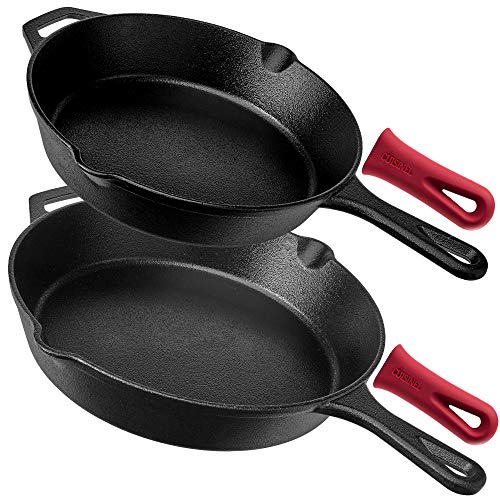 Pre-Seasshioned Cast Iron Skillet 2-Piece Set (10-Inch and 12-Inch) Oven Safe Cookware - 2 Heat-Resistant Holders - Indoor and Outdoor Use - Grill, Stovetop, Induction Safe
 -

 Arrow Reusable Plastic Storage Container Set, 6 Pack, 1 Quart / 4 Cup Each – Food, Meal Prep, Leftovers – Freeze, Store, Reheat - Clear Container Set With Lids – BPA-Free, Dishwasher / Microwave Safe
 -
 Norpro Bamboo 12-Inch Spatula, Flat Handle
 -
 Cooks Standard 02520 Quart Classic Stainless Steel Stockpot with Lid, 12-QT, Silver
Nutrition Information:
Yield: 30 Serving Size: 1Amount Per Serving: Calories: 54Total Fat: 1gSaturated Fat: 0gTrans Fat: 0gUnsaturated Fat: 1gCholesterol: 22mgSodium: 353mgCarbohydrates: 2gFiber: 0gSugar: 2gProtein: 8g
This data was provided and calculated by Nutritionix on 3/3/2023
Mei
Sunday 2nd of August 2026
Can I use another part of the pork meat besides tenderloin? TQ
KP Kwan
Monday 3rd of August 2026
You can use other cuts of pork. Make sure that it is lean because fat does not work well for making meat floss.
Jean
Saturday 4th of March 2023
Really appreciate and enjoy your recipes and instructions KP. I grew up eating rousing and still love it decades later. Never thought to make it myself and plan to give it a try in the future. Thanks much!
KP Kwan
Saturday 4th of March 2023
Hi, this is KP Kwan. I am happy to see you in this comment area, as you have read through my recipe. I am glad to reply to any questions and comments as soon as possible.