
Steamed Eggs (蒸水蛋) is a very common and easy dish that many Chinese families prepare at home. I am quite confident to say that almost everyone has either eaten it or made it themselves at some point.
So the aim of this post is not to show you how to make steamed egg, but to share a few key tips I have learned from my time working in a restaurant, as well as from cooking at home, to achieve the texture of the steamed eggs I want.
You see, everyone has their own preference. Some like it soft and delicate, just firm enough to hold its shape with a gentle wobble. Others prefer it slightly firmer custard. And then some enjoy it very soft and silky, so tender that it barely holds together.
In this post, I will show you how I control all of that in the kitchen. It comes down to a few important factors: the ratio of egg to water, the heat, the preparation before steaming, and the steaming time.
If you are looking for a way to get your steamed egg just the way you like it, I am happy to share what has worked for me.
Note: This post may contain affiliate links. Please read my privacy policy for more info. I may receive commissions for purchases made through links in this post. As an Amazon Associate, I earn from qualifying purchases.
Why this Chinese Steamed Egg Recipe Works
- A balanced egg-to-water ratio ensures the custard sets gently without becoming too firm or too fragile
- Low-heat steaming prevents the proteins from tightening too quickly, resulting in a smooth texture
- Straining and removing bubbles eliminates imperfections for a clean surface
- Covering the dish protects the custard from condensation, which would otherwise create an uneven texture
How to Make Chinese Steamed Eggs (Step-by-Step)
I know many of you would like to follow a recipe and try it out yourself, so here is the step-by-step method I use. However, the most important part is the section that follows, where I explain how factors like egg-to-water ratio, temperature, covering, and timing affect the final texture.
Steps
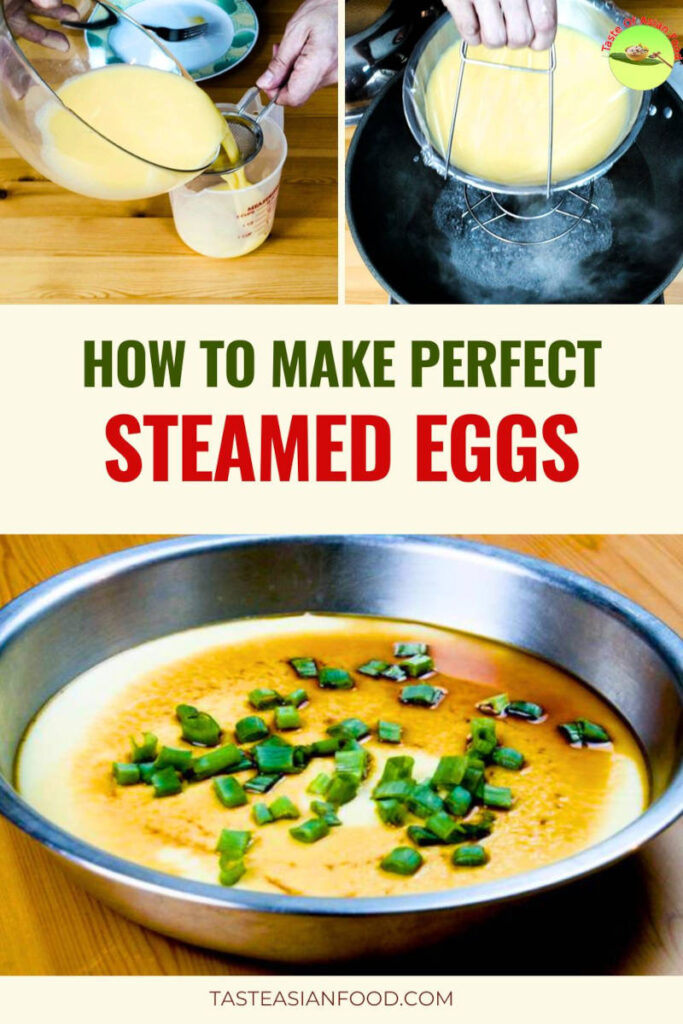
- Crack the eggs into a mixing bowl and add the water and a pinch of salt. Beat the mixture gently using a fork or a pair of chopsticks, stirring in one direction for about 30 seconds until the mixture is well combined.
- Strain the egg mixture through a fine sieve to remove any bubbles and impurities. You can strain it twice for a smoother texture and to ensure no shell fragments remain.
- Transfer the mixture into a steaming dish, preferably a shallow stainless steel plate for even cooking.
- Remove surface bubbles by lightly tapping the dish or using the tip of a paper towel to pick them off. This helps achieve a smooth surface.
- Cover the dish with aluminum foil or cling wrap to prevent water droplets from dripping onto the surface during steaming.
- Steam over low heat for about 8 minutes. After that, open the lid and check the texture. If it is still too soft, continue steaming for another 1 to 2 minutes.
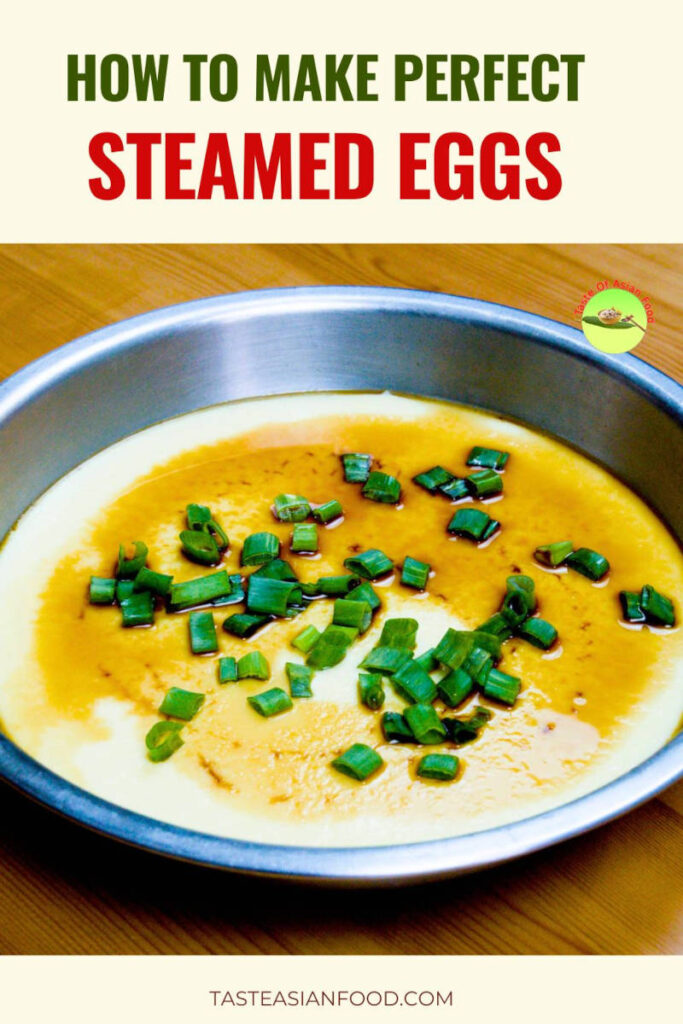
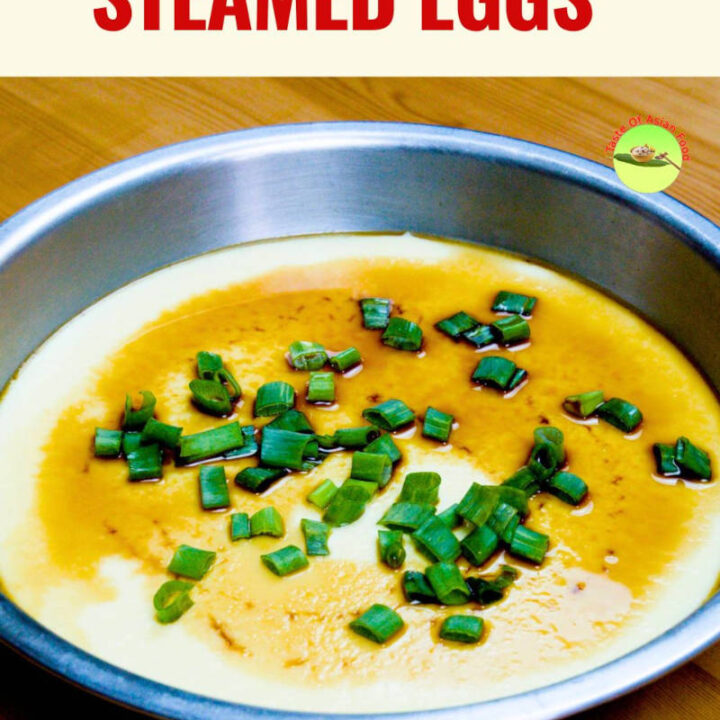
- Serve by drizzling a little soy sauce over the top and garnishing with sliced spring onions.
How to Make Steamed Eggs with Perfect Silky Texture
A complete Chinese steamed egg recipe with tips on texture, egg to water ratio, and steaming method to achieve a smooth and silky custard.
Ingredients
- 3 large eggs (150g)
- 260ml water (1 cup + 2 tsp)
- 1/4 tsp salt
- 1 tbsp light soy sauce
- 2 tbsp chopped spring onions
Instructions
- Crack the eggs into a mixing bowl and add the water and a pinch of salt. Beat the eggs gently using a fork or a pair of chopsticks, stirring in one direction for about 30 seconds until the mixture is well combined.
- Strain the egg mixture through a fine sieve to remove any bubbles and impurities. You can strain it twice for a smoother texture and to ensure no shell fragments remain.
- Transfer the mixture into a steaming dish, preferably a shallow stainless steel plate for even cooking.
- Remove surface bubbles by lightly tapping the dish or using the tip of a paper towel to pick them off. This helps achieve a smooth surface.
- Cover the dish with aluminum foil or cling wrap to prevent water droplets from dripping onto the surface during steaming.
- Steam over low heat for about 8 minutes. After that, open the lid and check the texture. If it is still too soft, continue steaming for another 1 to 2 minutes.
- Serve by drizzling a little soy sauce over the top and garnishing with sliced spring onions.
Recommended Products
As an Amazon Associate and member of other affiliate programs, I earn from qualifying purchases.
-
 3 Fine Mesh Strainers Set with Handle for Kitchen - Sizes 7", 4.7", 3.3", Easy Clean 304 Stainless Steel, Comfortable Non-Slip Grip. Ideal for Tea, Coffee, Rice, Quinoa, Veggies & Fruits
 -
 Norpro Bamboo 12-Inch Spatula, Flat Handle
 -
 Suwimut 6 Pack Stainless Steel Oval Platter, Heavy Duty Mirror Polish Large Sizzling Platter Serving Tray Fish Plate for Steaming Fish Dessert Meat Sushi, 14-Inch by 8.7-Inch, Silver
Nutrition Information:
Yield: 2 Serving Size: 1Amount Per Serving: Calories: 113Total Fat: 7gSaturated Fat: 2gUnsaturated Fat: 5gCholesterol: 282mgSodium: 855mgCarbohydrates: 2gFiber: 0gSugar: 1gProtein: 10g
This data was provided and calculated by Nutritionix on 4/1/2026
7 Secrets to a Smooth, Mirror-Like Surface
I strongly recommend going through this section before you start, especially if this is your first time making Chinese steamed egg.
- Do not beat the eggs too vigorously. Instead of whisking hard, gently stir the eggs in one direction just enough to combine the yolk and white. This helps minimize bubbles. Too many bubbles will prevent the steamed egg from having that smooth, silky, almost mirror-like surface.
- Strain the egg mixture. Always pass the mixture through a fine sieve, preferably twice. This removes bubbles and impurities, which is key to achieving a smooth and refined texture.
- The “Paper Towel” Hack. Using the tip of a paper towel to pick up small bubbles is the most effective method. It works much better than using a spoon or fork.
- Always cover during steaming. Cover the dish with aluminum foil or cling wrap. During steaming, condensation forms and can drip onto the surface, causing an uneven texture. If you do not prefer using foil or wrap, you can cover it with a large plate, but this is less effective, as some water may still drip in from the sides.
- Use low heat for better control. Some chefs steam over high heat for a short time before lowering the heat, but this requires experience. For home cooking, starting with low heat gives you much better control and more consistent results.
- Check doneness. After about 8 minutes (for three eggs), the custard should be nearly set. You can open the lid and gently shake the dish to check the texture. If it is not firm enough, simply continue steaming for another 1 to 2 minutes.
- Keep it simple when serving. The easiest way to enjoy Chinese steamed egg is to drizzle a little light soy sauce on top and garnish with spring onion. Simple, but incredibly satisfying.
Expert Tip: The Paper Towel Trick. While most recipes suggest using a spoon to scoop bubbles, I’ve found that using the tip of a paper towel to “wick” them away is the only way to achieve a truly mirror-like surface without disturbing the egg mixture.
How Water, Temperature, and Timing Affect the Texture
If you follow the instructions and tips above, your steamed egg will almost certainly get a silky smooth texture. However, if you want to go a step further and have full control over the final texture, the information below will help you to understand how water, temperature, and timing work together.
Water Quality
The quality of water used can make a difference. In some places, tap water may have a noticeable chlorine smell due to treatment. If that is the case, it is better to use previously boiled and cooled water, as boiling helps remove the chlorine. If your tap water is clean and neutral in taste, you can use it directly.
Egg to Water Ratio
The texture of the steamed egg depends largely on the amount of water added. Based on my testing, 150 grams of egg (about three large eggs without shells) works well with about 260 ml of water.
Note: “Large Eggs” usually weigh 50g-55g without the shell in Malaysia.
| Texture Preference | Egg-to-Water Ratio | Result |
| Firm / Custard | 1 : 1.2 | Holds shape well, dense bite. |
| Classic Silken | 1 : 1.5 | The restaurant standard; slight wobble. |
| Soft / Delicate | 1 : 1.75 | Melt-in-your-mouth, very fragile. |
By adjusting this ratio, you can control the texture exactly to your preference.
Should You Add Cornstarch?
I usually avoid adding cornstarch. While it can make the custard firmer and less prone to breaking, it also reduces the silky, delicate texture. If I want a firmer result, I prefer adjusting the egg-to-water ratio instead.
Temperature and Timing
In my testing, steaming over low to medium heat works best. For three eggs, it usually takes about 8 minutes.
After that, you can open the lid and gently check the texture. If it is not set to your liking, cover it again and continue steaming for another 1 to 2 minutes. This step is very forgiving and easy to adjust.
Covering for a Smooth Surface
To achieve a silky, smooth surface, it is important to cover the dish during steaming, either with aluminum foil or cling wrap. This prevents condensation from dripping onto the custard.
If you prefer not to use foil or plastic, you can cover the dish with a larger plate. This works, but may not be as effective, as some water can still drip in from the edges.
Use a stainless steel Plate
In the restaurant, we use stainless steel because it conducts heat more efficiently than ceramic. This allows the egg to cook faster, saves time, and helps the center set properly before the edges overcook. You can apply the same concept while cooking at home.
Frequently Asked Questions
Why does my steamed egg have a rough or “honeycomb” texture?
A rough, porous surface, often called “honeycomb,” is caused by high heat. When the steaming temperature is too high, the egg proteins tighten too quickly and trap steam inside, creating air pockets. To prevent this, always steam over low heat and make sure your dish is properly covered to buffer the temperature.
How do I fix overcooked or “holey” steamed eggs?
Unfortunately, once the “honeycomb” texture forms, the protein structure cannot be reversed. However, you can improve the presentation by adding a flavorful topping. Drizzle a mixture of light soy sauce, sesame oil, and fried shallots over the surface, or add a savory minced meat sauce to help mask the texture while enhancing the flavor.
Can I make Chinese steamed eggs in a multicooker or steaming oven?
Yes. When using a multicooker, avoid the high-pressure setting. Instead, use the “Steam” function on low or a manual setting with the vent open. For a steaming oven, set the temperature to 85°C to 90°C for a gentler cook. No matter which appliance you use, covering the dish with foil is still essential to prevent condensation from dripping onto the surface.
Why is my steamed egg watery in the center even after steaming?
This usually happens when the steaming dish is too deep or when the egg-to-water ratio is too high. Using a shallow stainless steel plate helps heat reach the center more evenly. If the center is still watery, continue steaming for another 2 minutes, then let it rest in the steamer with the heat turned off for 1 minute to allow carryover cooking.
Should I use warm water or cold water for the egg mixture?
For the smoothest texture, use room temperature or lukewarm water. Avoid using cold water, as it slows down the cooking process and can lead to uneven results. If you are using previously boiled water to remove chlorine, make sure it has cooled before mixing so it does not cook the eggs prematurely.
Do I really need to strain the eggs through a fine mesh strainer?
Yes, straining is one of the most important steps for achieving a restaurant-quality finish. It removes the chalaza, which is the stringy white part of the egg, as well as any air bubbles formed during mixing. For an extra smooth, mirror-like surface, strain the mixture twice directly into your steaming dish.
Can I use chicken stock instead of water?
Yes, chicken stock or dashi can be used to add more depth and umami to the dish. Just keep in mind that stock usually contains salt, so you should reduce the amount of salt added to the egg mixture to avoid overseasoning.