
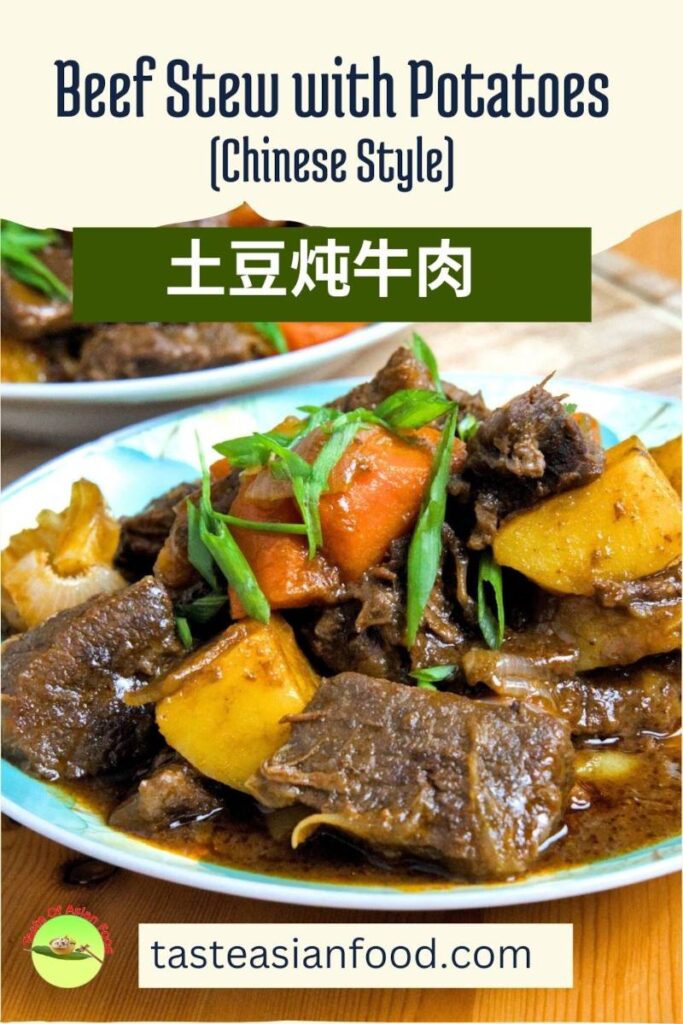
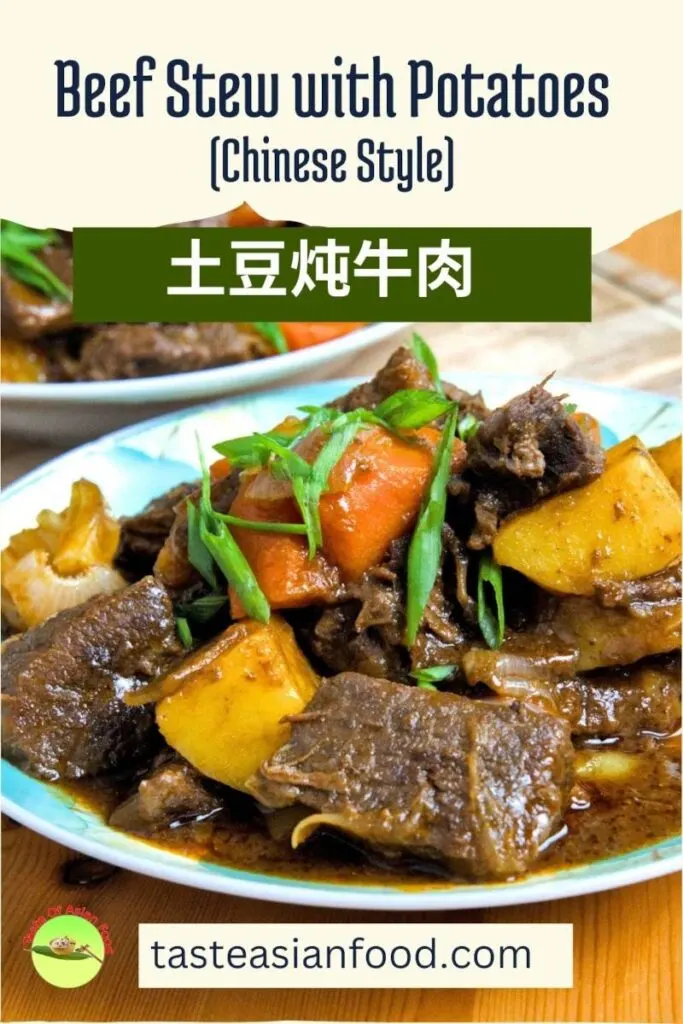
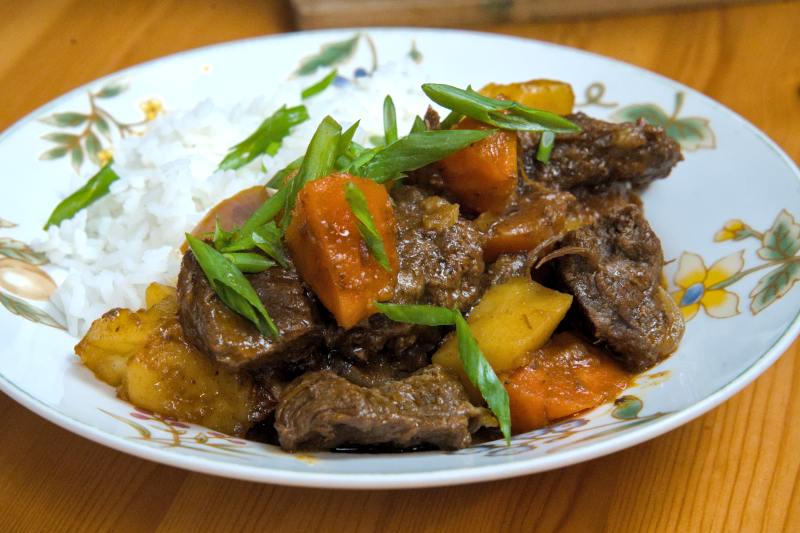
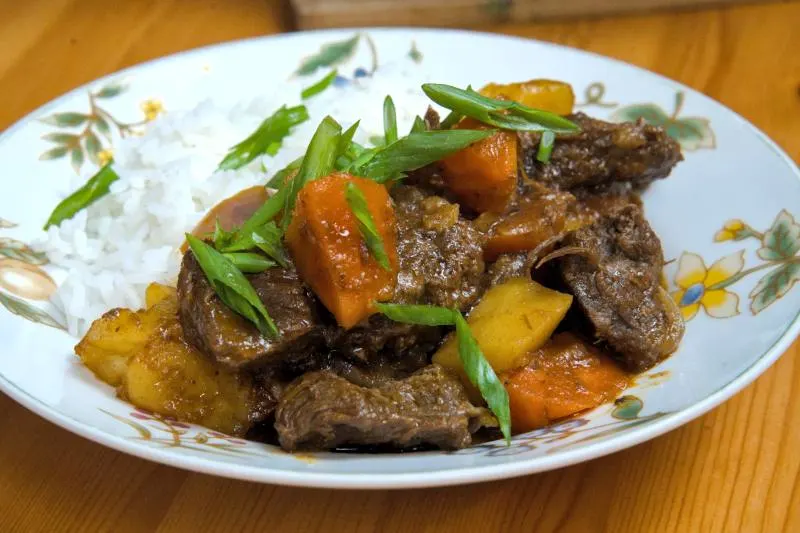
If you walk into a Cantonese household on a Sunday afternoon, there is a high probability you’ll smell the deep, savory aroma of beef stew simmering on the stove. While the world is familiar with the famous “Daikon and Beef Brisket” pairing, my kitchen almost always smells like Cantonese Beef Stew with Potatoes.
It’s the ultimate “fridge-raid” comfort food. Potatoes and carrots are always there, waiting to be transformed into a thick, starchy gravy that daikon simply cannot replicate.
Why this version? While daikon provides a refreshing, watery sweetness, potatoes act as a natural thickener. As they simmer, they release just enough starch to turn the braising liquid into a luxurious glaze that clings to every piece of beef.
Note: This post may contain affiliate links. Please read my privacy policy for more info. I may receive commissions for purchases made through links in this post. As an Amazon Associate, I earn from qualifying purchases.
The Secret is in the “Umami” Foundation
The backbone of this dish is Chu Hou Sauce. If you aren’t familiar with it, think of it as the more sophisticated, savory cousin of Hoisin. It carries a much deeper, earthy funk that is essential for red-cooked meats.
The Pro Secret: I always add a tablespoon of tomato paste. Traditionalists might raise an eyebrow, but the acidity in the tomato cuts through the heavy fermented beans and helps tenderize the beef fibers. It doesn’t make the stew taste like Italian pasta sauce; it simply makes the beef taste “beefier.”
Mastering the Sear: Don’t Rush the Browning
One of the biggest mistakes I see in home-cooked stews is “grey beef.” If you throw wet beef into a lukewarm pan, it steams instead of searing.
- The Dryness Factor: I always let my beef cubes sit in a mesh colander for 10 minutes, then pat them dry with paper towels.
- The Sound of Success: You want to hear a loud sizzle the moment the beef hits the oil.
- The Reward: That dark brown crust (the Maillard reaction) isn’t just for looks; those caramelized proteins dissolve into the sauce later, providing the “dark” color and rich mouthfeel Cantonese stews are known for.
Why Patience is Your Best Ingredient
You cannot rush a good braise. When working with Beef Chuck or Brisket, you are waiting for collagen to turn into gelatin. This transformation happens slowly between 160°F (71°C) and 200°F (93°F).
If you boil the stew too hard, the muscle fibers will tighten and become “stringy.” I keep my stove at the lowest possible setting where small bubbles break the surface gently. If you have 3 hours, use them. The difference between a 90-minute stew and a 3-hour stew is the difference between “chewy” and “melting.”
Timing the Vegetables for the Perfect Texture
There is nothing worse than a “mushy” stew where the potatoes and carrots have disintegrated.
- The Staggered Entry: I never add my potatoes and carrots at the beginning. They only need about 30 minutes.
- The Fork-Tender Test: You want the potatoes to be soft enough to crush with your tongue, but solid enough to be picked up with chopsticks.
- The Onion Nuance: Adding the onions with the potatoes (rather than at the start) allows them to retain a bit of their sweetness and structure, providing a nice contrast to the soft beef.
Troubleshooting: What if my sauce is too thin?
In Cantonese cooking, we look for the consistency when the sauce should coat the back of a spoon.
- The Fix: If your stew looks like soup at the end, don’t add cornstarch. Instead, take the lid off and turn the heat up to medium for the last 10 minutes. This reduces the liquid and concentrates the sugars, giving you that high-gloss finish seen in professional Cantonese restaurants.
Making it Your Own
This stew is a canvas. If you find yourself without potatoes, use taro or even pumpkin. If you don’t have Chu Hou sauce, a mix of Hoisin and additional sugar will get you 90% of the way there. The goal is a balance of salt, fermented depth, and that unmistakable “slow-cooked” soul.
Ready to Cook?
I have laid out the exact measurements and technical steps in the recipe card below. Whether you’re using a stovetop or a slow cooker, these proportions are tested to give you a perfect result every time.
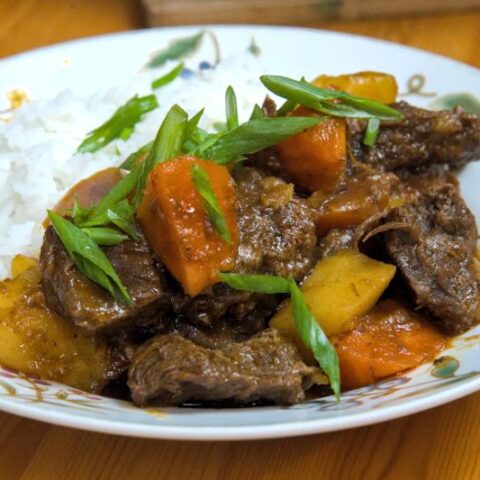
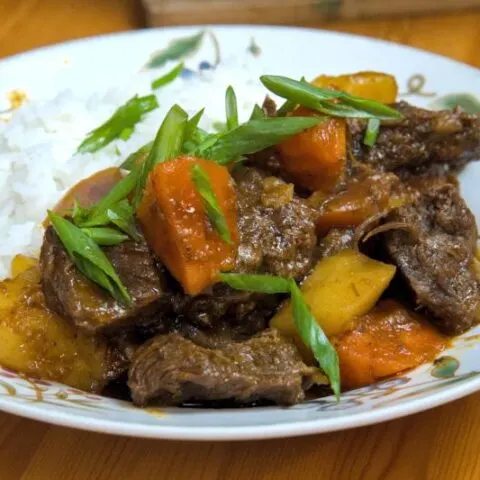
Authentic Chinese Beef Stew with Potatoes
A soulful, one-pot Cantonese classic featuring tender beef chuck and potatoes braised in a rich, savory Chu Hou sauce
Ingredients
Main Ingredients
- 750 g beef chuck, cut into 1–1½ inch cubes, silver skin removed
- 1 medium potato (~200 g), large chunks
- 1 medium carrot (~120 g), large chunks
- 1 medium onion, large chunks
Aromatics
- 3 cloves garlic, smashed or lightly chopped
- 1-inch ginger, thinly sliced
- 1 white scallion, cut into 2-inch pieces
Sauces & Seasonings
- 1.5 tbsp light soy sauce
- 1 tbsp oyster sauce
- 1.5 tbsp Chu Hou sauce (or Hoisin sauce as a substitute)
- 1 tbsp Shaoxing wine
- 1 tbsp tomato paste
- 1 tsp sugar
- 1/4 tsp ground white pepper
- Salt, to taste
Others
- 1.5 cups water (360 ml)
- Green scallion, finely sliced for garnish
Instructions
- Sear the Beef: Pat beef dry. Heat oil in a heavy pot and brown beef cubes in batches. Remove and set aside.
- Cook Aromatics: In the same pot, sauté garlic, ginger, and white scallion until fragrant.
- Add Sauces: Lower heat. Add light soy sauce, oyster sauce, Chu Hou sauce, Shaoxing wine, tomato paste, sugar, white pepper, and a light pinch of salt. Stir to combine.
- Simmer Beef: Return beef to the pot. Add water until halfway covering beef. Bring to gentle boil, then reduce heat to low. Simmer 2–3 hours until beef is nearly tender.
- Add Vegetables: Add potatoes, carrot, and onion. Simmer 30 more minutes until vegetables are tender but firm.
- Finish: Reduce sauce to desired thickness. Adjust seasoning. Garnish with green scallions and serve with rice or noodles.
Notes
Quick Tips:
- Sear beef before slow cooking for richer flavor.
- Substitute Hoisin sauce for Chu Hou sauce if unavailable.
- Serve with steamed rice, noodles, or buns.
Recommended Products
As an Amazon Associate and member of other affiliate programs, I earn from qualifying purchases.
-

 ThermoPro TP03A Digital Instant Read Meat Thermometer Kitchen Cooking Food Candy Thermometer for Oil Deep Fry BBQ Grill Smoker Thermometer
 -
 Instant Pot DUO60 6 Qt 7-in-1 Multi-Use Programmable Pressure Cooker, Slow Cooker, Rice Cooker, Steamer, Sauté, Yogurt Maker and Warmer
 -

 MICHELANGELO 12 Inch Granite Frying Pan Nonstick, Ultra Nonstick Frying Pans with Non toxic Stone Coating, Nonstick Skillet with Lid, Granite Rock Pan 12 Inch, Ceramic Induction Skillet - Blue
Nutrition Information:
Yield: 3 Serving Size: 1Amount Per Serving: Calories: 590Total Fat: 17gSaturated Fat: 7gUnsaturated Fat: 10gCholesterol: 245mgSodium: 822mgCarbohydrates: 22gFiber: 3gSugar: 6gProtein: 84g
This data was provided and calculated by Nutritionix on 17/1/2026
Prefer to watch?
I’ve recorded a quick tutorial showing how to master the sauce base and ensure your beef stays meltingly tender.
Frequently Asked Questions:
1. Can I make this ahead of time?
Yes! Like most stews, this tastes even better the next day as the flavors meld. It stays fresh in the fridge for up to 3 days.
2. Why is my beef still tough?
Toughness usually results from rushing the process. If it’s tough, it needs more time. Connective tissue only breaks down at low temperatures over long periods.
3. What should I serve this Cantonese beef stew with?
While steamed jasmine rice is the classic choice, this stew is incredible served over wide rice noodles (Ho Fun) or even with a side of crusty baguette to soak up the beef gravy.
More Cantonese Comfort Dishes
- Hong Shao Rou: For those who love melt-in-your-mouth pork belly.
- Chicken and Broccoli Stir-Fry: A 15-minute weekday savior.
- Chinese Watercress Soup: The perfect light pairing for this heavy stew.
M Kong
Friday 23rd of January 2026
Can I use my pressure cooker to prepare this dish?
KP Kwan
Friday 23rd of January 2026
Yes, you can use a slow cooker for about 6 hours, slow cook hight mode.
Steve
Tuesday 20th of January 2026
Can this be made in a slow cooker? If so, which setting & for how long?
KP Kwan
Tuesday 20th of January 2026
Yes, you can use a slow cooker for about 6 hours, slow cook hight mode
vito
Sunday 18th of January 2026
can black vinegar be added for more flavor? how much? some chefs recommend after drying cubes to dust w cornstarch to draw out moisture and make crispier. what do u think?........ u show slow cooker buy no directions,,how long on low setting?
KP Kwan
Tuesday 20th of January 2026
I once used the slow cooker on slow cook high mode, which automatically runs for six hours, and it worked really well. Adding black fungus is definitely a great idea too. It adds a nice contrast in texture and makes the dish even more interesting
KP
Sunday 18th of January 2026
Hi, this is KP Kwan. I’m delighted to see you here in the comment section after reading my recipe. I’ll be happy to answer any questions or comments as soon as possible.