
I had dinner at a noodle house near my home that specializes in Sichuan mala noodles. Since I can’t handle very spicy food, I decided to try one of their specialties—tomato soup noodles.
I was glad I made that choice because it suited my taste perfectly. The soup base was mainly made from tomatoes and pork broth, with just a gentle touch of Sichuan flavor.
Since I couldn’t figure out the exact seasoning used by the boss from Chongqing, China, understandably his trade secret, I used that experience as inspiration to develop my own version of tomato soup noodles.
Note: This post may contain affiliate links. Please read my privacy policy for more info. I may receive commissions for purchases made through links in this post. As an Amazon Associate, I earn from qualifying purchases.
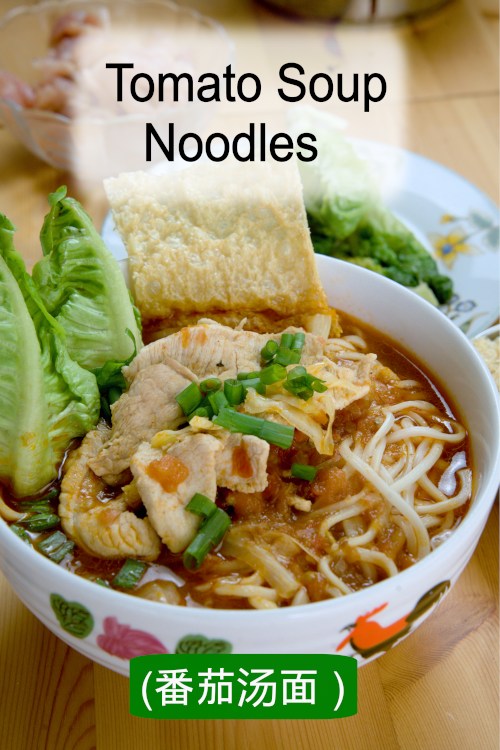
1. Why This Soup Base Is So Flavorful (and Why This Recipe Works)
The soup base is the heart of any noodle soup, and in this recipe, it is where most of the flavor really comes from.
I built it around three key layers that work naturally together.
- First, the homemade pork broth creates a deep, clean umami foundation. It gives the soup richness and body, making it feel both comforting and satisfying. If you prefer, you can also use beef or chicken broth, depending on what you have on hand.
- Next, fresh tomatoes, onions, and garlic turn that simple broth into something much more interesting. The tomatoes bring natural sweetness and a light acidity, while the onions and garlic add aroma and depth. Once they are cooked down properly, everything blends into the broth and becomes smooth, balanced, and full of flavor.
- Finally, I add a small amount of Sichuan mala soup base. It brings a gentle spicy note that does not overpower the tomatoes, but instead lifts the overall flavor and makes the soup more distinctive than a typical tomato noodle soup.
When these three elements come together, rich broth, fresh aromatics, and a touch of mala spice, the result is a bowl of noodles that is flavorful, balanced, and a little addictive. It is quite different from the more traditional tomato noodle soups you might find in Hong Kong or Macau, and that is exactly what makes it special.
2. Ingredients required for the recipe
Most of the ingredients are probably already in your kitchen pantry.
Noodles
This recipe works well with almost any type of noodles, including rice noodles, wheat noodles, Chinese egg noodles, and even macaroni or spaghetti.
Garlic and onions
These are essential in Chinese cooking for aroma. Chop them coarsely and sauté at the beginning to build the flavor base.
Tomatoes
Ripe, sweet red tomatoes are the key ingredient. Tomato paste or puree will enhance the flavor, and ketchup can be used as a backup if needed.
There are different ways to prepare the tomatoes. The most common method is to dice them and cook with garlic, onion, and spring onion.
In my version, I prefer a smoother soup, so I roughly chop the tomatoes until they almost turn into a paste before adding them to the wok.
You don’t need to remove the tomato skin. But if you prefer a smoother texture, you can blanch them briefly in boiling water for about 20 seconds after scoring a cross on the skin, then peel them easily.
Broth
Homemade pork broth gives the best flavor, but store-bought chicken or vegetable stock also works well. I don’t recommend using plain water, as it lacks depth.
Egg (optional)
Although I didn’t include egg in this version, you can add it if you like. Either drizzle beaten egg into the soup at the end or add cooked scrambled eggs separately.
Mushrooms (optional)
Enoki mushrooms add a nice texture, but button mushrooms or dried shiitake also work well.
Cabbage
Slice the cabbage thinly. It adds a crunchy contrast to the soft noodles.
Meat
I use pork slices, but chicken or beef works just as well. Slice thinly and marinate with salt, white pepper, cornstarch, and oil for about 15 minutes.
3. The seasoning ingredients
There is no need to use a complicated set of seasoning ingredients. I prefer to stick to the basic seasoning, which includes light soy sauce, sesame oil, ground white pepper, salt, and sugar.
I added some Sichuan hotpot soup base to give my tomato soup a spicy kick. The soup base is made with a combination of Sichuan herbs and spices. While making the base from scratch would be too time-consuming, this shortcut is to get a pack of the store-bought Sichuan soup base (麻辣烫底).
4. The detailed cooking process for the tomato soup noodles:
You can use any noodles for this recipe. However, for the best results, I picked noodles that could absorb the soup’s flavor effectively, as this would enhance the overall taste. Since different noodles have varying cooking times, please refer to the instructions on the packaging to cook the noodles until al dente.
- Heat some vegetable oil in a wok or a large saucepan.
- Then, add the chopped onion and sauté until fragrant and translucent.
- Halfway through cooking the onion, add the chopped garlic.
- After washing the fresh tomatoes, chop them until they are nearly a paste. If making a large batch, use a blender.
- Add the fresh tomatoes and the store-bought tomato paste.
- Pour the broth and boil over medium heat until it becomes a creamy tomato soup.
- Add all the seasonings (refer to the recipe below) to the tomato soup.
- Add to the Sichuan soup base according to the spiciness you prefer.
- Add the shredded cabbage.
- Once done, stir in the meat slices and wait for them to cook through.
- Do a taste test to decide whether to adjust the seasoning and saltiness.
- Finally, place the cooked noodles in the bowl and pour the tomato soup.
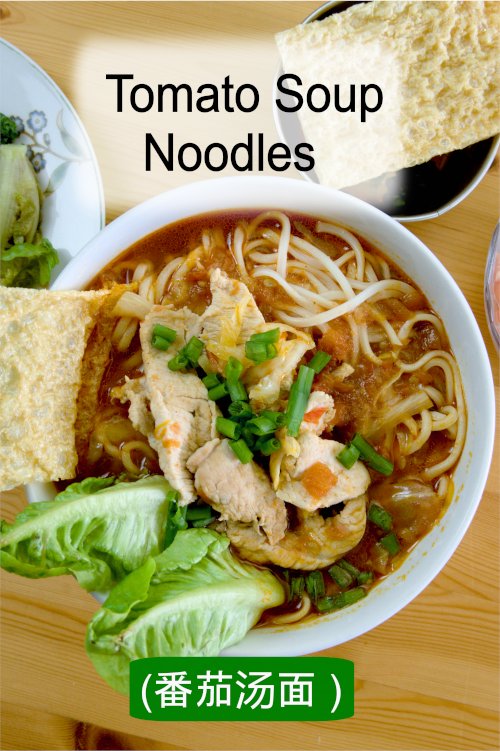
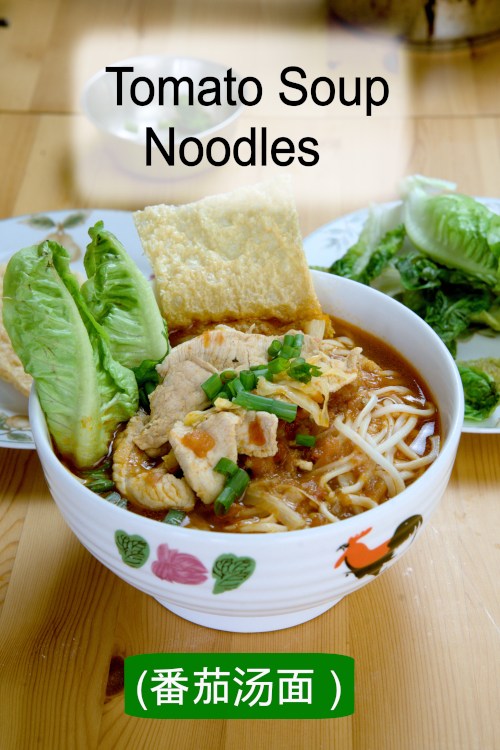
- Garnish with some chopped green onions. It is topped with leafy vegetables and a piece of beancured skin. (optional)
5. Cooking Tips for the Best Tomato Soup Noodles
Here are a few simple tips that can help you get a better result when making this dish at home.
- First, give the tomatoes enough time to cook down properly. The longer they simmer, the more they break down and blend into the soup. This is what creates a natural sweetness and a richer, more cohesive broth.
- Second, do not rush the onion and garlic step. Sauté them until they are fragrant and lightly translucent, since this builds the aromatic base of the entire soup.
- Third, adjust the consistency of the soup to your preference. If you want a deeper, more concentrated flavor, let it simmer a little longer so it reduces slightly. If you prefer something lighter, simply add a bit more stock.
- Fourth, go easy on the Sichuan soup base at first. It can be quite strong, so start with a small amount, taste, and adjust gradually. This helps the mala flavor enhance the soup without taking over.
- Finally, cook the meat slices gently. They only need a short time in the hot soup, and overcooking will make them lose their tenderness.
With these small adjustments, you can easily fine-tune the soup to match your own taste.
6. Other Chinese noodles that you will love
If you enjoy this tomato noodle soup recipe, I’d like to suggest some other noodle dishes for you to try:
- Try the longevity noodles to cook something for a special occasion such as Chinese New Year or a birthday party.
- Here is a detailed explanation of how to prepare authentic Hong Kong-style wonton soup noodles.
- The Mee Rebus Malaysian-style noodle is perfect for trying something different.
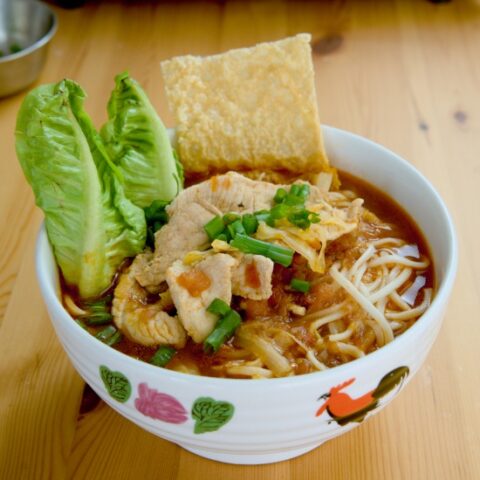
Tomato soup noodles
A flavorful tomato soup noodles made with homemade stock, fresh tomatoes, and a touch of Sichuan flavor. It's an irresistible flavor combination.
Ingredients
Ingredients A (marinate)
- 100g pork slices
- 1/8 tsp salt
- Dash of ground white pepper
- 1/4 tsp cornstarch
- 1/2 tsp oil
Ingredients B
- 300g noodles (weight after cooked)
- 1 small onion, dice
- 2 cloves garlic, chopped
- 150g tomatoes, cut into small dice, then chopped
- 1/2 tbsp tomato paste
- 2 cups broth
- 2 tbsp vegetable oil
- 50g cabbage, cut into thin strips
- Bok choy, beancurd skin, and green onions as topping
Ingredients C (Seasonings)
- 2 tsp light soy sauce
- 1/8 tsp ground white pepper
- 1 tsp sesame oil
- 1/2 tsp salt
- 2 tsp Sichuan soup base
Instructions
- Marinate the meat with ingredients A for 15 minutes.
- Cook the noodles as per the instructions on the packaging.
- Heat the vegetable oil in a wok.
- add the chopped onion and sauté until fragrant and translucent.
- Halfway through cooking the onion, add the chopped garlic.
- Add the chopped tomatoes and tomato paste into the wok..
- Pour the broth and boil over medium heat until the tomato disintegrates.
- Add all the seasonings (Ingredients C)
- Add the shredded cabbage.
- Once done, stir in the meat slices and wait for it to cook through.
- Place the cooked noodles in the bowl and pour the tomato soup.
- Garnish with some chopped green onions. It is best to top with leafy vegetables and a piece of beancured skin. (optional)
Recommended Products
As an Amazon Associate and member of other affiliate programs, I earn from qualifying purchases.
-
 Tuscanini Tomato Paste Tube, 7.5oz (2 Pack) Made with Premium Italian Tomatoes
 -
 Pre-Seasshioned Cast Iron Skillet 2-Piece Set (10-Inch and 12-Inch) Oven Safe Cookware - 2 Heat-Resistant Holders - Indoor and Outdoor Use - Grill, Stovetop, Induction Safe
 -
 Little Sheep Hot Pot Soup Base (Plain), 130 gms (Pack of 5)
Nutrition Information:
Yield: 1 Serving Size: 1Amount Per Serving: Calories: 1304Total Fat: 57gSaturated Fat: 10gTrans Fat: 1gUnsaturated Fat: 43gCholesterol: 103mgSodium: 3028mgCarbohydrates: 134gFiber: 12gSugar: 20gProtein: 63g
This data was provided and calculated by Nutritionix on 1/20/2024
Hello, I also like tomato soup. May I ask where to put eggs in the tomato soup?
If I want to add an egg, I will make a hard-boiled egg separately and add it to the soup. While I can add a beaten egg directly to the soup, that’s not my preferred method.
Hi, Mr. Kwan. I love your kung pao tofu recipe and eat it frequently, and I look forward to trying your tomato soup noodle recipe, too. I am vegan, so I will use vegetable stock and add some refined coconut oil to mimic the fattiness of pork. I will come back and tell you how it turns out. Thanks for your excellent recipes.
Thank you for your support, and all the best in your cooking.
Hi, this is KP Kwan. Thank you for reading my recipe. Please feel free to ask any questions or leave comments. I’ll respond as soon as possible.
@KP Kwan,
@KP Kwan, Thanks for the unique recipe and hoping to try it one day since I have never cooked tomato soup noodles. Will revert to you once I have cooked it and let you know of the outcome. Regards. Ruby