
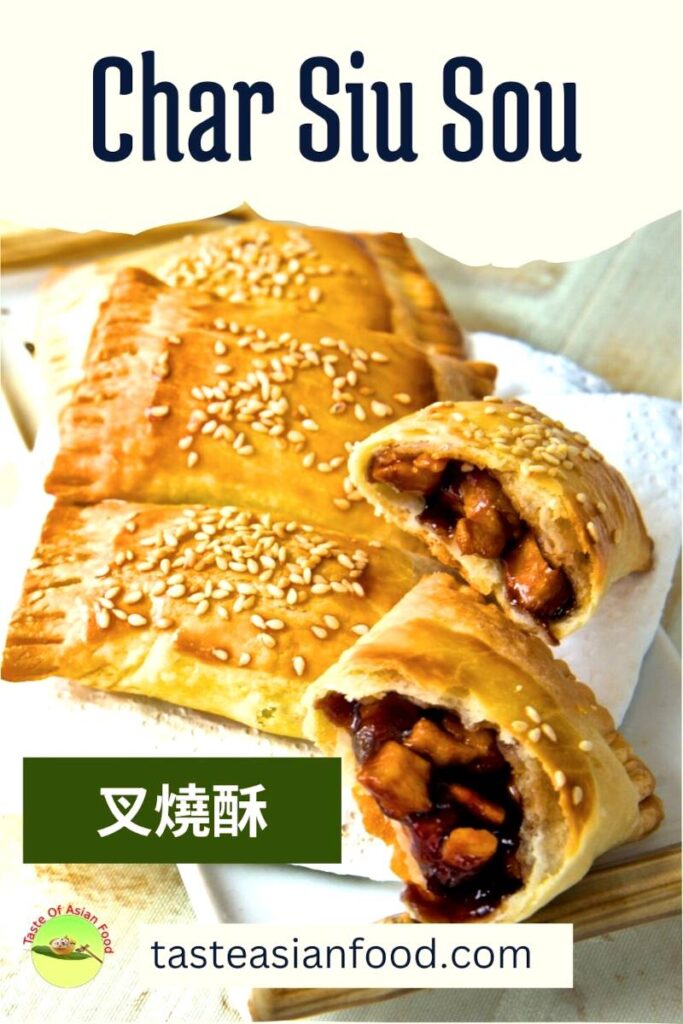
If you love Chinese barbecue pork and enjoy savory Chinese pastries, then Char Siu Sou 叉燒酥 is just right for you. It’s a classic pastry you’ll often find in Chinese cafés and a regular item in most Dim Sum restaurants.
Like many traditional Chinese pastries, Char Siu Sou is made with Chinese-style puff pastry, which tastes quite different from the Western version. The layers aren’t created by butter alone, but with an “oil dough,” a mixture of flour and oil. This is the same type of pastry used for traditional Chinese egg tarts and salted egg pastries.
Coincidentally, it’s also the same pastry used for curry puffs, which I just made a few days ago. So I’m using the leftover pastry I stored in the freezer, which saves me the time of preparing a new batch.
I also decided to make the Char Siu filling myself, which doesn’t take much time at all. You can definitely use ready-made Char Siu if you want to simplify things even further.
Note: This post may contain affiliate links. Please read my privacy policy for more info. I may receive commissions for purchases made through links in this post. As an Amazon Associate, I earn from qualifying purchases.
The Char Siu Filling
You might be wondering… is the filling I use actually real barbecue pork? Well, not exactly. It’s chicken breast pieces stir-fried with soy sauce, oyster sauce, and a few seasonings.
So does it make a difference compared to using authentic barbecue Char Siu? Honestly, the difference is very minimal. Once it’s seasoned with the sauces and baked inside the pastry, most people won’t be able to tell the difference, and it will still taste just as delicious.
How to Make Char Siu Sou
Now, let’s get into the details of how to prepare Char Siu Sou.
Since the dough-making process is easier to follow visually, we’ve added a video for you. You can find it right above the recipe card below 🎥👇.
1. Prepared the Chinese Puff Pastry
Since I’ve already shared the full step-by-step process (and a video too!) in my recent curry puff blog post, I’ll only give a quick overview here. You can check out the detailed instructions by clicking here, which will take you directly to the section where everything is explained clearly.
- Briefly, this pastry is made with two doughs. The first dough is called water dough. As the name implies, it’s made by kneading flour, salt, sugar, and oil together with water. This dough is soft and stretchable, and it’s used to wrap around the oil dough.
- So what is oil dough? It’s simply a dough made by mixing butter with just enough flour to form a smooth, oily dough.
- To assemble the pastry, roll out the water dough and wrap it around the smaller oil dough. Then roll the combined dough flat, and roll it up again, just like making a Swiss roll. The oil inside the oil dough helps separate the layers of water dough, forming those beautiful flaky layers.
- Repeat the “roll flat and roll up” process three times, and you’ll create multiple layers just like Western puff pastry, but with that signature Chinese texture and flavor.
Note:
Traditional Chinese puff pastry uses a combination of butter and lard, which gives it the signature flavor found in Hong Kong dim sum restaurants. For this recipe, I am using only butter because I keep the pastry pork-free, making it more suitable and appealing for everyone.
2. Prepare the filling
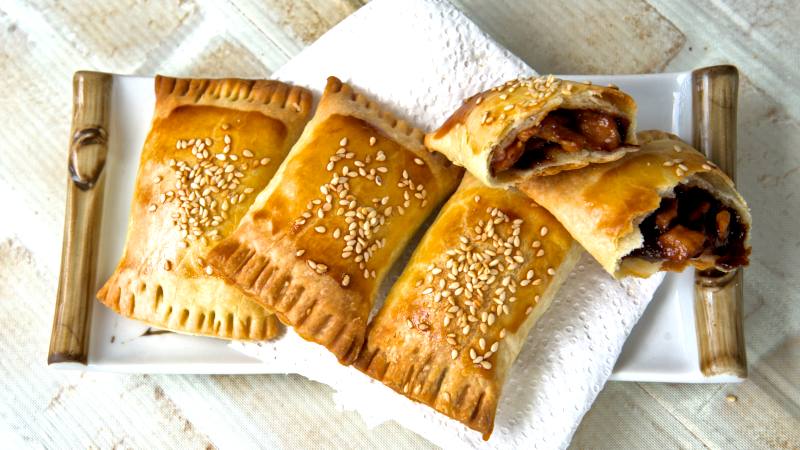
Cut the meat into small pieces and mix it with a savory sauce made of oyster sauce, light soy sauce, and a few other seasonings. Traditionally, this pastry uses Chinese barbecue pork (char siu), but today I’m doing things a little differently.
I’m starting with chicken meat instead of barbecue pork. Why? Because chicken is something almost everyone enjoys, and honestly, once the filling is seasoned and baked inside the pastry, the difference is almost unnoticeable. The only thing you might miss is a tiny hint of smokiness from the barbecue pork. But flavor-wise, it’s really minimal.
- Heat a pan with a little oil over medium heat, then sauté the chopped onions until they turn soft and translucent. After that, add the chicken cubes and stir-fry until they are cooked and turn slightly brown.
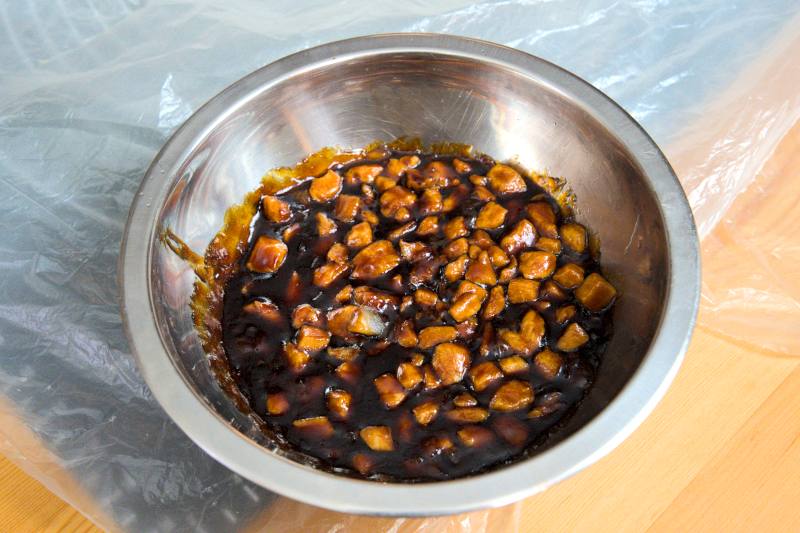
- For the seasoning mixture, I combine sugar, cornstarch, oyster sauce, light soy sauce, dark soy sauce, sesame oil, a splash of Shaoxing wine, and some water. Pour it into the pan and let it simmer over low heat with the meat until the cornstarch thickens the liquid into a glossy gravy.
- The thickness of the gravy is important: check the consistency. When you tilt the pan, the gravy should flow down slowly. Too thin → it will leak out during shaping and baking. Too thick → the filling won’t taste as good and will feel dry
- Once the gravy has reached the right consistency, transfer the filling to a container and let it cool to room temperature. Then chill it in the refrigerator until it’s completely cold. Cold filling is much easier to wrap and helps the pastry stay neat and sealed during baking.
3. Wrap the Filling and Bake
Now comes the final part, wrapping the filling with the pastry and baking it to perfection.
- Start by rolling the pastry into a rectangle. Cut the sheet of pastry into 12 equal pieces. (This recipe makes 12 Char Siu Sou.) The key to rolling out the pastry is to keep it very cold and firm, but still pliable. When the pastry is cold, it won’t stick to the rolling pin and will roll out smoothly. However, if it’s too cold and hard, it may crack when you force-roll it. So aim for that sweet spot.
- Once you’ve rolled the dough into an even sheet and cut it into individual pieces, the pastries will start to soften as they sit at room temperature. To make them easier to handle later, I lightly flour each piece, stack them up, and place them back into the freezer for about 30 minutes. Alternatively, you can separate each of them with a plastic sheet instead of dusting with flour.
- After about half an hour, the pastry should be firm but still bendable. Take the pieces out and roll each one slightly thinner, especially at the two long edges. This helps when folding and prevents the joining ends from becoming too bulky.
- Brush the edges lightly with water or egg white. They act as glue to help seal the pastry.
- Spoon the Char Siu filling into the center of the pastry, then fold the two long sides (the thinner ends you rolled) toward the middle so they meet on top. Gently press the seams to seal them well.
- Flip the pastry over so the seam is on the bottom. Use a fork to press and seal both edges to keep the gravy from leaking during baking. If needed, use a dough cutter to trim the edges neatly.
- Before baking, brush the top with egg wash and sprinkle on some sesame seeds.
Baking
- Preheat the oven to 190–200°C (375–400°F).
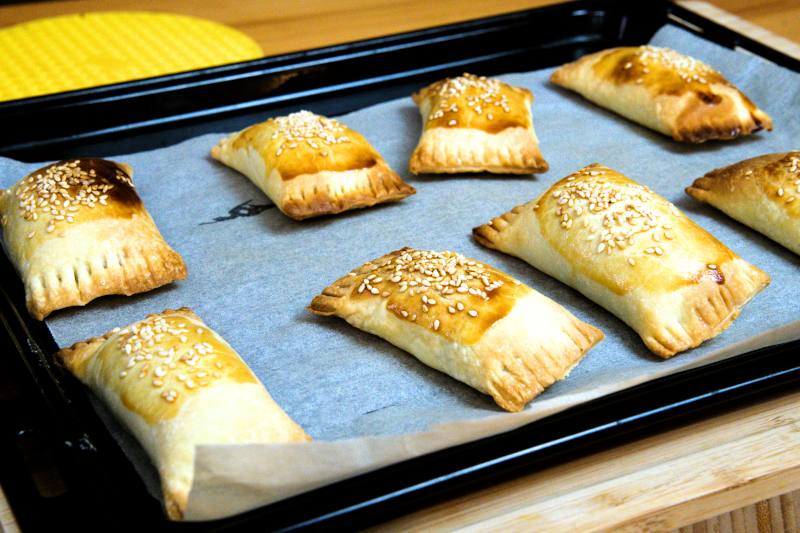
- Arrange the pastries on a baking tray lined with parchment paper.
- For maximum flakiness, I like to place the entire tray back into the freezer again so the pastry is fully chilled before baking. This ensures the layers puff beautifully once they hit the hot oven.
- Bake for 20–25 minutes, or until the pastries turn a deep golden brown.
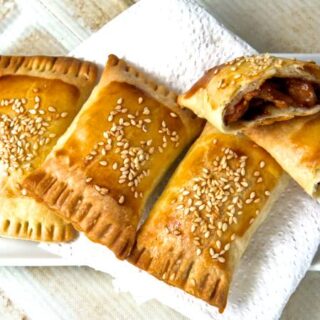
How to Make Char Siu Sou
Make golden, flaky Char Siu Sou at home! This recipe walks you through traditional dim sum pastry, with rich, savory char siu filling and perfect layering.
Ingredients
Ingredients for oil dough
- 90g regular flour (or just enough to bind the butter)
- 60g butter
Ingredients for water dough
- 160g regular flour
- 35g butter
- 15g sugar
- 1/4 tsp salt
- 80ml water (quantity might vary slightly according to the type of flour)
Ingredients for the filling
- 200g chicken breast meat
- 40g onion
- 2 tbsp sugar
- 2 tsp cornstarch
- 2 tbsp oyster sauce
- 1 tbsp light soy sauce
- 1 tbsp dark soy sauce
- 1 tsp sesame oil
- 1 tbsp Shaoxing wine
- 100ml water
- 2 tbsp vegetable oil
Instructions
Make the Chinese Puff Pastry
- Prepare water dough by mixing flour, sugar, salt, oil, and water until smooth.
- Prepare oil dough by mixing flour and butter into a soft dough.
- Wrap the oil dough inside the water dough.
- Roll the dough into a rectangle, then roll it up like a Swiss roll.
- Repeat the rolling and folding process 3 times to create flaky layers.
- Cover and chill the dough until firm.
Prepare the Filling
- Heat oil and sauté onions until soft.
- Add chopped char siu (or chicken) and stir-fry briefly.
- Mix the sauces, sugar, cornstarch, and water, then pour into the pan.
- Simmer until the mixture thickens into a glossy gravy.
- Let the filling cool completely, then chill in the fridge.
Assemble the Pastries
- Roll the pastry into a rectangle (about 12 × 6 inches) and cut into 8 pieces.
- Chill the pieces briefly if they soften.
- Roll each piece slightly thinner, especially the long edges.
- Spoon filling in the center, brush edges with water or egg white, and fold both long sides to meet on top.
- Seal the edges and place seam-side down.
- Brush with egg wash and sprinkle sesame seeds.
Bake
- Preheat oven to 190–200°C (375–400°F).
- Chill the shaped pastries briefly.
- Bake for 20–25 minutes, or until golden brown.
Recommended Products
As an Amazon Associate and member of other affiliate programs, I earn from qualifying purchases.
-
 Pro Dough Pastry Scraper/Cutter/Chopper Stainless Steel Mirror Polished with Measuring Scale Multipurpose- Cake, Pizza Cutter - Pastry Bread Separator Scale Knife (1)
 -
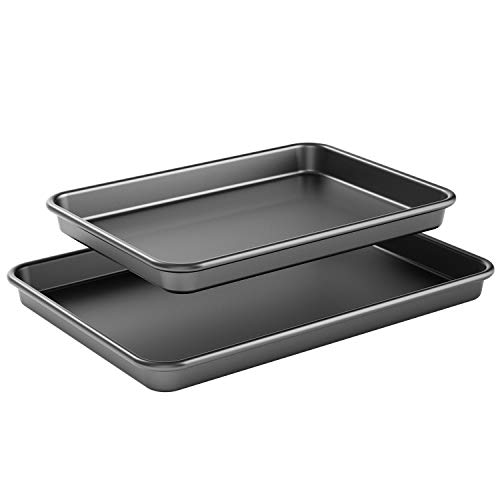 Super Thick 0.7mm Nonstick Cookie Sheet Pan, Metal Baking Tray, 2 Pack Baking Sheet Pans, Large and Medium Cookie Pan Set
 -
 Rolling Pin & Silicon Pastry Mat,Silicone Large Pastry Mat With 19.6" x 15.7",Dough Roller Sleek and Sturdy 11.8" Perfect Match
Nutrition Information:
Yield: 12 Serving Size: 1Amount Per Serving: Calories: 214Total Fat: 12gSaturated Fat: 5gUnsaturated Fat: 7gCholesterol: 32mgSodium: 131mgCarbohydrates: 21gFiber: 1gSugar: 4gProtein: 6g
This data was provided and calculated by Nutritionix on 12//2025
Other Dim Sum Favorites You Should Try
We feature a range of classic dim sum recipes that you can easily make at home on this blog. Here are some favorites you shouldn’t miss:
- Beancurd Skin Roll — A popular dim‑sum dish where savoury pork and shrimp filling is wrapped with tofu-skin (bean curd skin), then fried and steamed, creating a texture that is crispy outside yet tender inside.
- Taro Puff (Wu Gok / 芋角) — A deep‑fried dim‑sum classic: taro-based outer pastry puffed into a light, crispy, golden-brown shell, enclosing a rich, savory filling that melts in your mouth.
- Steamed Pork Bun (Char Siu Bao / 叉烧包) — Soft, fluffy steamed buns filled with sweet-savory char siu pork, perfect for breakfast, brunch, or any dim-sum feast.
Hi, this is KP Kwan. I’m delighted to see you here in the comment section after reading my recipe. I’ll be happy to answer any questions or comments as soon as possible.