
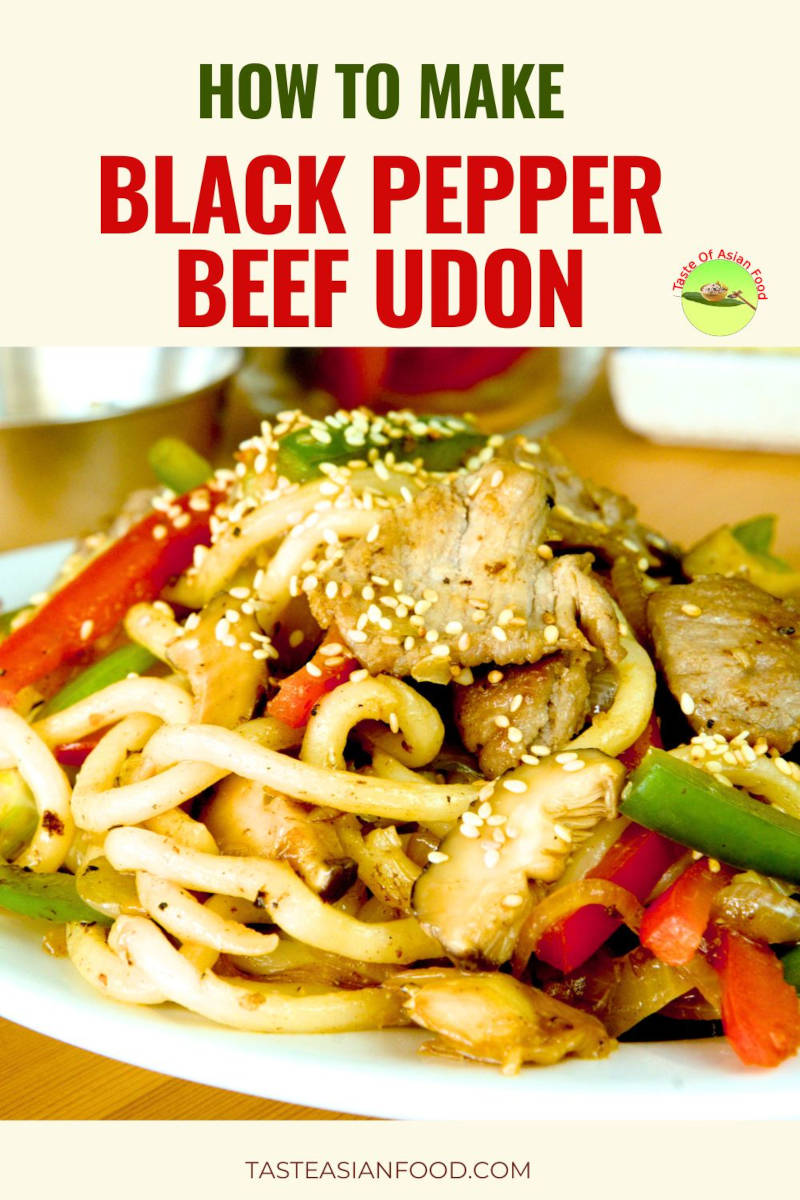
What happens when you combine Japanese noodles, Chinese cooking techniques, and a hint of Western seasoning? You get this flavorful beef udon with black pepper.
This beef udon is a variation of the classic Japanese niku udon with a simple twist by adding freshly crushed black pepper. It adds a subtle heat and aroma that enhances the flavor without overpowering the dish. I’ve made this many times, and it’s always a comforting meal that my family truly enjoys.
Note: This post may contain affiliate links. Please read my privacy policy for more info. I may receive commissions for purchases made through links in this post. As an Amazon Associate, I earn from qualifying purchases.
Why This Recipe Works
- Chewy noodles – Udon noodles have a naturally chewy texture that holds onto the sauce very well.
- Tender beef – The light baking soda marinade helps break down the meat fibers, keeping the beef soft and juicy even after quick stir-frying.
- Separate cooking – Cooking the beef, vegetables, and noodles separately ensures each component keeps its best texture without becoming overcooked or soggy.
- Balanced sauce – The mix of soy sauce, mirin, oyster sauce, and Chinese cooking wine creates a deep, savory base that ties everything together.
- Black pepper lift – Freshly crushed black pepper adds aroma and a gentle heat that elevates the overall flavor without overpowering the dish.
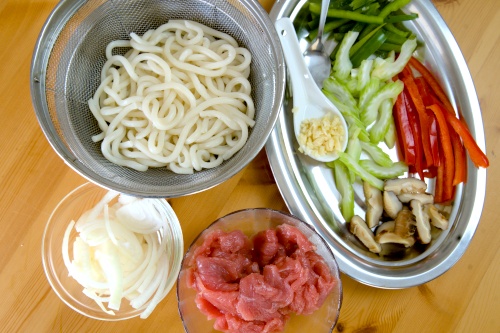
What You’ll Need for This Beef Udon
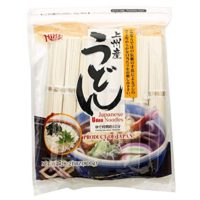
- Udon noodles – Thick, chewy noodles that hold sauce very well and form the base of this dish. Fresh udon is preferred for its soft yet springy texture after stir-frying.
- Beef – Thinly sliced tender cuts such as sirloin, ribeye, or flank steak work best as they cook quickly and stay juicy when properly marinated.
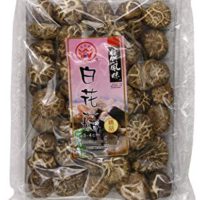
- Vegetables – Bell peppers, celery, and shiitake mushrooms add crunch, freshness, and umami contrast, balancing the soft noodles and beef.
- Aromatics – Garlic and onion build the foundation of flavor. They add fragrance, sweetness, and depth to the stir-fry base.
- Seasonings (fusion sauce + black pepper) – A combination of light soy sauce, dark soy sauce, oyster sauce, mirin, Chinese cooking wine, sugar, and salt creates a rich, savory base. Freshly crushed black pepper adds aroma and a gentle heat.
- Optional add-ins – Sesame oil, green onions, rice vinegar, sesame seeds, chili flakes, snap peas, and bok choy can be added to further enhance aroma, freshness, texture, or heat, depending on personal preference.
Step-by-Step Method for Beef Udon
1. Beef Marination
- Slice the beef thinly across the grain so it cooks quickly and stays tender.
- Place the beef into a bowl and add salt, baking soda, vegetable oil, and cornstarch.
- Mix well until the beef fully absorbs the marinade.
- Let it rest for about 15 minutes before cooking.
2. Ingredient Prep
- Soak the dried shiitake mushrooms in hot water until fully rehydrated and soft. Once soft, cut them into strips.
- Roughly chop garlic so it releases aroma without burning too quickly during stir-frying.
- Slice onion, bell pepper, and celery into thin, even pieces for quick and uniform cooking.
- Mix all seasoning ingredients in a bowl, including light soy sauce, dark soy sauce, oyster sauce, mirin, Chinese cooking wine, sugar, and salt.
- Prepare freshly crushed black pepper and set aside for the final step.
3. Noodle Preparation
- Bring a pot of water to a boil.
- Add udon noodles and gently loosen them with chopsticks.
- Once separated, drain immediately and set aside. This prevents overcooking and keeps the noodles chewy for stir-frying.
4. Searing Beef
- Heat oil in a wok or large skillet over medium-high heat.
- Add the marinated beef in a single layer. Avoid stirring too often so it is nicely browned.
- Remove the beef from the wok and set aside, leaving the oil behind.
5. Cooking Aromatics
- In the same wok, add sliced onions and stir-fry until they start to soften.
- Add garlic and continue cooking until onions become translucent and fragrant. This builds the base flavor of the dish.
6. Stir-Frying Vegetables
- Add bell peppers, celery, and shiitake mushrooms to the wok.
- Stir-fry over medium heat until just fragrant but still slightly crisp.
- Remove the vegetables and set aside.
7. Combining Beef & Sauce
- Return the beef to the wok.
- Pour in the prepared seasoning mixture and stir well to coat the beef evenly.
8. Adding Noodles
- Add the drained udon noodles to the wok.
- Toss continuously so the noodles absorb the sauce and are evenly coated.
9. Final Mix
- Return the cooked vegetables and mushrooms to the wok.
- Add the freshly crushed black pepper.
- Mix everything thoroughly until evenly combined and heated through.
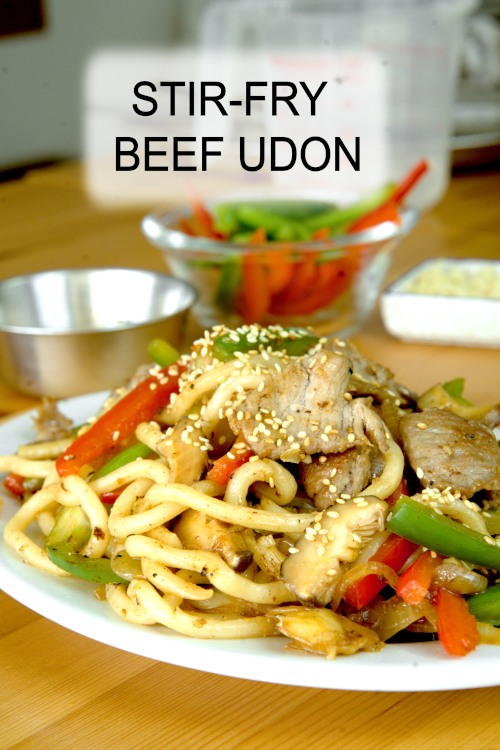
- Transfer to a serving plate immediately. Serve fresh for the best texture and flavor.
Tips for Perfect Beef Udon Stir-fry
Beef slicing – Always slice the beef thinly across the grain so it stays tender and cooks quickly during high-heat stir-frying.
Baking soda control – Use only a small amount of baking soda in the marinade. This is enough to tenderize the beef without causing a bitter taste.
Wok heat – Keep the heat at medium-high to high when searing beef. This helps develop flavor quickly without overcooking the meat.
Cook separately – Always cook beef, vegetables, and noodles separately. This prevents soggy vegetables and ensures each ingredient keeps its best texture.
Vegetable timing – Remove them once they are just cooked to maintain crunch and color.
Noodle handling – Loosen the udon in boiling water, but do not overcook. They will continue cooking slightly during stir-frying.
Black pepper freshness – Crush the black pepper just before adding it to release the full aroma and flavor.
Frequently Asked Questions
Can I use other types of noodles instead of udon?
Yes, you can substitute with thick wheat noodles or even spaghetti. However, udon is preferred because its chewy texture holds the sauce much better and gives the dish its signature bite
Is baking soda safe to use in the beef marinade?
Yes, in small amounts, it is completely safe. It is commonly used in Chinese-style cooking to tenderize meat by slightly breaking down the muscle fibers. Just be careful not to overuse it, as too much can affect the texture.
Can I replace mirin if I don’t have it?
If mirin is not available, you can substitute it with dry sherry, Shaoxing wine, or make it alcohol free. The goal is to add a mild sweetness that balances the savory sauces.
Do I need to use both light and dark soy sauce?
Light soy sauce provides saltiness, while dark soy sauce adds a richer color and slightly deeper flavor. You can still make the dish with just one, but the balance will be slightly different.
Can I skip oyster sauce?
Yes, but oyster sauce adds extra umami and helps round out the overall flavor. If you skip it, you may want to slightly increase the soy sauce or add a pinch more sugar to balance the taste.
Why do the noodles need to be briefly boiled before stir-frying?
This step helps loosen the udon, so they separate easily in the wok. It ensures even coating later and prevents clumping during stir-frying.
Can I prepare this dish ahead of time?
It is best served fresh, as udon noodles tend to absorb sauce and soften over time. However, you can prepare all ingredients in advance, so the final cooking process is very quick.
Can I adjust the black pepper level?
Yes, the black pepper is flexible. You can reduce it for a milder flavor or increase it if you prefer a stronger peppery kick. It is meant to enhance, not overpower, the dish.
If you enjoyed this fusion yaki udon recipe, I have some other similar recipes that I would love to suggest to you:
- If you are a fan of udon, try Japanese curry udon. It’s a delicious and unique dish that you won’t regret trying.
- Another noodle dish that you should try is Taiwanese beef noodles. The flavor of the tender beef, combined with the Taiwanese blend of spices, is delicious.
- If you’re looking for something spicy and distinctively different from Japanese and Chinese noodles, you should try the traditional Thai stir-fry noodle, Pad See Ew.
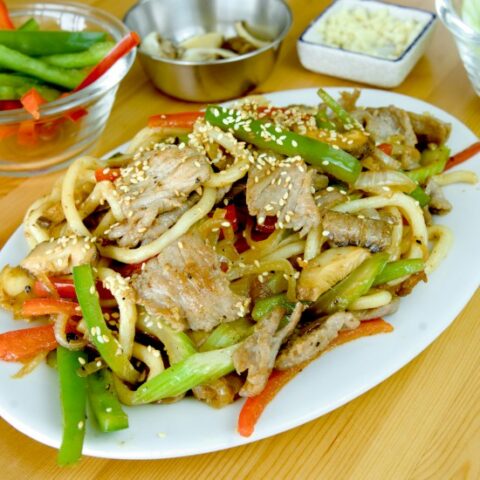
Beef udon recipe with black pepper
Japanese Beef udon recipe with black pepper. It is a yaki udon style stir-fry that can be prepared in minutes.
Ingredients
Ingredients A
- 200g fresh udon noodles
Ingredients B (marinade)
- 125g beef, thinly sliced across the grain
- 1/4 tsp salt
- 1/4 tsp baking soda
- 2 tsp vegetable oil
- 1 tsp cornstarch
Ingredients C (seasonings)
- 2 tsp light soy sauce
- 1 tsp dark soy sauce
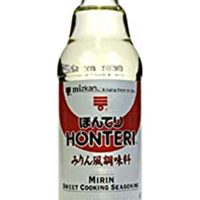
- 1 tbsp mirin
- 2 tsp sesame oil
- 1 tbsp oyster sauce
- 1/2 tsp sugar
- 1/2 tsp salt
Ingredients D (Others)
- 1 tsp crushed black pepper
- 1 tbsp chopped garlic
- 1 medium-sized onion, sliced
- 1 bell pepper. sliced (preferably mixed color for better presentation)
- 1 stalk celery, sliced
- 5 dried shitake mushrooms, rehydrate and cut into strips
- Green onions and toasted sesame seeds to garnish
Instructions
Preparation
- Cut the beef into thin slices across the grain. Marinate with Ingredients B for 15 minutes before cooking.
- Soak the dry shiitake mushrooms in hot water and place something heavy on top to fully submerge the mushrooms. Once the mushrooms are fully rehydrated and soft, cut them into strips.
- Mix all the seasoning ingredients in a small bowl per the recipe. Get ready a tablespoon of freshly crushed black pepper.
Prepare the noodles for stir-frying
- Fill a stock pot with water and bring it to a boil.
- Place them in the boiling water. Use chopsticks to loosen the noodles gently.
- After a few minutes, drain the water using a colander and set the udon noodles aside.
Stir-fry
- Heat some oil in a wok over medium to high heat. Add the beef in a single layer and sear it on each side until it turns golden. Take out the beef and leave the remaining oil in the wok.
- Next, add the onions and stir-fry them for a while. Add the chopped garlic while cooking the onions halfway.
- Once the onions become translucent, add all the vegetables and stir-fry them over medium heat until they turn fragrant. Remove the vegetables from the wok.
- Return the beef to the wok and stir in the prepared sauce. Add the drained udon noodles to the wok and mix them with the beef and sauce.
- Finally, return the vegetables and mushrooms to the wok and mix everything well. Transfer the noodles to a serving plate and garnish with chopped green onions and sesame seeds.
Recommended Products
As an Amazon Associate and member of other affiliate programs, I earn from qualifying purchases.
Nutrition Information:
Yield: 1 Serving Size: 1Amount Per Serving: Calories: 985Total Fat: 54gSaturated Fat: 13gTrans Fat: 1gUnsaturated Fat: 37gCholesterol: 109mgSodium: 3685mgCarbohydrates: 79gFiber: 11gSugar: 19gProtein: 49g
This data was provided and calculated by Nutritionix on 1/9/2024
Hi KP Kwan,
Many thanks for your beef udon recipe but unfortunately dont consume beef due to religious purposes,
You can cook the same way with chicken instead of beef 🙂
Hi, this is KP Kwan. Thank you for reading my recipe. Please feel free to ask any questions or leave comments. I’ll respond as soon as possible.