
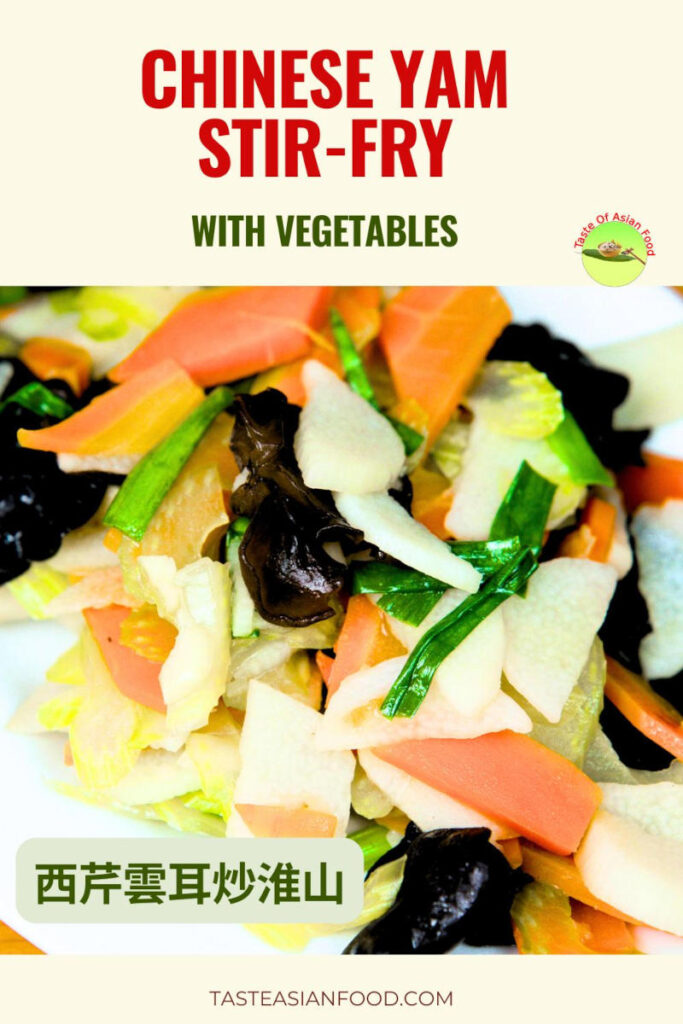
Chinese yam stir-fry with celery and cloud mushrooms might sound unfamiliar to non-Chinese, but it is a very popular side dish in Chinese cuisine. I had it multiple times during my two-week trip to northern Xinjiang. Among all the rich, spicy, and heavily seasoned dishes we had during the journey, this simple non-spicy stir fry stood out for its light, clean, and refreshing flavor.
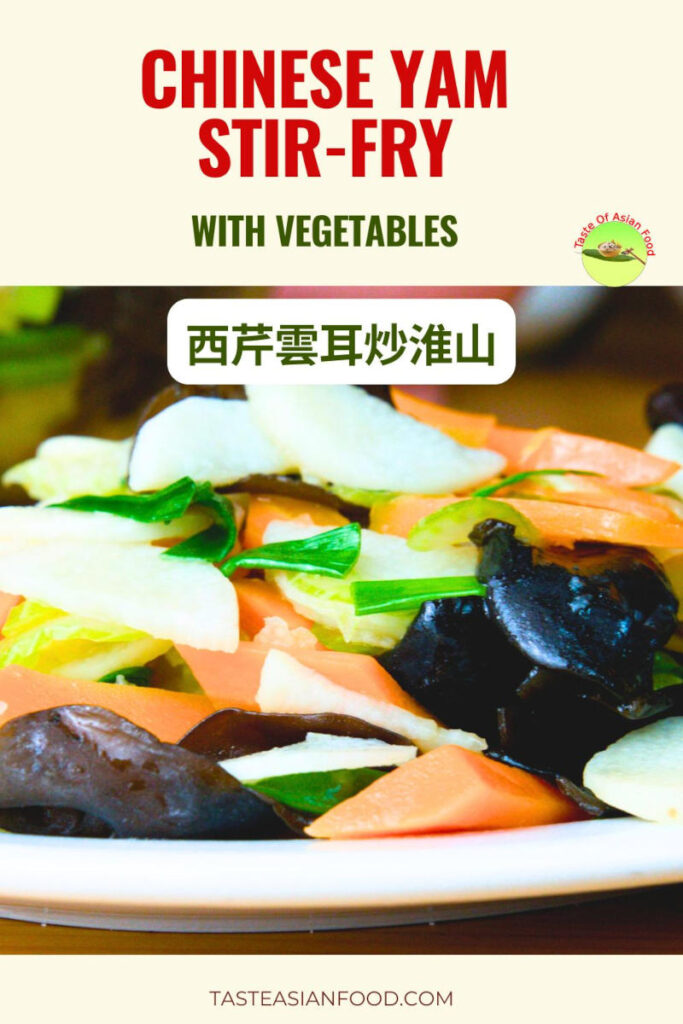
The Chinese yams are tender with a light crunch, the celery added freshness, and the cloud fungus gave the dish a wonderful texture. Altogether, it made a light and refreshing stir-fry that paired perfectly with the stronger-flavored dishes on the table.
Now that I am back home, I can finally recreate this dish in my own kitchen. I hope you will enjoy it as much as we did during our journey through Xinjiang.
Note: This post may contain affiliate links. Please read my privacy policy for more info. I may receive commissions for purchases made through links in this post. As an Amazon Associate, I earn from qualifying purchases.
What is Chinese yam (山药 / 淮山) (shān yào)?
Fresh Chinese yam is a popular root vegetable commonly used in Chinese cooking, especially in soups and stir-fries. It looks like a long sweet potato with rough brown skin, while the inside is smooth and white.
When raw, the texture can feel slightly slippery after peeling and slicing. Once cooked, it becomes tender with a light crunch that makes it very enjoyable to eat.
Compared to potatoes or sweet potatoes, Chinese yam has a much more delicate flavor. It tastes mild and refreshing, and it absorbs seasonings very well without overpowering the dish.
Why This Recipe Works
This dish works so well because of three key elements: texture, flavor balance, and cooking method.
- First, Chinese yams are soft with a gentle crunch, celery brings a fresh crisp bite, cloud mushroom adds that springy chewy texture, and carrot gives a light sweetness with a bit of firmness. Every bite feels a little different, which keeps the dish interesting even though the ingredients are simple.
- Second, the flavor is light and clean. This is exactly why it works so well as a side dish, especially when served with richer, spicier, or mala-style dishes with chili oil. It helps balance out heavier flavors on the table.
- Third, the brief blanching step gently pre-cooks each ingredient so they all finish at the same time in the wok. It also helps preserve color, prevents overcooking, and ensures the final dish tastes fresh and crisp.
Wear a glove when peeling Chinese yam
Peeling Chinese yam can cause itchiness and skin irritation for some people, so wearing a glove is the easiest way to avoid that discomfort.
Why does this happen? Chinese yam contains a natural sticky sap that contains calcium oxalate crystals. These tiny needle-like crystals are the main reason for itching, redness, and a tingling sensation. It is not harmful, just a bit uncomfortable for sensitive skin.
Why blanch the vegetables before stir-frying?
Chinese yam (山药) is slippery and slightly sticky when it is raw. If you toss it straight into the wok, it can cook unevenly. A quick blanch helps reduce that stickiness and makes everything easier to stir-fry.
A short blanch gives the yam a gentle head start in cooking. That way, when it goes into the wok later, it turns tender but still keeps a nice clean bite instead of going mushy.
Celery and carrots are often blanched as well, so all the vegetables finish cooking simultaneously. The result is a more balanced stir-fry where everything feels crisp, tender, and well-combined.
Detailed Step-by-Step Instructions – Chinese Yam stir-fry
1: Prepare the Chinese Yam
It is recommended to wear gloves when handling the Chinese yam, as the sap released from the yam may cause itchiness or mild skin irritation in some individuals.
- Using a vegetable peeler, peel away the skin of the Chinese yam. Once peeled, cut the yam lengthwise into halves. Then slice it thinly into half-moon pieces about 3mm thick.
- Bring a pot of water to a rolling boil. Add all the sliced Chinese yam into the boiling water and blanch for about 1 minute. During this time, the yam slices will start to become slightly translucent at the edges.
- Once done, remove the yam slices from the water and drain well. Set aside.
2: Prepare the Cloud Mushroom (云耳)
- Place the dried cloud fungus into a bowl of room-temperature water and soak for about 20 minutes, or until fully expanded and hydrated.
- Once softened, rinse them thoroughly under running water several times to remove any dirt or impurities. Drain away the excess water and set aside.
Note:
- You can also use wood ear mushrooms (木耳) for this recipe. They are larger, thicker, and firmer than cloud mushrooms. After soaking, tear them into smaller pieces as they are too large for stir-frying.
- Cloud mushrooms and wood ear mushrooms are also referred to as black fungus in some English translations.
3: Prepare the Vegetables
- Peel the carrot and slice it into thin pieces. For a more restaurant-style presentation, you may cut the carrot into diamond-shaped slices, which is commonly seen in Chinese cooking. Please refer to the video below the recipe card for how to cut them into a diamond shape.
- Next, slice the celery diagonally into thin slices. Prepare the green onions by cutting them into sections about 3–4 cm in length. Set aside for later use.
4: Blanch the Vegetables
- Using the same pot of boiling water that was used for the Chinese yam slices, blanch the carrot and celery for about 2 minutes, or until they become crisp-tender while still retaining their vibrant color. Remove both vegetables and drain well.
- Next, add the hydrated cloud mushrooms into the boiling water and blanch briefly until the water returns to a boil again, which takes about 30 seconds. Remove and drain thoroughly.
5: Prepare the Aromatics and Sauce
- Thinly slice the garlic and prepare the ginger slices.
- Next, prepare the stir-fry sauce by combining salt, sugar, and light soy sauce with 2 tablespoons of water or stock. Heat the sauce gently on the stovetop or in the microwave until the sugar has fully dissolved.
- In a separate small bowl, combine 1 teaspoon of cornstarch with 1 tablespoon of water to form a cornstarch slurry. Stir well and set aside. This slurry will later be used to lightly thicken the sauce and give the dish a glossy finish.
6: Stir-Fry the Chinese yam with vegetables
- Heat 2 tablespoons of cooking oil in a wok or large frying pan over medium heat.
- Add the sliced garlic and ginger and sauté gently until fragrant. Keep the heat at low to medium to avoid burning the garlic.
- Once aromatic, turn the heat up to high and add the Chinese yam, celery, carrot, and cloud fungus into the wok. Continue stir-frying over medium-high heat for about 1–2 minutes.
- Pour in the prepared stir-fry sauce and toss everything together.
- Taste the dish and adjust the seasoning according to your preference.
- Give the cornstarch slurry a quick stir before pouring it into the wok. Continue stirring briefly until the sauce lightly thickens and coats the vegetables evenly.
- Finally, add the green onion sections and give everything a few quick stirs. Dish out immediately and serve hot.
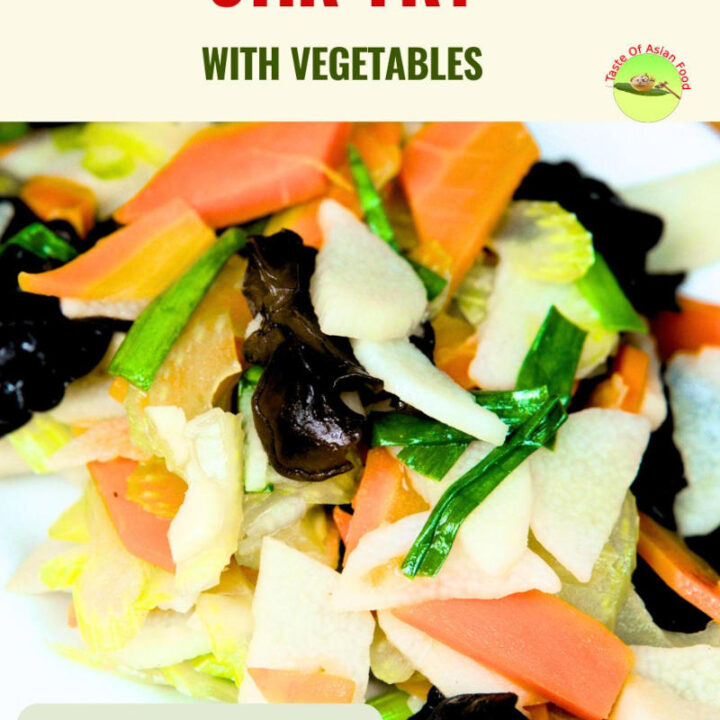
Chinese Yam Stir-fry with celery and cloud mushrooms
Stir-fried Chinese yam with celery, carrot, and wood ear mushrooms served on a white plate, light and glossy Chinese vegetable dish
Ingredients
Main Ingredients
- 250g Chinese yam (山药 / 淮山)
- 15g dried cloud fungus/wood ear fungus (云耳)
- 130g carrot
- 230g celery
- 3 stalks green onion
- 3 cloves of garlic
- 4 thin slices of ginger
- 2 tbsp cooking oil
Stir-Fry Sauce
- 1 tsp salt
- 1/2 tsp sugar
- 1 1/2 tbsp light soy sauce
- 2 tbsp water or stock
- 1 tsp cornstarch
- 1 tbsp water
Instructions
- Peel and slice Chinese yam into 3mm half-moon slices. Blanch for 1 minute and drain.
- Soak dried cloud fungus for 20 minutes until expanded. Rinse and drain.
- Slice carrot, celery, green onion, garlic, and ginger.
- Blanch carrot and celery for 2 minutes until crisp-tender. Blanch cloud fungus for 30 seconds. Drain well.
- Mix salt, sugar, light soy sauce, and water or stock to prepare the stir-fry sauce. Prepare cornstarch slurry separately.
- Heat oil in a wok. Sauté garlic and ginger until fragrant.
- Add Chinese yam, carrot, celery, and cloud fungus. Stir-fry over high heat for 1–2 minutes.
- Add stir-fry sauce and adjust seasoning if needed. Stir in cornstarch slurry until lightly thickened.
- Add green onion sections, toss briefly, then serve hot.
Recommended Products
As an Amazon Associate and member of other affiliate programs, I earn from qualifying purchases.
-
 Cooks Standard 02520 Quart Classic Stainless Steel Stockpot with Lid, 12-QT, Silver
 -
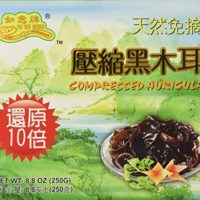 Premium Dried All Natural Compressed Chinese Auricularia Black Fungus Mushroom (Black Wood Ear Mushroom) - 8.8 Oz -- 10 Times Volume Yield After Soaking
 -
 Cooks Standard 02520 Quart Classic Stainless Steel Stockpot with Lid, 12-QT, Silver
Nutrition Information:
Yield: 3 Serving Size: 1Amount Per Serving: Calories: 230Total Fat: 10gSaturated Fat: 1gUnsaturated Fat: 9gSodium: 1303mgCarbohydrates: 35gFiber: 6gSugar: 5gProtein: 3g
This data was provided and calculated by Nutritionix on 5/28/2026
Frequently Asked Questions About Chinese Yam Stir-Fry
If I do not have Chinese yam, can I use other ingredients as a substitute?
Yes. Some good substitutes include potato, lotus root, jicama, daikon radish, or water chestnuts. Each substitute gives a slightly different texture, but lotus root is the closest in terms of crunch and texture.
I understand that some recipes call for oyster sauce. Can I use that?
Yes, you can. Oyster sauce adds a richer and slightly sweeter umami flavor to the dish. However, this version intentionally keeps it light and refreshing, so using only light soy sauce gives a cleaner taste.
I find that my skin gets irritated when I slice and cut the Chinese yam. What should I do?
Chinese yam contains natural compounds that may cause itchiness or mild skin irritation for some people. Wearing gloves while peeling and slicing is the easiest solution. If irritation occurs, wash your hands with soap and cold water, or rub a little vinegar or lemon juice on the affected area to help reduce the itchiness.
Can I skip blanching the vegetables and Chinese yam?
Technically, yes, but blanching is highly recommended. It helps maintain the vegetables’ color, texture, and crispness while also reducing the slimy texture of the Chinese yam. Blanching also shortens the final stir-frying time and helps everything cook evenly.
Can I turn this into a main dish by adding meat?
Absolutely. Thinly sliced chicken, beef, pork, or even shrimp work very well in this dish. Simply marinate the meat lightly with soy sauce and cornstarch, stir-fry it separately, then combine it with the vegetables.
Can I add chili to make it spicy?
Yes. You can add sliced fresh chili, dried chili, or even a little chili oil if you prefer a spicier version.
I only have a small stove. Is a powerful stove necessary for stir-frying?
A high-powered stove helps achieve better wok hei and faster cooking, but you can still make this dish successfully on a regular home stove. The key is not to overcrowd the pan and to stir-fry quickly over the highest heat your stove can provide.
How do I store leftover Chinese yam?
If you have extra uncooked Chinese yams, wrap them with a paper towel or plastic wrap and store them in the refrigerator.
Is the slimy texture of Chinese yam harmful since it can irritate the skin?
No, the slimy texture is completely normal and safe to eat. The irritation only happens when the raw sap touches sensitive skin due to naturally occurring compounds in the yam.
Hi, this is KP Kwan. I am happy to see you at this comment area, as you have read through my recipe. I am happy to reply any questions and comments as soon as possible.