
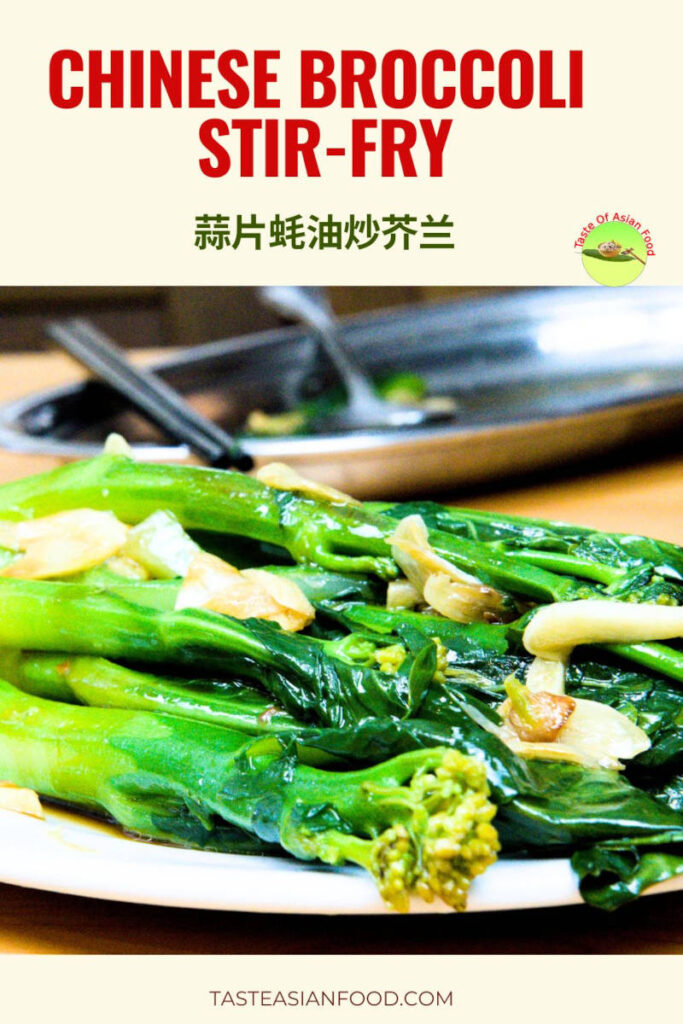
Chinese broccoli Stir-fry may look like a simple dish, but there is actually a lot that can go wrong. When it is done properly, it can transform from a simple home-cooked vegetable dish into one of the most elegant Cantonese-style greens you would expect in a restaurant.
At home, getting really good Chinese broccoli often feels a little unpredictable. Sometimes the leaves lose their vibrant green color, the sauce turns watery and heavy, or the stems end up tough and fibrous. The reasons vary. Sometimes it is simply because we do not take the dish seriously enough, and other times it is because we are not fully aware of the important details involved in making proper stir-fried Chinese broccoli, from preparation and heat control to seasoning choices and cooking technique.
I would like to share some practical methods that I learned throughout my years of cooking and running my own restaurant, techniques that can still be easily replicated in a home kitchen.
Let’s get into the details of how to cook Chinese broccoli.
Content
Note: Click any item to jump straight to that part of the post.
- Why Different Types of Gai Lan Need to Be Treated Differently
- Preparing Gai Lan Before Stir-Frying
- Why Blanching Makes a Big Difference
- Why I Prefer Garlic Oil Instead of Chopped Garlic
- Building a More Balanced Sauce for Gai Lan
- The Final Stir Fry Stage
- Plating and Serving Gai Lan Elegantly
- Common Mistakes to Avoid
- Why Chefs Still Blanch Despite Nutrient Loss
Note: This post may contain affiliate links. Please read my privacy policy for more info. I may receive commissions for purchases made through links in this post. As an Amazon Associate, I earn from qualifying purchases.
Why Different Types of Gai Lan Need to Be Treated Differently
- Chinese broccoli, also known as Gai Lan or Kai Lan, comes in several varieties. Some are small and tender (baby Gai Lan), while others have thick, sturdy stems. Therefore, there is no single cooking method that works perfectly for every type.
- The larger stems are best blanched first. This helps them cook more evenly without leaving the stems underdone, while the leaves turn too soft during stir-frying. Baby Kai Lan, on the other hand, is naturally tender and can go straight into the wok without blanching.
- On the other hand, large Chinese broccoli often comes with very thick stems. In this case, slice the stems diagonally so they cook through more evenly and do not remain tough in the centre.
Preparing Gai Lan Before Stir-Frying
- After washing the Chinese broccoli, trim off the bottom ends slightly since this section is usually tough and stringy. This step is especially important when working with larger Gai Lan that have thicker stems.
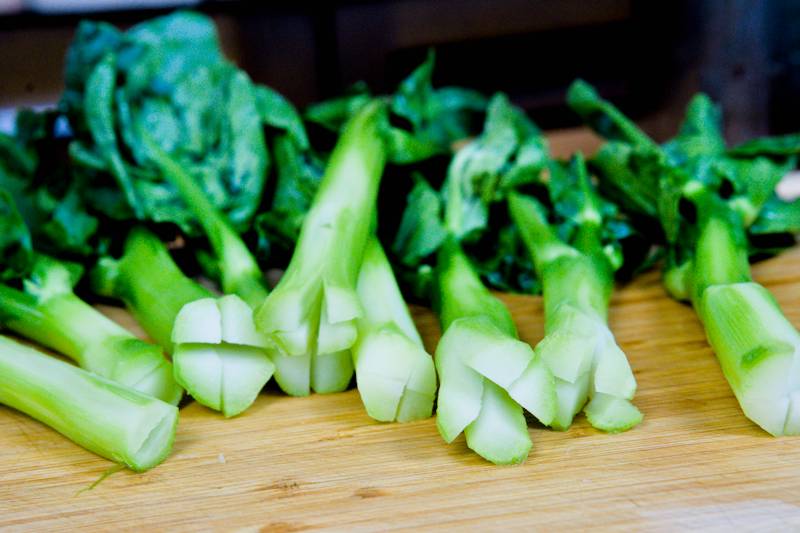
- For thicker stems, make a shallow crisscross cut lengthwise at the base. This allows heat to penetrate more easily, so the stem cooks evenly. It also improves the appearance after cooking.
- If the Chinese broccoli is very large with extra-thick stems, slice the stems diagonally into thinner pieces so they cook through properly.
- In this article, I am using medium-sized Kai Lan, about 6 to 8 inches long, so the extra slicing step is not necessary.
- After trimming and removing the outer layer of the stems with a vegetable peeler, the Chinese broccoli is ready for cooking.
Why Blanching Makes a Big Difference
Blanching is a useful step before stir-frying in Cantonese cooking because it helps control texture and balances the different cooking speeds between the stems and the leaves. I usually blanch medium or large-sized Gai Lan to ensure even cooking. For the small baby Gai Lan, I skip this step because it is naturally tender and cooks very quickly during stir-frying.
Below is the method I use for blanching Gai Lan:
- Fill the wok with water. I prefer using a wok instead of a pot because the wide shape makes it easier to position the Chinese broccoli properly. This way, the leafy parts stay above the water while the stems are submerged at the beginning. The stems are cooked first for about 2 minutes, then I gently push the whole vegetable into the water and blanch for another 2 minutes. This helps both stems and leaves reach a tender crisp texture at the same time. Thicker stalks naturally need a longer cooking time. The best way to judge doneness is simple and practical: pick one piece up and taste or check its texture.
- Add a small amount of salt, baking soda, and oil to the water. The salt gives the Chinese broccoli a light base seasoning, while the oil helps keep it looking shiny, vibrant, and fresh after cooking. Baking soda raises the pH of the cooking water, which helps the vegetables retain their bright green color throughout the cooking process.
- After blanching, remove the Chinese broccoli immediately. Drain it well in a colander, then spread it out on a large plate so it cools quickly. This also helps remove excess moisture, which is important for a better stir-fry later.
Note:
- If I am preparing the vegetables ahead of time, I add one more step. I place them into a large bowl of cold water to shock them and stop the cooking process immediately.
- The goal is not to fully cook the Gai Lan, but to bring it to a partially cooked stage so the final stir fry can be quick, to retain the tender crisp texture, and the vibrant green color
Why I Prefer Garlic Oil Instead of Chopped Garlic
Garlic plays an important supporting role in this restaurant-style Gai Lan recipe. It gives the Chinese broccoli a rich aroma and adds another layer of flavor without overpowering the freshness of the vegetables.
There are several ways to use garlic in stir-fried Gai Lan.
- One option is chopped garlic
- Another is stir-frying whole garlic slices together with the vegetables
- Another approach is making garlic oil, which gives a cleaner flavour and a more elegant finish
In practice, I often use a combination of these methods depending on the dish.
- Slice the garlic thinly and cook it slowly over low heat in oil to gently release its aroma. Once the garlic turns a light golden brown, remove the slices and set them aside. The garlic-infused oil is then used to stir-fry the Chinese broccoli.
- When the Chinese broccoli is almost fully cooked, return the garlic slices to the wok and toss everything together briefly before serving.
Note:
- Garlic oil helps distribute flavour more evenly throughout the dish. It also reduces the risk of burnt garlic, which can easily happen when chopped garlic is added directly into a very hot wok. The final result is smoother and more refined.
- The garlic slices also work as a garnish, since a plain plate of green vegetables can sometimes look a little too simple.
- Finely chopped garlic tends to stick to the vegetables and make the dish look messy, while garlic slices keep the Chinese broccoli looking fresh, glossy, and vibrant.
Building a More Balanced Sauce for Gai Lan
Many home cooks use oyster sauce alone to season stir-fried Chinese broccoli because it is simple and convenient. However, using only oyster sauce can make the flavor feel a little too one-dimensional and heavy.
Combining oyster sauce with light soy sauce and a small amount of sugar creates a more balanced and well-rounded flavor. The sugar is especially important because it helps balance the slight natural bitterness of the Chinese broccoli.
Sesame oil is slightly controversial because it has a very strong aroma and flavor. If too much is added, it can easily overpower the fresh taste of the Gai Lan. If you choose to use sesame oil, it is best to use it sparingly.
My preferred approach is to mix the oyster sauce, light soy sauce, and sugar first, then gently warm the mixture just enough to dissolve the sugar.
Instead of adding all the sauce directly into the wok during stir-frying, I like to keep about one-third of it aside and drizzle it over the Chinese broccoli just before serving. This makes the vegetables look brighter and fresher, while giving the dish a cleaner, lighter, and more elegant presentation.
The Final Stir Fry Stage
The final step is where everything comes together. Since the Chinese broccoli has already been partially cooked during blanching, this step should be quick and done over high heat.
A hot wok is essential to produce the best texture and flavor. I usually use a cast-iron wok, although a carbon steel wok works just as well. I avoid using non-stick pans because they are not designed for high-heat stir-frying.
A high-power stove also makes a noticeable difference. If you are cooking on a regular home stove, please use the highest heat available and cook in smaller batches to keep the wok temperature high throughout the stir-frying process.
Here is the method I use for stir-frying Chinese broccoli:
- Heat the oil over low to medium heat and sauté the garlic gently. Garlic burns very easily, so it is important not to rush this step.
- Once the garlic turns lightly golden, remove the slices and leave the garlic-infused oil in the wok.
- Turn the heat up high, then add the Chinese broccoli and toss quickly. Since the vegetables are already partially cooked, they only need a short time in the wok to finish cooking while still keeping their texture and vibrant green color. The entire stir-fry usually takes about one minute.
- Return the garlic slices and mix with the Gai Lan.
- During the stir-frying process, season the vegetables lightly with salt and add about two-thirds of the prepared sauce mixture.
- Keep the remaining one-third of the sauce aside for drizzling over the Chinese broccoli just before serving. This helps the vegetables look fresher, brighter, and more elegant on the plate.
Plating and Serving Chinese Broccoli Stir-fry Elegantly
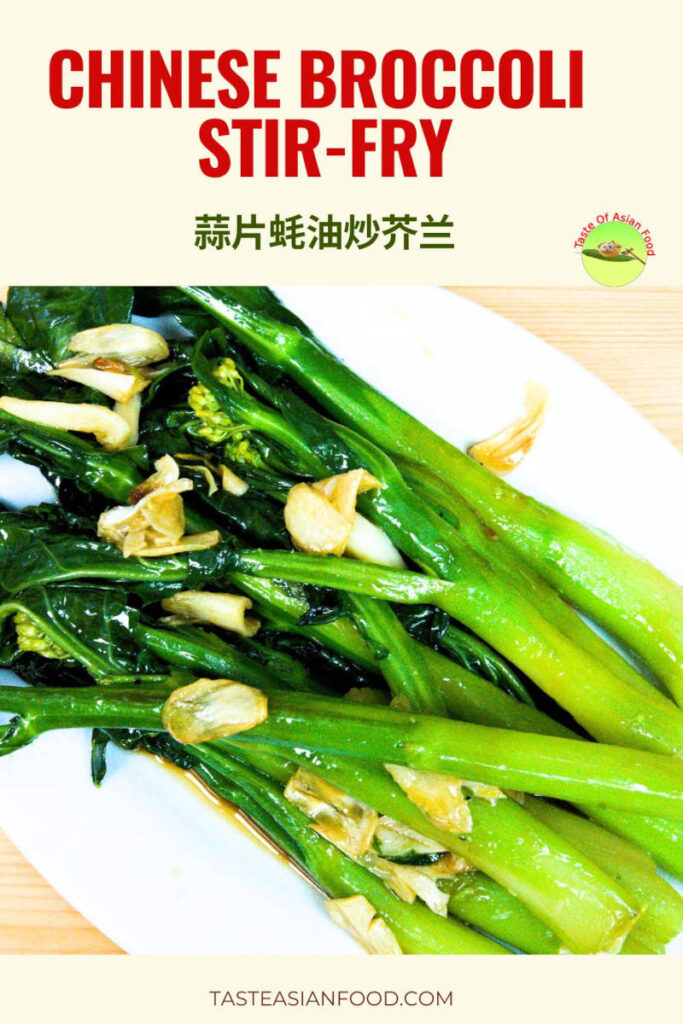
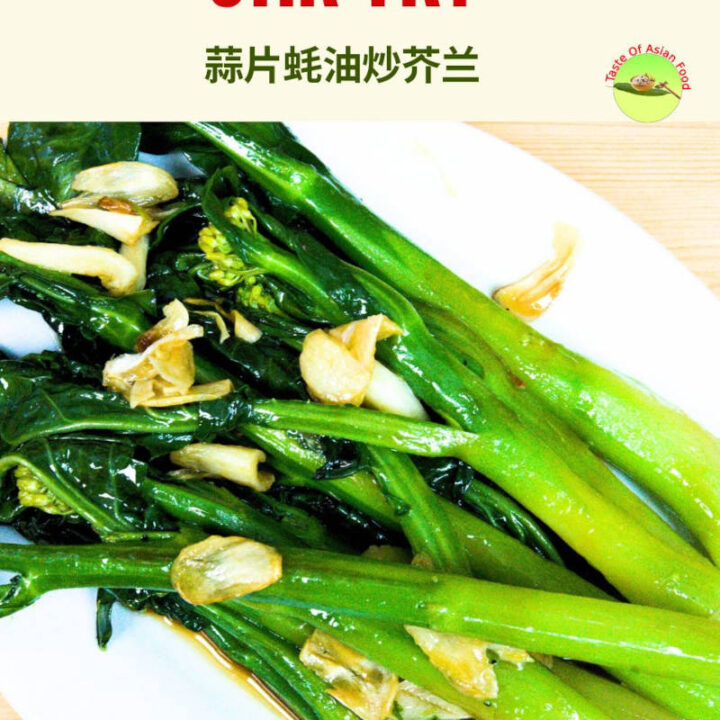
Presentation may seem like a small detail, but it makes a big difference when serving stir-fried Chinese broccoli. Instead of placing the vegetables on the plate randomly, I prefer arranging the Gai Lan neatly in one direction. I usually use an oblong ceramic plate because it naturally creates a cleaner and more structured presentation. The dish immediately looks more refined and restaurant-style.
After plating, I sometimes use kitchen scissors to separate the stems from the leafy sections, especially if the stems are thicker. This makes the vegetables easier to handle and more comfortable to eat.
Next, spoon the remaining sauce around the bottom of the vegetables. You still want the bright green color of the Gai Lan to remain visible.
This dish is best served immediately while still hot. Gai Lan continues to soften after leaving the wok, so timing is important if you want to keep that perfect, tender, crisp texture.
Chinese Broccoli Stir-fry (Gai Lan)- the Cantonese Restaurant Way
A Cantonese-style approach to stir-fried Chinese broccoli (gai lan), including preparation, blanching, garlic oil, oyster sauce balance, and plating techniques.
Ingredients
- 500 g Chinese broccoli (Gai Lan or Kai Lan)
- 6 cloves garlic, thinly sliced
- 1.5 tablespoons oyster sauce (see note)
- 1.5 tablespoons light soy sauce
- 1 teaspoon sugar
- 2 tablespoons hot water
- 2 tablespoons cooking oil
- salt for blanching
- 1/2 teaspoon baking soda for blanching
- Water for blanching
Instructions
1. Preparing the Gai Lan
- Wash the Chinese broccoli thoroughly and drain well.
- Trim off the bottom ends slightly to remove tough and fibrous sections.
- Peel the outer layer of thicker stems if necessary.
- Make a shallow crisscross cut lengthwise at the base to help them cook more evenly.
2. Blanching the Gai Lan
- Fill a wok or wide pan with water and bring it to a boil.
- Add salt, baking soda, and oil to the water.
- Arrange the Chinese broccoli so the stems are submerged while the leafy parts remain above the water initially. Blanch the stems for 2 minutes.
- Gently submerge the entire vegetable in the water and blanch for an additional 2 minutes (the exact cooking time depends on the size and thickness of the Chinese broccoli). Remove immediately and drain well in a colander.
- Spread the vegetables on a large plate to cool slightly and release excess moisture.
3. Preparing the Garlic Oil and Sauce
- Combine oyster sauce, light soy sauce, sugar, and water or stock in a small bowl.
- Warm the mixture gently until the sugar dissolves.
- Heat the oil over low heat and fry the garlic slices gently until lightly golden.
- Remove the garlic slices and set aside.
- Keep the garlic-infused oil in the wok for stir-frying.
4. Final Stir Fry
- Turn the heat to high. Add the blanched Chinese broccoli into the wok.
- Toss quickly over high heat for about 1 minute. Season lightly with salt.
- Add about two-thirds of the prepared sauce mixture.
- Return the garlic slices to the wok and toss briefly to combine.
- Stir fry just until the vegetables are glossy, tender, crisp, and heated through.
5. Plating and Serving
- Arrange the Chinese broccoli neatly in one direction on an oblong serving plate.
- Slightly overlap the stalks for a cleaner and fuller presentation.
- Spoon the remaining sauce to the bottom of the vegetables.
Notes
Please use vegetarian oyster sauce, which is made with mushroom extract, if you want it to be a truly vegetarian dish.
Recommended Products
As an Amazon Associate and member of other affiliate programs, I earn from qualifying purchases.
-
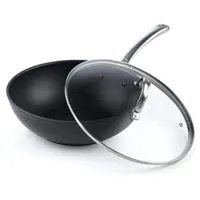 Cooks Standard 02591 Flat Bottom with Lid 11-Inch Hard Anodized Nonstick Wok Stir Fry Pan, Black
 -
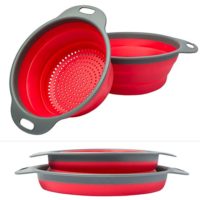 Colander Set - 2 Collapsible Colanders (Strainers) Set By Comfify - Includes 2 Folding Strainers Sizes 8" - 2 Quart and 9.5" - 3 Quart Red and Grey
 -
 DOWAN Large Serving Platter, 16"/14"/12" Oval Platters Oven Safe, White Serving Plates for Wedding Decor, Ceramic Serving Dish for Entertaining Food, Set of 3
Nutrition Information:
Yield: 3 Serving Size: 1Amount Per Serving: Calories: 137Total Fat: 11gSaturated Fat: 1gUnsaturated Fat: 10gSodium: 939mgCarbohydrates: 10gFiber: 4gSugar: 3gProtein: 3g
This data was provided and calculated by Nutritionix on 5/10/2026
Common Mistakes to Avoid when preparing Cantonese-style Gai Lan
- Overcooking the Chinese broccoli
Overcooking is one of the most common mistakes. It dulls the bright green colour and makes the stems overly soft, while the leaves lose their fresh, vibrant texture. - Leaving too much water in the wok
If the Chinese broccoli is not drained properly after blanching, excess water will dilute the stir-fry. The dish becomes watery and loses its clean, concentrated flavour, while also preventing proper wok heat. - Using too much oyster sauce
Oyster sauce should enhance the dish, not dominate it. Overusing it makes the flavour heavy and masks the natural sweetness of the gai lan. A light, balanced hand works best. - Burning the garlic
Garlic cooks quickly under high heat. Once it becomes too dark, it turns bitter and can easily affect the entire dish. It should be carefully controlled and removed at the right moment. - Overcrowding the wok
Adding too much at once lowers the wok temperature. Instead of stir-frying, the vegetables end up steaming, which affects both texture and flavour. - Adding sesame oil too early or too heavily
Sesame oil has a strong aroma. If used too much, it can overpower the natural taste of the Chinese broccoli.
Why Chefs Still Blanch Despite Nutrient Loss
Blanching does cause a small loss of water-soluble vitamins, but in this case, I believe it is a worthwhile trade-off. The blanching time is very short, only about two minutes, which helps minimize nutrient loss while greatly improving the final texture and appearance of the Chinese broccoli. Adding a little salt and oil to the blanching water also helps preserve the chlorophyll, allowing the Gai Lan to remain bright green, glossy, and visually fresh after cooking. More importantly, blanching helps the stems and leaves cook evenly, giving the vegetables a tender crisp texture that is far more enjoyable to eat.
This balance between nutrition, texture, and presentation is a compromise professional Cantonese chefs make regularly to achieve the best overall result.
Absolutely delicious and amazing recipe, most delicious way to eat broccoli.
Hi, this is KP Kwan. I am happy to see you at this comment area, as you have read through my recipe. I am happy to reply any questions and comments as soon as possible.