
Have you ever experienced this? You pan-fry a chicken breast and end up with meat that is dry and tough.
Even though I have been cooking for years and worked in restaurants, I have run into this disappointing result more times than I can count. After going through countless failures, I finally discovered a method that works every time.
This method combines different techniques, and I am excited to share it with you. I hope it helps you level up your cooking skills and take your dishes to the next level.
Note: This post may contain affiliate links. Please read my privacy policy for more info. I may receive commissions for purchases made through links in this post. As an Amazon Associate, I earn from qualifying purchases.
Steps to Perfectly Juicy Pan-Fried Chicken Every Time
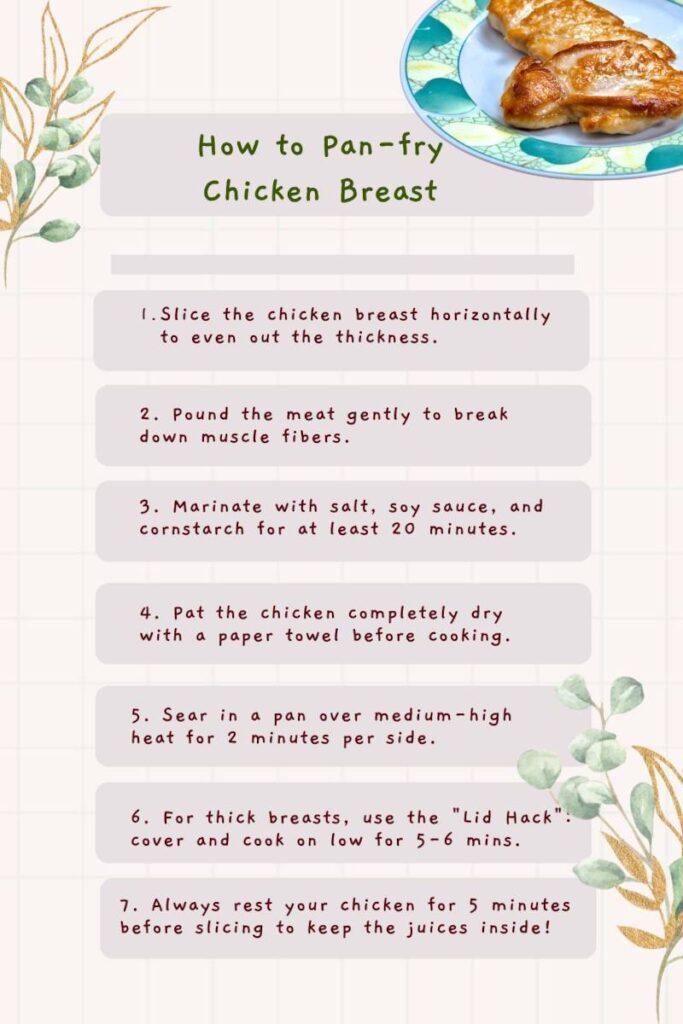
Before I dive into the details, here’s a quick summary of the steps I use.
- Cut the chicken breast horizontally in half
- Pound the chicken breast
- Marinate the meat with salt, soy sauce, and cornstarch
- Keep the chicken dry before pan-frying
- Pan fry over medium-high heat
- Do not disturb the chicken initially
- The Lid Hack for thicker chicken breasts (optional)
- The final touch: resting before slicing
1. Cut the chicken breast horizontally in half
Slice the chicken breast horizontally to make it thinner. This helps prevent the inside from staying raw while the outside turns golden brown. Thinner slices ensure the chicken is cooked just right, not overcooked or undercooked, as the surface reaches a nice golden color.
2. Pound the chicken breast
Pound the chicken breast using a meat mallet or the spine of a cleaver. This breaks down tougher muscle fibers, making the meat juicier and more tender, and evens out the thickness to prevent thinner areas from drying out while thicker parts are still cooking.
3. Marinate the meat with salt, soy sauce, and cornstarch
After pounding the chicken, marinate it for about 20 minutes. The three main ingredients used for the marinade are:
- Salt: penetrates the chicken and relaxes the tightly coiled protein structure, helping the meat retain more juice and reducing moisture loss during cooking.
- Soy sauce: adds flavor and contains salt that further relaxes protein fibers. It also has enzymes that break down long, tough protein chains, making the meat more tender. Its slight acidity also contributes to tenderizing the chicken.
- Cornstarch: forms a protective layer on the surface of the meat, shielding it from direct heat and helping prevent drying out.
Marinating chicken in this way is a standard method for stir-frying or pan-frying to ensure juicy, tender meat.
4. Keep the chicken dry before pan-frying
Keeping the chicken dry is an important step to ensure it sears nicely in the pan. Water boils at 100°C, and if the surface of the chicken is wet, it will never reach the high temperature needed to brown and crisp properly.
If the chicken is wet, it will take longer for the surface to dry in the pan before it can start browning. By that time, the chicken may have been cooking too long, resulting in dry, overcooked meat that is far from juicy.
Another issue is that water from the chicken disrupts the thin layer of oil that acts as a lubricant between the meat and the pan, making the chicken stick more easily.
To avoid these problems, pat the chicken dry with a paper towel and then let it sit in the refrigerator for 15 minutes. The cool, dry air in the fridge further dehydrates the surface, helping it sear beautifully when pan-fried.
5. Pan fry over medium-high heat
Now we get to the real cooking part. Heat some oil in the pan and bring it up to medium-high heat, around 375°F to 450°F (190°C to 230°C). This is the ideal temperature for pan frying to achieve a golden brown surface.
A practical way to check if the oil is hot enough is to use a wooden chopstick. When you dip it into the oil, it should bubble immediately and vigorously around the chopstick. A more reliable way is to use a kitchen thermometer.
6. Do not disturb the chicken initially
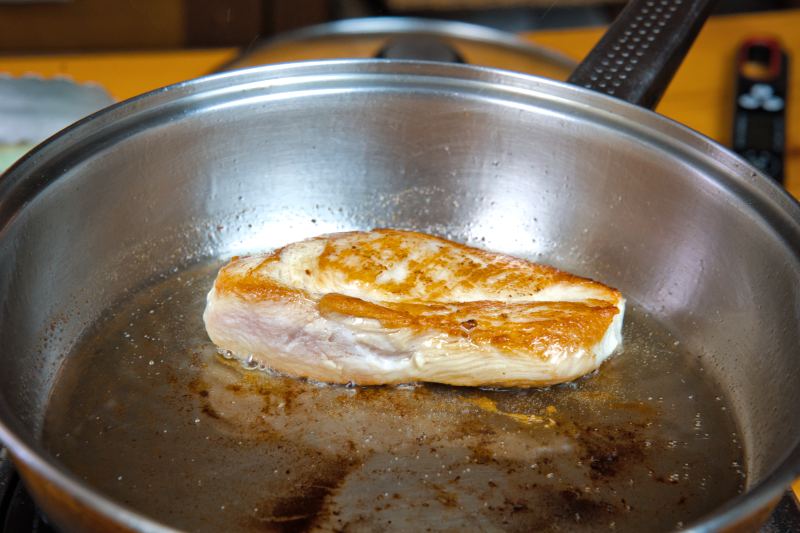
One mistake I used to make was moving the chicken around too early. Here’s why that’s a problem: when the chicken hits the hot pan, the cornstarch coating begins a chemical process called gelatinization (The process that creates the protective, crispy coating). If you move the chicken too soon, the coating can tear, causing the meat to stick and the juices to leak out, leaving the chicken dry.
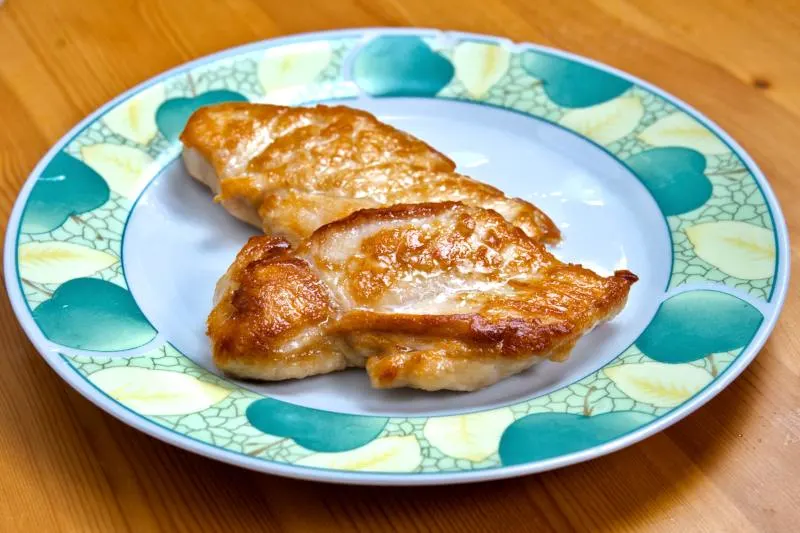
Now, I let the chicken sit undisturbed for about two minutes. Then I gently nudge it to check if it’s sticking. Once the cornstarch has formed a crispy surface, the chicken will naturally release from the pan, giving you a perfectly golden, juicy result.
Flip the chicken over and pan-fry the other side until golden.

7. The Lid Hack for thicker chicken breasts (optional)
Now we get to the part that used to stump me: cooking thick chicken breasts.
If you slice the chicken breast in half horizontally, when both sides turn golden brown, the inside is usually perfectly cooked. But if the chicken breast is thick and you want to pan fry it without slicing it thinner, the inside will likely still be undercooked by the time the surface is golden.
You could continue frying it longer, but then the surface may become too dark, and the chicken can turn dry. That’s what I used to do, but now I use a much better method to cook the interior without overcooking the outside: the Lid Hack.
The Lid Hack
After both sides of the chicken have turned golden brown, turn the heat down to a minimum and cover the pan with a lid. Let it cook for a few more minutes with the heat trapped inside. The low heat continues to cook the interior without further browning the surface.
How long? It depends on the thickness and size of the chicken breasts, but a good starting point is 5 to 6 minutes. Use a kitchen thermometer to check: once the internal temperature reaches around 160°F (71°C), turn off the heat and let the chicken rest for another two minutes. The residual heat will bring it to 164°F (74°C), perfectly cooked.
Note: One drawback of this Lid Hack is that the trapped moisture can soften the crispy surface. If you want to maintain the crispiness, you can transfer the pan-fried chicken to an air fryer or oven at 360°F (180°C) and continue cooking until the internal temperature is fully reached. (I partially solved this problem without using an air fryer by opening the lid once or twice. Each time, I open it for about one second. This helps release the trapped moisture, which makes it crispier.)
8. The final touch: resting before slicing
Let the chicken breast rest for 5 minutes before slicing. This last step of resisting the urge to slice it immediately is totally worth it. While the chicken is still hot, the juices are being squeezed out of the muscle fibers. As it cools slightly, the muscles relax and act like a sponge, reabsorbing the juices and keeping the meat juicy and tender.
That’s how I Pan-Fry Chicken Breast. To make it even clearer, I also made a video to show how I do it 🎥👇
How to Pan-Fry Chicken Breast Without Drying Them Out
Tired of tough chicken? This guide shows you how to prep, marinate, and pan-fry chicken breast for a protein-packed meal that is never dry and always flavorful.
Ingredients
- 2 Chicken Breasts
- 1 tbsp Soy Sauce
- 1 tbsp Cornstarch
- 1/2 tsp Salt
- Cooking Oil (high smoke point)
Instructions
- Prep: Slice the chicken breast horizontally in half to make it thinner.
- Tenderize: Pound the meat with a mallet or the spine of a knife to even out the thickness.
- Marinate: Coat chicken in salt, soy sauce, and cornstarch. Let's sit for 15-20 minutes.
- Dry: Pat the surface dry with a paper towel. For best results, let it sit in the fridge uncovered for 15 minutes.
- Sear: Heat oil to medium-high (375°F/190°C). Fry for 2 minutes undisturbed until golden.
- Flip: Turn over. For thick pieces, lower the heat to a minimum, cover with a lid, and cook for 5-6 minutes until the internal temp hits 160°F/71°C.
- Rest: Remove from the pan and let rest for 5 minutes before slicing.
Nutrition Information:
Yield: 2 Serving Size: 1Amount Per Serving: Calories: 231Total Fat: 4gSaturated Fat: 1gUnsaturated Fat: 3gCholesterol: 103mgSodium: 1017mgCarbohydrates: 7gFiber: 0gSugar: 0gProtein: 38g
This data was provided and calculated by Nutritionix on 31/12/2025
Ben
Friday 2nd of January 2026
What was the sauce for the pan fried chicken breast?
KP Kwan
Friday 2nd of January 2026
It’s a simple sauce made with half a tablespoon of dark soy sauce, one tablespoon of light soy sauce, and four tablespoons of chicken broth Then I let it boil with four slices of ginger and one stalk of scallion, cut into sections, along with a quarter cup of water. Let it boil for about two minutes to extract all the flavor from the ginger and scallion ✨
After that, strain the sauce, and that’s it. Simple, clean, and full of aroma
KP
Wednesday 31st of December 2025
Hi, this is KP Kwan. I’m delighted to see you here in the comment section after reading my recipe. I’ll be happy to answer any questions or comments as soon as possible.