
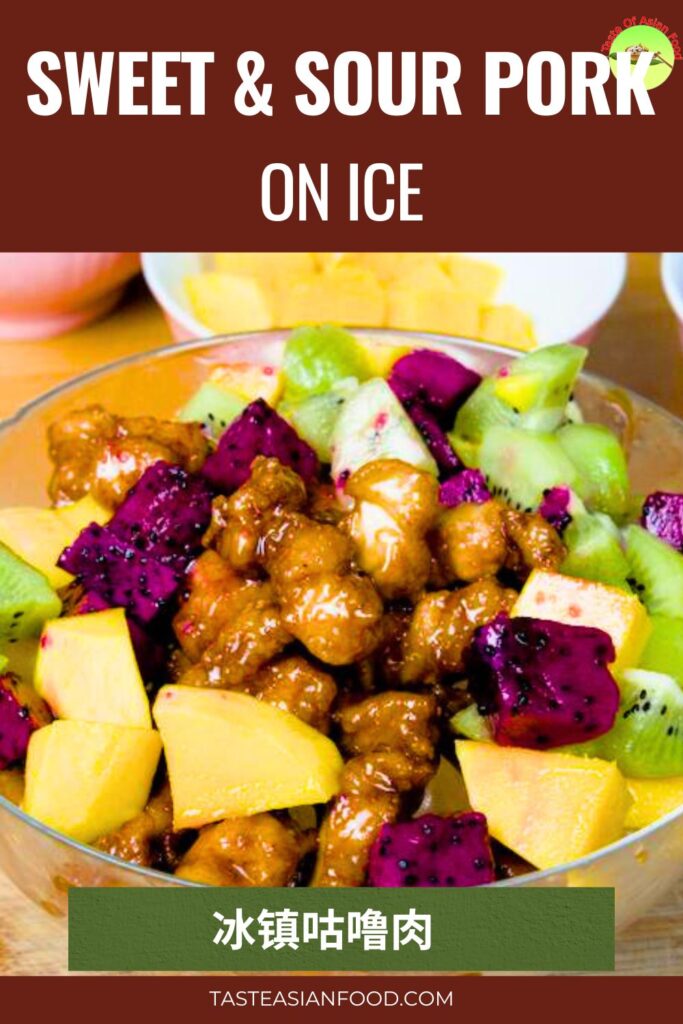
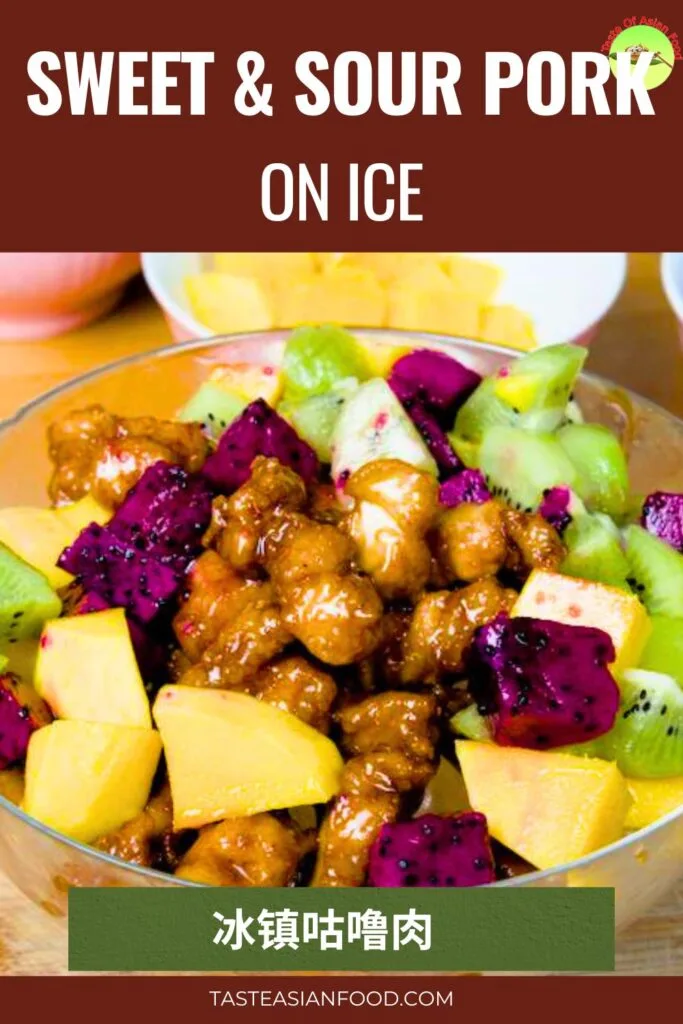
Imagine lifting a piece of glossy, sweet and sour pork, still warm from the wok, resting on a bed of ice cubes. The exterior is cool and crisp, yet inside, the pork is steaming hot and juicy. The sugar glaze has hardened into a delicate, caramelized shell that shatters lightly with each bite.
This is sweet and sour pork on ice (Gu Lou Yuk/冰镇咕噜肉), a banquet-style presentation of the classic Cantonese dish Gu Lou Yuk. In this article, I’ll take you through this unique version of the dish, often featured at Chinese banquets and on the menu of high-end Chinese restaurants.
Serving sweet and sour pork over ice is not just about presentation; it’s about creating a unique dining experience. After the pork is deep-fried to perfection, it’s coated in a glossy, sweet and sour sauce. When the hot, maltose-rich glaze meets the freezing surface of the ice, the rapid temperature drop forces the sugar to solidify almost instantly, forming a thin, glass-like caramelized shell that is irresistibly crisp.
The experience doesn’t stop there. The contrast between the hot, juicy pork inside and the cool, crisp exterior creates a surprising and delightful mouthfeel.
In this recipe, we’ll recreate this restaurant-style dish using a traditional method commonly seen in Malaysia. Instead of the usual vegetables, we’ll use a vibrant mix of kiwi, mango, and dragon fruit for a colorful and refreshing twist that enhances both flavor and presentation.
Note: This post may contain affiliate links. Please read my privacy policy for more info. I may receive commissions for purchases made through links in this post. As an Amazon Associate, I earn from qualifying purchases.
Why Sweet and Sour Pork on Ice Is a Winning Recipe
This dish is not just visually stunning. It’s a culinary experience. Here’s why it stands out:
- Crispy exterior that lasts – What makes sweet and sour pork on ice so memorable is the lasting crispiness. The caramelized sugar layer formed when the hot pork meets the ice acts like a protective shell. Unlike ordinary sweet and sour pork, which softens quickly once coated in sauce, this version maintains its crunch far longer.
- Contrast of temperatures – Each bite offers a unique mouthfeel. The pork remains hot and tender on the inside, while the exterior feels refreshingly cool. This hot-and-cold combination creates a sensory experience that is both surprising and satisfying.
- Vibrant fruits enhance flavor and presentation – Using colorful fruits like kiwi, mango, and dragon fruit adds a refreshing twist to the traditional dish. Not only does this enhance the visual appeal, but the fruity sweetness also balances the rich, savory pork perfectly.
- Restaurant-style showmanship – In some high-end Chinese restaurants, dry ice is added to the presentation, creating a dramatic, smoky effect. Even without the dry ice, serving the pork over ice is a theatrical touch that elevates the dining experience.
- Authentic technique – This recipe follows traditional Chinese cooking principles, using maltose and a time-tested sweet and sour sauce, just like in many Malaysian Chinese restaurants.
Main Ingredients and Why They Matter
The choice of ingredients is crucial for making sweet and sour pork on ice that tastes and looks great. Here’s a breakdown:
Pork
- Cut matters – Use pork belly or pork butt. Both cuts have enough fat (at least 30%) to keep the meat tender, juicy, and flavorful after double frying.
- Marinade – The pork is marinated with egg, Chinese five-spice powder, red fermented bean curd, and a pinch of salt. This combination infuses the meat with the signature savory, slightly aromatic taste that complements the sweet and sour sauce perfectly.
Sweet and Sour Sauce
- Core ingredients – Maltose, Chinese plum sauce, tomato sauce, sugar, and optionally chili sauce.
- Why maltose is important – Its thick consistency allows it to caramelize quickly when the pork hits the ice, creating the crispy sugar layer that makes this dish so special.
- Adjusting flavor – The ratio of tomato sauce to chili sauce controls the spiciness. For a mild version, skip the chili sauce altogether.
Fruits
- Colorful presentation – Kiwi, mango, and dragon fruit are used to give the dish a vibrant, eye-catching appearance.
- Flavor balance – The natural sweetness and slight acidity of the fruits contrast beautifully with the rich, deep-fried pork.
- Flexibility – You can swap the fruits based on availability or preference. Strawberries, honeydew, or even pineapple can work just as well.
How to Make Sweet and Sour Pork on Ice – Step by Step
Step 1: Prepare the Pork
- Remove the skin from the pork belly and cut the meat into 1-inch bite-sized pieces.
- Use a meat mallet to gently pound both sides of each piece. This mechanical tenderizing ensures the pork stays juicy and tender even after double-frying.
Step 2: Marinate
- In a bowl, combine the pork with beaten egg, Chinese five-spice powder, red fermented bean curd, cornstarch, and a pinch of salt.
- Mix thoroughly so each piece is coated evenly.
- Let the pork marinate for 15–30 minutes to allow the flavors to penetrate the meat.
Step 3: Coat with Cornstarch
- After marinating, coat each pork piece thoroughly with additional cornstarch.
- Shake off the excess and let the coated pork rest for 15 minutes. This allows the cornstarch to absorb surface moisture, which helps it adhere during frying and prevents clumping in the oil.
Step 4: First Fry
- Heat oil to 130–140°C (266–284°F).
- Deep fry the pork in small batches for 1½–2 minutes, just enough to cook the pork through.
- Check that the internal temperature reaches 70°C (158°F).
- Remove the pork from the oil and let it rest for 10 minutes. Resting allows the internal moisture to migrate to the surface, where it will be removed during the second fry, resulting in an exceptionally crispy exterior.
Step 5: Second Fry
- Reheat the oil to 190°C (374°F).
- Fry the pork again for about 30 seconds, until golden and crispy.
- Drain in a colander to remove excess oil. This double-frying method gives the pork an exceptionally crisp exterior while keeping the inside tender.
Step 6: Prepare the Sweet and Sour Sauce
- In a nonstick pan, combine sugar, Chinese plum sauce, tomato sauce, maltose, water, and optional chili sauce
- Heat gently until the mixture begins to boil. Maltose is very sticky, so a nonstick pan is recommended.
- Reduce the sauce until it thickens to a syrupy consistency that easily coats the back of a spoon.
Step 7: Coat the Pork
- Remove the pan from the heat and quickly toss the fried pork in the sauce until every piece is fully coated.
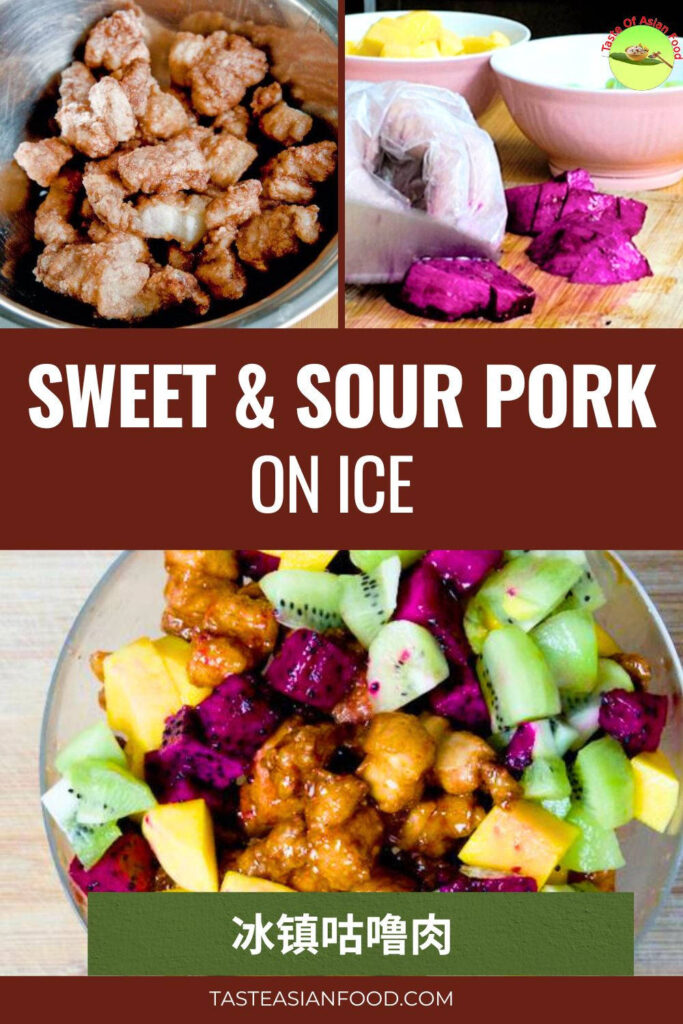
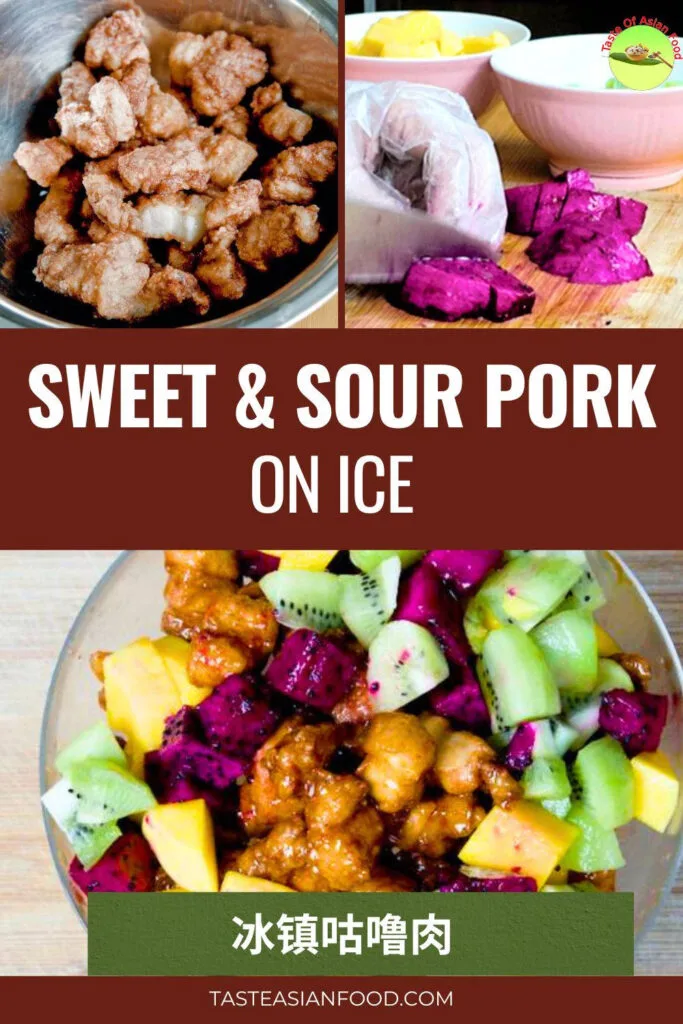
- Immediately transfer the pork to a bowl filled with ice cubes. The rapid cooling caramelizes the sugar on the surface, forming an extra crispy layer.
- Optional: To prevent excess water from melting ice, place a metal plate on top of the ice and arrange the pork on the plate.
Step 8: Add Fruit and Serve
- Dice mango, kiwi, and red dragon fruit into pieces roughly the same size as the pork.
- Gently mix the fruits with the caramelized pork and serve immediately. The chilled fruits balance the rich flavors of the pork and add a vibrant, refreshing touch.
Note:
- Always ensure the pork reaches a safe internal temperature (145°F / 63°C) before the second fry and serving, especially since the exterior cools rapidly on the ice.
Tips for the Best Sweet and Sour Pork on Ice
- Choose the right cut of pork. The pork should contain at least 30% fat for the best texture and flavor. Pork belly and pork butt are ideal because the fat keeps the meat juicy after double-frying.
- Adjust the sugar level if needed. This recipe uses a relatively generous amount of sugar to create the caramelized coating. You may reduce the sugar according to your personal preference.
- Use Chinese-style plum sauce. The plum sauce should be the thick, syrup-based Chinese plum sauce. Do not substitute with freshly pressed pure plum juice.
- Control the level of spiciness. The ratio of tomato sauce to chili sauce can be adjusted. I use ¼ chili sauce and ¾ tomato sauce for mild heat. For a non-spicy version, use only tomato sauce.
- Do not worry about the ice affecting crispiness. The melted ice water will drip to the bottom of the bowl. If too much water accumulates, discard it. Alternatively, place a metal plate over the ice and arrange the pork on top to prevent direct contact with water.
- You may use a different sauce recipe. There are many sweet and sour sauce variations. You may use your preferred sauce, as long as you follow the same cooking principles. The sauce in this recipe reflects the authentic style widely served in Chinese restaurants.

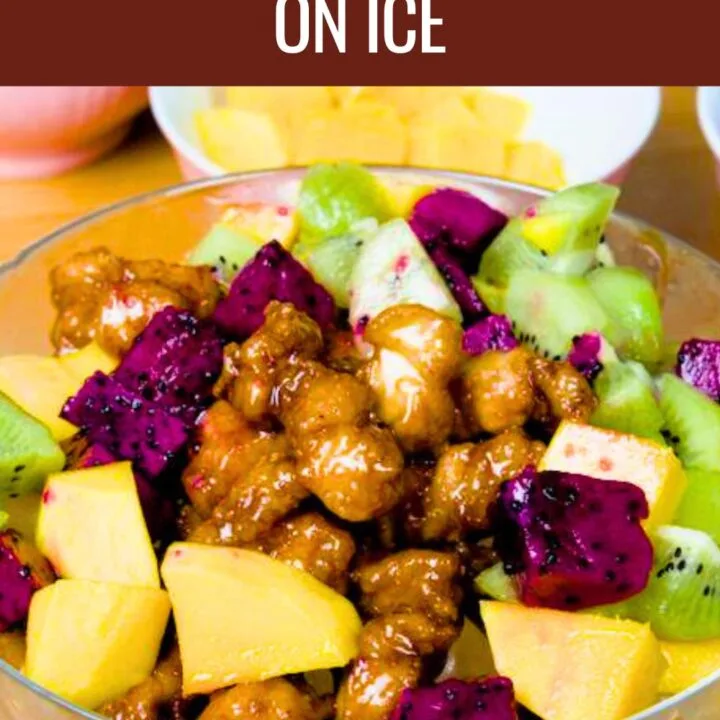
Sweet and Sour Pork on Ice (Gu Lou Yuk 冰镇咕噜肉)
Make Sweet and Sour Pork on Ice at home with a restaurant-style recipe, crispy caramelized pork, and refreshing fruits like mango, kiwi, and dragon fruit.
Ingredients
For the Pork Marinade
- 450 g (1 lb) pork belly
- 1 egg
- 1 teaspoon Chinese five-spice powder
- 1 cube red fermented bean curd 南乳.
- 2 tablespoons cornstarch
- 1/4 teaspoon salt
- Additional cornstarch for coating
For the Sweet and Sour Sauce
- 2 tablespoons sugar
- 2 tablespoons chili sauce
- 6 tablespoons tomato sauce
- 4 tablespoons Chinese plum sauce
- 90 g maltose
- 1/2 cup water
Fruit
- 1/2 medium mango, diced
- 2 kiwi, diced
- 1/2 red dragon fruit, diced
Instructions
- Remove the skin from the pork belly and cut it into 1-inch pieces. Pound lightly with a meat mallet to tenderize.
- In a bowl, combine pork, egg, five-spice powder, red fermented bean curd, cornstarch, and salt. Mix well and marinate for 15 to 30 minutes.
- Coat each piece of pork evenly with additional cornstarch. Let it rest for 15 minutes.
- Heat oil to 130 to 140°C. Deep fry pork in batches for 1 1/2 to 2 minutes or until cooked through. Remove and rest for 10 minutes.
- Increase oil temperature to 190°C. Fry pork again for 30 seconds until crispy. Drain well.
- In a nonstick pan, combine sugar, chili sauce, tomato sauce, plum sauce, maltose, and water. Bring to a boil and cook until thick and syrupy.
- Add fried pork to the sauce and toss quickly to coat. Remove immediately.
- Transfer pork to a bowl filled with ice or place over a metal plate set on ice to cool and set the caramelized coating.
- Toss with diced mango, kiwi, and dragon fruit before serving.
Recommended Products
As an Amazon Associate and member of other affiliate programs, I earn from qualifying purchases.
-
 Fermented Red Bean Curd Chinese Tofu 11.28 oz
 -

 MICHELANGELO 12 Inch Granite Frying Pan Nonstick, Ultra Nonstick Frying Pans with Non toxic Stone Coating, Nonstick Skillet with Lid, Granite Rock Pan 12 Inch, Ceramic Induction Skillet - Blue
 -
 Koon Chun Plum Sauce, 15-Ounce Glass Jars (Pack of 3)
 -

 Maltose 純正麥芽糖 500g x 4 Jars
Nutrition Information:
Yield: 3 Serving Size: 1Amount Per Serving: Calories: 1093Total Fat: 82gSaturated Fat: 29gUnsaturated Fat: 52gCholesterol: 170mgSodium: 627mgCarbohydrates: 65gFiber: 3gSugar: 43gProtein: 20g
This data was provided and calculated by Nutritionix on 26/02/2026
More Pork Recipes You May Enjoy
Sweet and Sour Pork on Ice (Gu Lou Yuk/冰镇咕噜肉) is more than just a recipe. It is a celebration of contrast: hot and cold, crisp and tender, rich yet refreshing. If you love this recipe, here are three more pork dishes you may want to explore:
- Pan-fried pork chops Hong Kong style – A comforting classic inspired by the flavors of Hong Kong, featuring juicy marinated pork chops pan-seared and finished in a rich, savory sauce.
- Chinese pork ribs Wuxi style – A beautifully caramelized rib dish from Wuxi, known for its deep mahogany glaze and balanced sweetness with soy-based savoriness.
- Pork stir-fry recipe with ginger and spring onions – A fragrant home-style favorite where tender slices of pork are quickly cooked with fresh aromatics to highlight the natural flavor of the meat.
KP
Thursday 26th of February 2026
Hi, this is KP Kwan. I’m delighted to see you here in the comment section after reading my recipe. I’ll be happy to answer any questions or comments as soon as possible.