
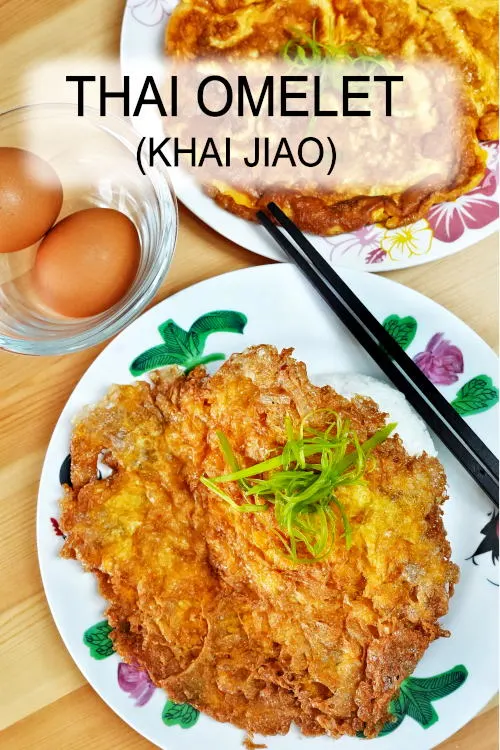
Today is a quiet, lazy Monday, and I’m alone at home. When that familiar hunger strikes, I just want something quick, comforting, and packed with flavor.
That is when I turn to one of my favorite Thai street foods, the Thai omelet or Khai Jiao (ไข่เจียว). This is a common dish found in Thai street food stalls across Bangkok and other cities in Thailand.
What makes it so special is its simplicity. With just eggs and fish sauce, I can create an omelet that is crispy on the outside, fluffy in the middle, and perfect to serve over hot steamed rice.
It may not be the healthiest meal, but it is one of the fastest and most rewarding comfort foods to make at home.
Content
Note: Click any item to jump straight to that part of the post.
Note: This post may contain affiliate links. Please read my privacy policy for more info. I may receive commissions for purchases made through links in this post. As an Amazon Associate, I earn from qualifying purchases.
Why This Recipe Works
Thai omelet is very different from the Western-style omelets many people are familiar with.
In French and other Western cooking, an omelet is usually soft, pale, and gently cooked without browning. The texture is smooth and delicate.
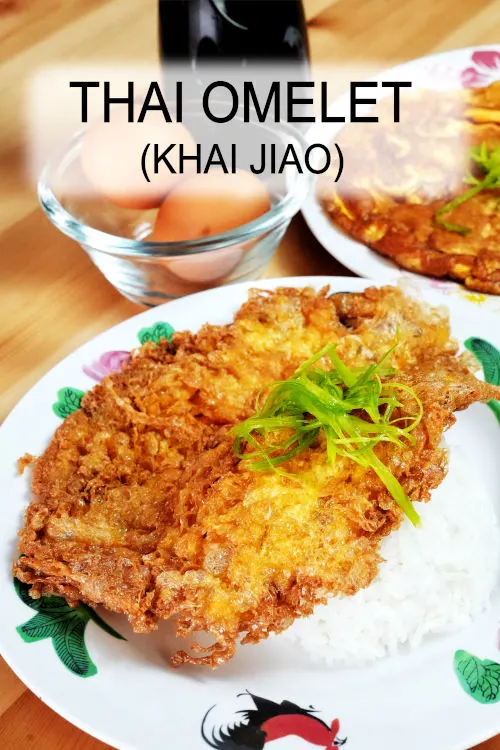
In contrast, Thai omelet is all about heat, oil, and texture. It is fried in hot oil until it becomes golden brown with crispy, slightly crunchy edges while remaining light and fluffy inside.
This bold contrast is what makes Khai Jiao such a popular Thai street food. The combination of a crispy exterior and an airy, fluffy interior is exactly why locals love it, and it also makes it interesting to Western diners.
Thai Omelet Ingredients – Simple, Authentic Thai Street Food Recipe
The beauty of a Thai omelet, or Khai Jiao, is how little you actually need to make it.
At its most basic, it requires just eggs, fish sauce, and cooking oil. Despite this short ingredient list, the flavor is rich and satisfying with a distinct Thai taste.
Eggs provide the structure and fluffiness, while fish sauce adds the signature savory depth that makes Thai cuisine unique. The oil also plays an equally important role in creating the crispy golden edges that give this fried omelet its signature look.
You will find the exact measurements and step-by-step method in the recipe card below. Follow it closely to achieve the authentic texture and flavor of a classic Thai street food omelet.
Step-by-Step Cooking Instructions
You need a few techniques to get this right, even though it only uses two main ingredients.
Of course, you can also add other ingredients to the egg mixture to turn it into something more than just a plain omelet, and I have some suggestions in the next section.
Here are the steps to prepare the omelet, Khai Jiao.
- Transfer it to a paper towel to drain excess oil.
- Garnish with chopped spring onions (green onions) or coriander leaves before serving.
- First, crack two eggs into a large mixing bowl.
- Season the eggs with fish sauce, about one teaspoon per egg.
- Beat the eggs with fish sauce until the mixture becomes fluffy and well combined
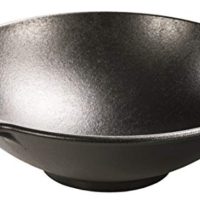
- Heat enough vegetable oil in a wok so that it is at least one inch deep.
- When the oil is sufficiently hot, pour the beaten eggs into the wok from about one foot above. This height helps create more bubbles, making the omelet fluffier.
- Maintain medium-high heat and do not disturb the egg for the first 20 seconds to allow it to set. If the oil is at the right temperature, you will see the egg puff up quickly.
- After that, gently move the omelet to prevent it from sticking to the bottom.
- When the edges turn golden, use a spatula to lift the omelet and check whether the bottom has turned golden brown.
- Flip the omelet over and continue frying the other side for another 20 to 30 seconds.
- Remove the omelet using a slotted spoon once both sides are golden.
Alternative Method for Making Khai Jiao
The method described above is the traditional way to make a Thai egg omelet. However, it uses a significant amount of oil and may not be ideal if you are looking for a lighter, healthier option.
An alternative method is to use a nonstick pan. It helps prevent the omelet from sticking and allows it to cook more evenly with less oil. For two eggs, you only need about one tablespoon of oil.
The main difference is in texture. With less oil, the omelet will not puff up as much, and the edges will not be as crispy compared to the deep-fried version. It is a trade-off between health and texture. The flavor remains largely the same, so the choice depends on your preference and cooking style.
Crispy Thai Omelet Variations
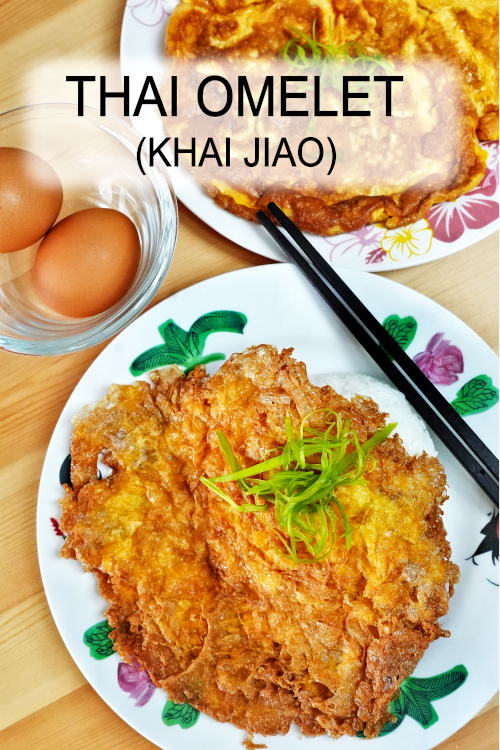
What I have shared in this fluffy omelet recipe is the basic way of making a Thai omelet, but you can take it further with plenty of variations. Below are some common ways to make it more wholesome, depending on your personal taste and what is available at home.
- Minced pork Thai omelet – It makes the omelet more filling and turns it into a complete meal when served with rice.
- Shrimp or seafood omelet – This version is especially popular in Thai seafood restaurants and coastal regions.
- Vegetable Thai omelet – Chopped vegetables such as onions, chilies, bell peppers, or tomatoes can be added for extra color and texture.
- Thai basil or herb omelet – Fresh Thai basil or coriander leaves can be mixed into the eggs for a fragrant herbal twist.
- Sauce and seasoning variations – Although fish sauce is the most authentic seasoning, some variations use soy sauce, oyster sauce, or even a squeeze of lime juice for a slightly different flavor profile.
More Recipes to Try
Here are some Thai street food recipes I have posted on this food blog. These dishes are part of everyday Thai home cooking and street food culture.
- Pad Kra Pao (Thai basil stir-fried minced meat) – It is one of the most well-known Thai street foods, loved for its bold, spicy, and aromatic basil flavor. It is a perfect quick meal when you want something more filling than an omelet.
- Thai green curry – This dish is known for its creamy texture and distinctive flavor from green chilies and aromatic herbs. You can easily make it at home using a good-quality store-bought curry paste.
Thai omelet (khai jiao)
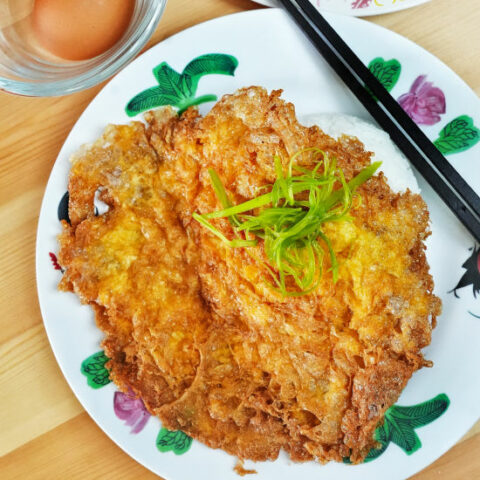
This recipe is the easiest two ingredients omelet that is rich in flavor. It is the best recipe when you want a quick meal.
Ingredients
- 2 large eggs
- 2 tsp fish sauce
- Vegetable oil for frying
Instructions
- First, crack two eggs in a large bowl.
- Season the raw eggs with fish sauce.
- Beat the egg with the fish sauce until it is fluffy and homogeneous.
- Heat sufficient vegetable oil at least one inch in depth in a wok.
- Pour the beaten eggs about one foot above the wok. Maintain medium-high heat and do not disturb the egg for the first 20 seconds, to let the egg set.
- Flip over when the edges and the bottom of the omelet turn golden.
- Remove the omelet with a large wire mesh strainer when both sides have turned golden.
- Remove the excess oil with a paper towel.
- Garnish the omelet with some spring onions to serve.
Recommended Products
As an Amazon Associate and member of other affiliate programs, I earn from qualifying purchases.


Nutrition Information:
Yield: 1 Serving Size: 1Amount Per Serving: Calories: 267Total Fat: 23gSaturated Fat: 4gTrans Fat: 0gUnsaturated Fat: 18gCholesterol: 372mgSodium: 1084mgCarbohydrates: 1gFiber: 0gSugar: 1gProtein: 13g
This data was provided and calculated by Nutritionix on 30/12/2022