
Char Siu (Chinese barbecue pork, 叉烧) has always held a special place in my heart. It is not just a dish, but a memory tied to my early years growing up in Ipoh.
Back then, my mother prepared nearly every meal at home. Breakfast before school, simple lunch boxes of rice with stir-fried vegetables and pork, and comforting dinners with homemade dishes like lotus root soup and steamed eggs. Char Siu wasn’t something my mother knew how to make.
My first taste of Char Siu came unexpectedly. After our school team won an inter-school table tennis competition, we went out for char siu rice to celebrate. That single meal opened the door to a flavor I had never experienced before. The meat was tender and succulent, coated in a glossy, flavorful sauce made with soy, oyster sauce, and other ingredients. I still remember savoring every bite, especially the way the rich sauce mixed perfectly with plain rice.
As I grew older and eventually moved to Penang for my university years, my appreciation for food expanded as I was exposed to a wide variety of cuisines. Yet, despite the diversity, Char Siu remained a constant favorite.
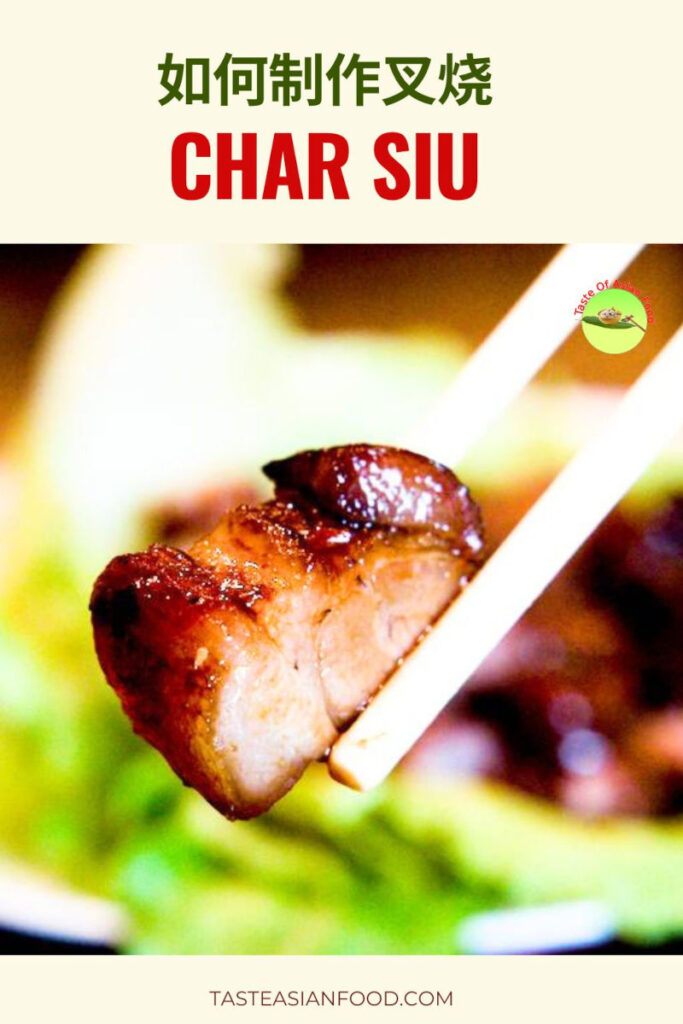
Content
Note: Click any item to jump straight to that part of the post.
- What is Char Siu and What Makes It So Special?
- Ingredients & Choosing the Right Pork for Char Siu
- Key Ingredients in the Char Siu Marinade
- How to Make Char Siu (Step-by-Step)
- Tips, Techniques & Troubleshooting for Perfect Char Siu
- Maltose vs Honey (which is better?)
Note: This post may contain affiliate links. Please read my privacy policy for more info. I may receive commissions for purchases made through links in this post. As an Amazon Associate, I earn from qualifying purchases.
What is Char Siu and What Makes It So Special?
Char Siu (叉烧), often translated as Chinese barbecue pork, is a classic dish popular in Guangdong and Hong Kong. You’ll find it from humble street stalls to high-end Cantonese restaurants. Each place often claims to have its own “secret” recipe.
Char Siu is pork marinated in a flavorful sauce, then roasted until beautifully caramelized on the outside while remaining tender and juicy inside. A well-made Char Siu has a glossy, mahogany-red surface with slightly charred edges, and a subtle smokiness.
The magic lies in its layers of flavor: a gentle sweetness from sugar or maltose, savory depth from soy sauce and oyster sauce, and aromatic notes from ingredients like garlic, ginger, and Chinese wine.
It may seem simple, but achieving that perfect balance requires careful attention to ingredients, marination, and cooking technique. That’s why Char Siu is often considered both an everyday dish and a mark of skill among Cantonese cooks.
Ingredients & Choosing the Right Pork for Char Siu
Choosing the right cut of pork is one of the most important steps in making great Char Siu.
- Pork shoulder. The most commonly used cut is pork shoulder (shoulder loin / 梅头肉). This cut strikes the perfect balance between lean meat and fat, which is essential for producing tender, juicy Char Siu.
- Pork belly. If you prefer a fattier and more tender version, pork belly is an excellent choice. It produces a softer, richer texture with a more pronounced melt-in-your-mouth quality.
- Pork tenderloin. On the other hand, pork tenderloin can also be used as a leaner option. However, because it contains very little fat, it can dry out easily. If you choose this cut, it’s important to reduce the cooking time and use higher heat to prevent the meat from becoming tough.
Note: You can also find other variations, including Char Siu chicken, which uses chicken breast or thighs as a substitute for pork.
Key Ingredients in the Char Siu Marinade
Although every recipe may vary slightly, most Char Siu marinades are built on a few essential ingredients that work together to create their signature flavor:
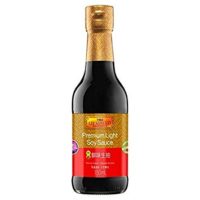
- Soy sauce – Provides saltiness and umami depth
- Oyster sauce – Adds richness and a slightly sweet, savory note
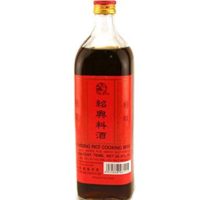
- Chinese rice wine (Shaoxing wine) – Helps enhance aroma and remove any unpleasant odors
- Garlic and ginger – Add flavor and aroma.
- Sugar, honey, maltose – Provide sweetness and help with caramelization
- Red yeast rice – Used mainly to give Char Siu its characteristic reddish color. (An alternative is the red fermented bean curd)
Note: Red yeast rice is traditionally soaked in water and strained to extract a natural red coloring. This liquid is then added to the marinade. While it does not significantly affect the flavor, it is used to achieve the iconic mahogany-red appearance of Char Siu. If unavailable, some recipes use red fermented bean curd or food coloring.
How to Make Char Siu (Step-by-Step)
Making char siu at home that tastes just as good as what you get at a restaurant is very achievable with the right method and a bit of patience. While traditional char siu is cooked over charcoal, this oven-baked version is much more practical for home cooks, yet still delivers the same caramelized exterior and tender, juicy meat.
Step 1: Cut the Pork
- Cut the pork (preferably shoulder or pork belly) into long strips, about 1½ to 2 inches thick. Keep the pieces as evenly as possible so they cook evenly.
- If the pork has skin, remove it. Then rinse the meat briefly and pat it dry with paper towels. This step is important because excess moisture can dilute the marinade and affect flavor absorption.
Step 2: Prepare the Marinade
- If you are using red yeast rice, soak it in a small amount of warm water. Use the back of a spoon to break it up and release the red color, then strain the liquid and discard the solids.
- Combine the liquid with soy sauce, oyster sauce, Chinese rice wine (Shaoxing wine or dry sherry as a substitute), garlic, ginger, sugar or maltose, and a small amount of white pepper and five-spice powder.
- Gently heat the marinade to dissolve the sugar, then let it cool completely before using.
Step 3: Marinate the Pork
- Place the pork and marinade into a ziplock bag or a plate with a cover, making sure the meat is fully coated.
- Marinate in the refrigerator for at least 12 hours, or ideally 24 hours or longer for a deeper flavor.
- Turn the meat at least once to ensure the marinade is evenly absorbed.
Step 4: Roasting
- Preheat the oven to 200°C to 220°C (390°F to 428°F).
- Line a baking tray with aluminum foil or baking paper to make cleanup easier. Place a wire rack on top of the tray so the pork is elevated. This allows heat to circulate evenly and prevents the meat from sitting in a pool of liquid.
- Remove the pork from the marinade and let the excess drip off. Reserve some marinade for basting later.
- Place the pork on the wire rack and roast for 20 minutes. At this stage, the pork will start to cook and release some juices. The goal is to cook the meat through.
- Prepare a basting sauce by diluting the maltose with some reserved marinade, as maltose is quite thick. If you are using honey, there is no need to dilute it since it is naturally less thick.
- After the first 20 minutes, remove the pork from the oven, brush it generously with the basting sauce, turn the meat over, and return it to the oven.
- Continue roasting and repeat the basting process every 10 minutes. Each round of basting helps build layers of caramelization to create that signature glossy surface.
- The char siu is ready when the edges are slightly charred and caramelized, and the internal temperature reaches about 70°C/160°F. Be careful not to overcook it, especially if you are using lean cuts like tenderloin, as this can cause the meat to dry out.
Step 5: Rest and Slice
- Once done, remove the pork from the oven and let it rest for at least 10 minutes. This allows the juices to redistribute within the meat, keeping it moist when sliced.
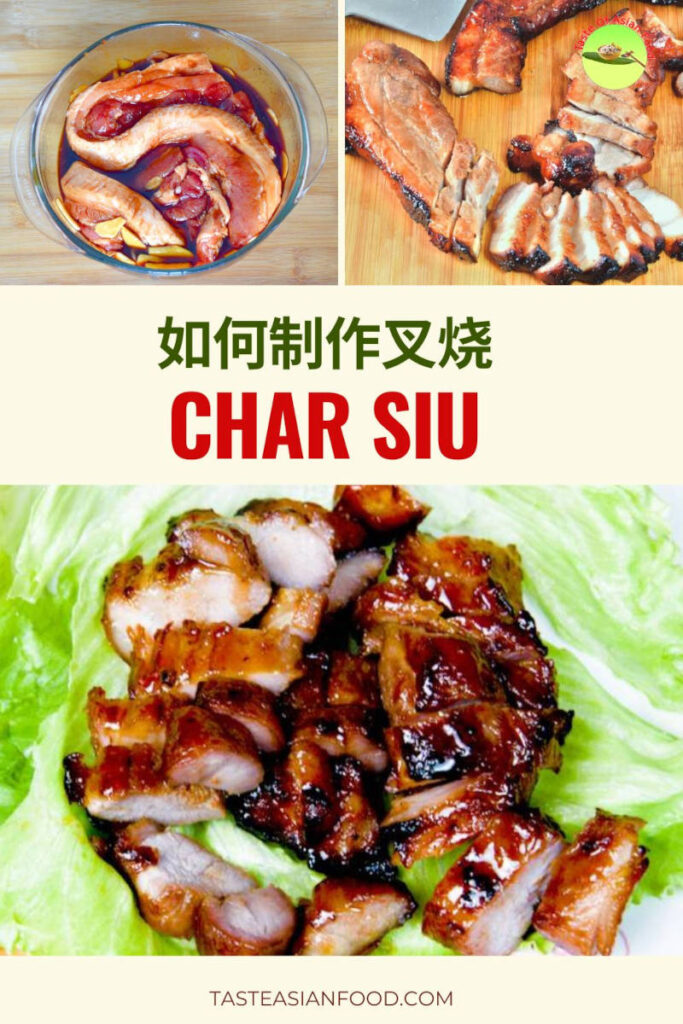
- Slice the Char Siu against the grain into 3–5 mm thick slices.
- Bring the leftover marinade to a boil and use it to drizzle over the sliced Char Siu to serve.
Tips, Techniques & Troubleshooting for Perfect Char Siu
These tips will help you achieve better flavor, texture, and appearance in your char siu.
1. Choose the right cut of pork
The cut of pork you use directly affects the final result.
- Pork shoulder (shoulder loin) is the best all-round choice, as it has a balance of fat and lean meat
- Pork belly is richer, fattier, and more tender
- Pork tenderloin is healthy, but it can dry out quickly
👉 A bit of fat is important because it keeps the meat juicy and tender during roasting.
2. Roast the pork with even thickness
Cut the pork into evenly sized pieces so they cook uniformly. If the thickness is uneven, the thinner parts will become overcooked while the thicker sections may remain undercooked.
3. Pat the pork dry before marinating
After washing the pork, always pat it dry. Too much moisture will dilute the marinade.
4. Marinate long enough for deep flavor
To achieve the best results, the pork should be marinated for at least 12 hours, though 24 hours or longer is best. This allows the flavors to penetrate fully into the meat. A well-marinated char siu should be tasty enough to enjoy on its own, without needing any extra sauce.
5. Use high heat for better results
Roast the pork at 200°C to 220°C, or 390°F to 428°F. High heat cooks the meat quickly and creates a nicely caramelized surface before the inside dries out.
6. Aim for caramelization, not just cooking
The sweetness in char siu comes from sugar, honey, and maltose. They also help create that glossy, caramelized surface that char siu is known for.
As the pork roasts at high heat, the sugar in the marinade begins to caramelize. This process gives the meat its slightly charred edges and shiny glaze. Maltose is often preferred because of its thick and sticky texture, which helps the marinade cling to the pork and create a more even coating during roasting.
7. Use a wire rack for even cooking
Place the pork on a rack set over a lined tray. This allows the heat to circulate evenly around the meat. Let the excess marinade drip away, and do not let the pork sit in liquid as it cooks.
8. Don’t overcook the pork
Overcooking is one of the most common reasons for making the char siu tough. The ideal internal temperature is around 70°C or 160°F. Cooking beyond this point can result in meat that is dry and tough. I suggest using a kitchen thermometer to check the internal temperature of the char siu if you are unsure.
9. Rest the meat before slicing
After cooking, let the pork rest for at least 10 minutes. This gives the juices time to redistribute throughout the meat, which helps keep it moist when you cut into it. If you skip this step, the juices can run out too quickly.
10. Adjust cooking temperature and timing based on your oven
Every oven is a little different, and factors like the position of the heat elements and the distance from it can affect how the pork browns. Because of this, you need to adjust the cooking time. It is always better to watch the color and texture of the meat rather than relying only on the timer.
Maltose vs Honey (which is better?)
For the most authentic char siu, maltose is the preferred choice. Its thick, sticky texture helps create a beautifully glossy, caramelized coating that clings well to the meat. However, it may be hard to find in certain places.
Honey, on the other hand, is widely available. It is also easier to handle than maltose because it is less sticky. It will form a slightly lighter glaze and with a more pronounced sweetness.
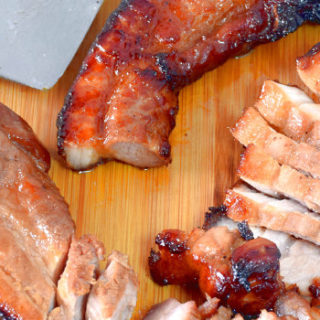
Char Siu recipe
The Char Siu recipe that you can make it at home which is as good as the Chinese restaurant.
Ingredients
Ingredients A- Sauce
- 10 g red yeast rice
- 2 tablespoons Shaoxing wine
- 4 tablespoons light soy sauce
- 2 tablespoons oyster sauce
- 1/4 teaspoon Chinese five-spice powder
- 2 cloves garlic, slivered
- 15 g ginger, thinly sliced
- 3 tablespoons honey
Ingredients B- others
- 600 g pork belly
Instructions
- Cut the pork across the grain into 5cm long strips.
- Soak the red yeast rice for half an hour or until soft with the wine and light soy sauce.
- Break the rice grains with the back of a spoon to release the color. Filter.
- Add the filtered mixture to oyster sauce, honey and five spice powder.
- Keep the pork, the sauce, ginger, and garlic in a zip bag or a bowl. Marinate for one day in the refrigerator.
- Put the pork on the metal rack. Place an aluminum foil on the drip pan.
- Brush the pork with the basting sauce, Roast at 220°C / 428°F for ten minutes. Remove the pork and apply the basting sauce again. Overturned the pork and grill for another ten minutes.
- Move the pork closer to the top heating element for another ten minutes.
- Remove from the oven.
- Set aside until it is no longer hot, Slice and serve.
Recommended Products
As an Amazon Associate and member of other affiliate programs, I earn from qualifying purchases.

Nutrition Information:
Yield: 6 Serving Size: 6 servingsAmount Per Serving: Calories: 380Total Fat: 22gSaturated Fat: 8gTrans Fat: 0gUnsaturated Fat: 13gCholesterol: 84mgSodium: 986mgCarbohydrates: 19gFiber: 1gSugar: 9gProtein: 25g
This data was provided and calculated by Nutitionix on 5/31/2019.
What is Red yeast rice? I tried searching for it on Amazon and the only thing that was coming up was vitamin supplements, specifically CoQ10 vitamins. Could you perhaps share a link for this product?
Red yeast rice is rice that is fermented, and the process yields a red color. It is used traditionally mainly to provide color to certain dishes, as it naturally releases red coloring into liquid. It is used to make Peking duck and also to make fermented red bean curd. If you do not have it, you can just purchase red fermented bean curd from the Asian store as a substitute. Medically, red yeast rice can be used for lowering cholesterol, as it contains statins. So you may see it as a source of making health supplements.
Hello KP,
Hope you have been well! Your generous sharing of your cooking experience for so many types of delicious food all these years brings much joy to me. Many of them bring happy memories of my mum’s cooking, from steam egg to char siu, dim sum, popiah, chapati etc. I don’t cook much myself but enjoy reading your recipes. Thank you!
Warm regards,
A Malaysian fan
Glad to hear that you enjoy my recipe. It is perfectly fine if you do not cook often, but I hope the recipes will be helpful whenever you do. Best regards.
Hello KP
I started with your recipe making my own char siu after a few times I started to tweak the recipe. Looked after different recipes and my taste form the restaurants.
For me essential ingredients are now:
Light soja sauce
Oyster sauce
Fermented bean curd
5 spice powder
Red yeast
Maltose
Brown cane sugar
Rice wine
Garlic
Ginger
and for glazing
Maltose
Honey
Brine
Roasting in oven at 200c for 35min. Start glazing when the meat gets dry outside glaze minimum 2 times and roast for 10 minutes after the last glazing.
This combination makes me a real georgrous tase compared to best restaurants where I have tried it!
Thank you for sharing your experience, and I will take notes of your improvement from my basic recipe.