
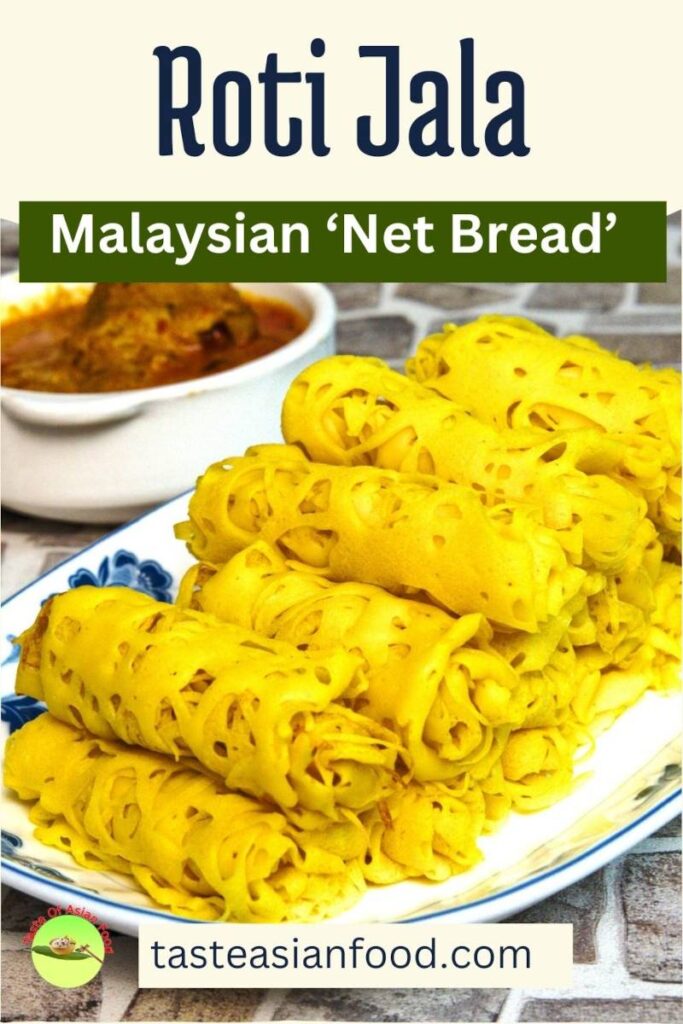
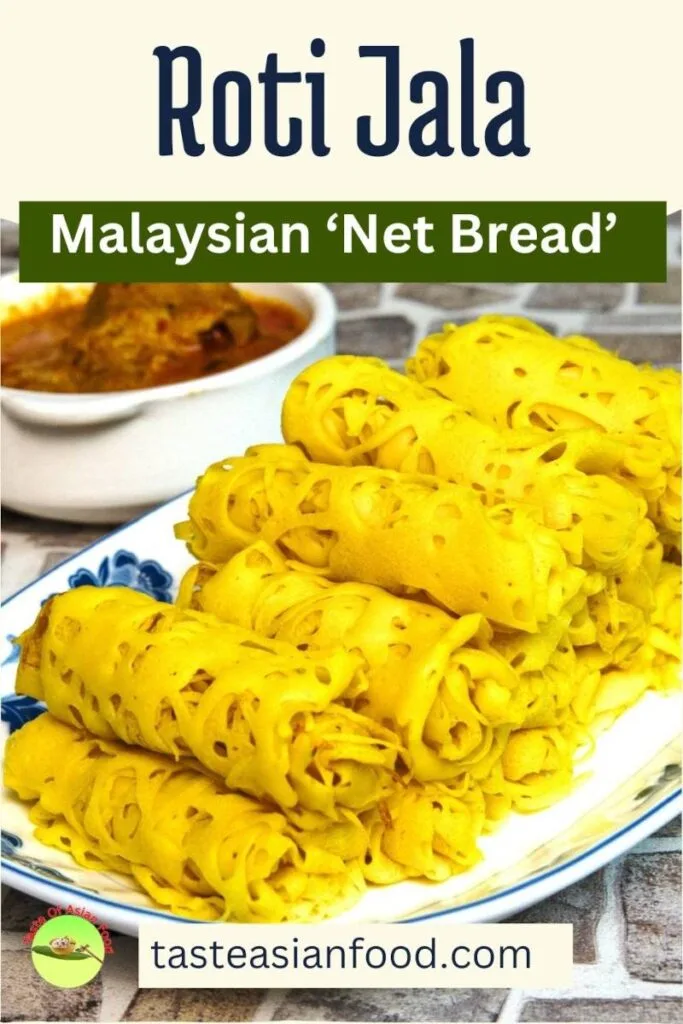
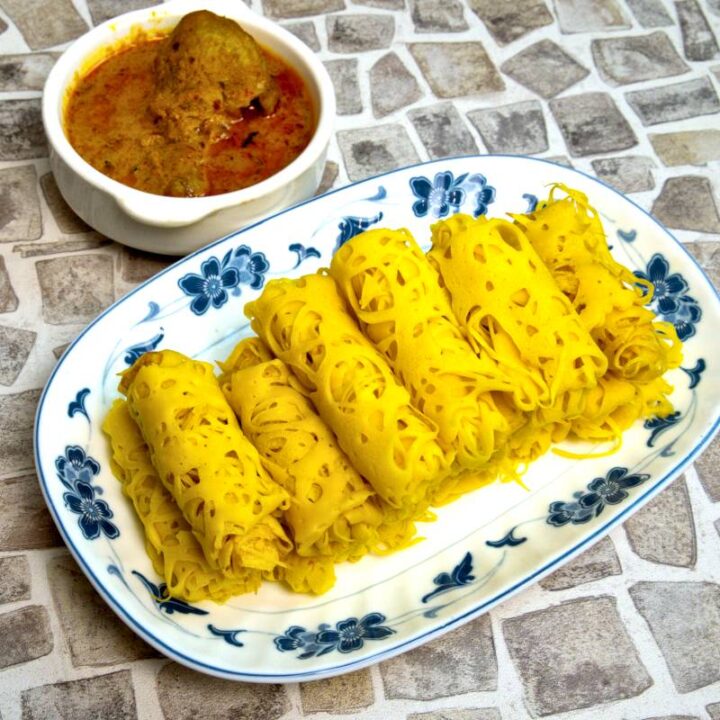
A few weeks ago, one of my readers requested a recipe for Roti Jala. We used to make this beautiful, net-like crepe at our former restaurant, and for this version, I made a few small tweaks to give it a slightly upgraded touch. So here is our updated take on Roti Jala, also known as Net Bread in English.
Roti Jala is a traditional Malay dish and is also popular in certain parts of Indonesia, especially Aceh in Sumatra (they call it Roti Kirai), as both regions share a common Malay heritage.
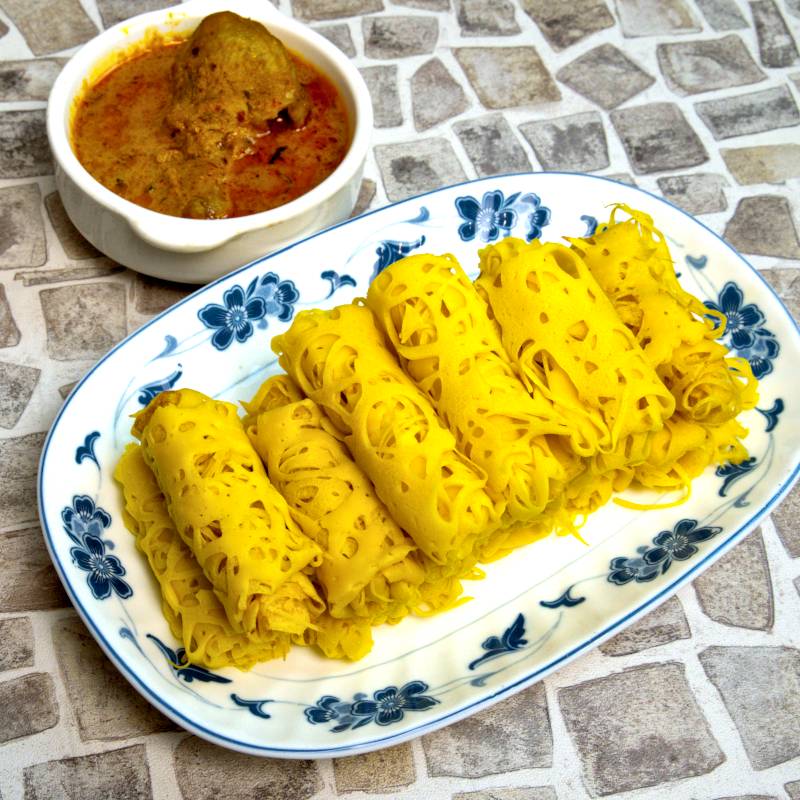
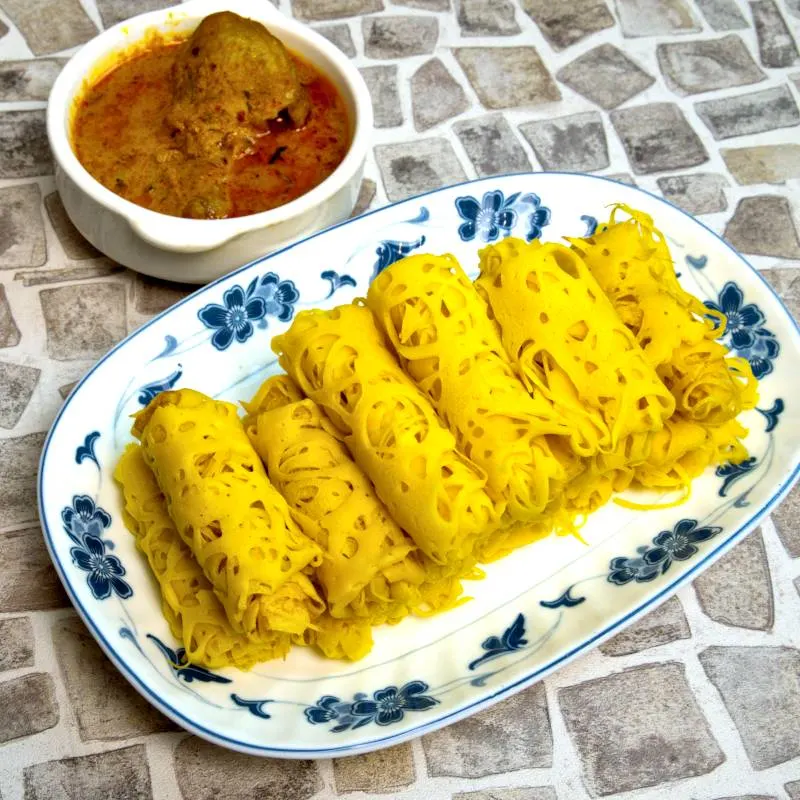
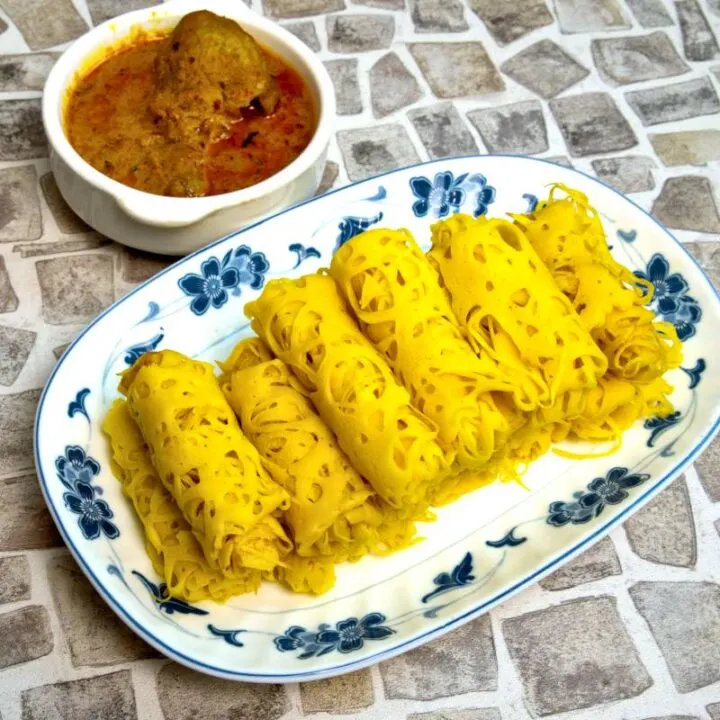
It’s made by pouring batter in a circular motion through a container with multiple small holes at the bottom, creating a delicate, lace-like pattern. Once cooked, the net pancakes are folded into little rolls and served alongside curries.
Roti Jala is not only delicious but also visually stunning, a bright yellow piece of folded, lacy “cloth” sitting on your plate. If your guests haven’t seen it before, I promise it will be a delightful surprise.
Note: This post may contain affiliate links. Please read my privacy policy for more info. I may receive commissions for purchases made through links in this post. As an Amazon Associate, I earn from qualifying purchases.
What it’s made of
Roti Jala is essentially a net pancake made primarily with plain flour. The other ingredients include water, salt, and coconut cream. My version is slightly different, as I add an egg to the batter, which gives it a richer flavor.
Turmeric powder is added to give Roti Jala its signature bright yellow color, and the coconut cream can be replaced with regular milk without any issues.
What equipment do you need?
A special mold for making Roti Jala is widely available in Malaysia, as it’s such a popular dish. The one I use is a plastic cup with four nozzles at the bottom. This Roti Jala cup works much better than a squeezy bottle because it releases four streams of batter at the same time instead of just one. As a result, the net cooks more evenly and looks more attractive.
Another practical DIY option is to use an empty food can and punch a few holes to mimic a specially made Roti Jala cup.
How to Make Roti Jala
Alright, let’s make some Roti Jala. Although it looks fancy, it’s actually pretty chill once you get the hang of it.
a. Make the batter
- Start by adding the all-purpose flour, salt, and turmeric powder to a large bowl. Mix well so the turmeric powder is evenly distributed. Crack an egg, lightly beat it, and add it to the flour mixture.
- In a separate bowl, combine the coconut cream and water. I’m using packaged coconut cream, which is quite thick, so I use a little less than I would if I were using fresh coconut milk from the market. The total amount of liquid (coconut milk plus water) should roughly match the amount of flour.
- Whisk everything together until smooth, making sure there are no lumps. I usually strain the thin batter through a wire mesh strainer just to be safe.
b. Rest the batter
- Let the batter rest for about 10–15 minutes. This allows the gluten to relax, which helps make the Roti Jala more elastic and less likely to tear.
c. Cook the Roti Jala
- Heat a non-stick pan or skillet over medium-low heat. Make sure it’s not too hot, or the batter will set before you’ve finished forming the lacy pattern.
- Lightly grease the pan with about ½ teaspoon of oil, then wipe off any excess. Roti Jala shouldn’t be greasy.
- Pour the batter into a Roti Jala mold and drizzle it onto the pan in a circular motion to create a net-like pattern. Don’t stress if the pattern isn’t perfect, as it will be folded later anyway.
- Let it cook undisturbed for about 45 seconds to 1 minute, depending on the heat and size. When the surface looks dry, the edges start to lift slightly, and the bottom is lightly golden, it’s ready. There’s no need to flip it.
- Carefully lift it out and place it on a plate.
d. Fold and serve
- Once it’s cool enough to handle, fold the left and right sides toward the center, then roll it up.
- Serve immediately while it’s still warm. It pairs beautifully with chicken curry, lamb curry, beef rendang, and, of course, Kapitan Chicken.
How to Make Roti Jala
This Roti Jala recipe is based on my restaurant experience, with tips on batter consistency, tools, and cooking for perfect net bread at home.
Ingredients
- 225 g plain flour
- 100 ml coconut cream
- 400 ml water
- 1 egg
- ½ teaspoon salt
- ½ teaspoon turmeric powder
- A little oil, for greasing the pan
Instructions
- In a large bowl, combine the flour, salt, and turmeric powder. Mix well to distribute the turmeric evenly.
- Lightly beat the egg and add it to the flour mixture.
- In a separate bowl, mix the coconut cream and water, then gradually add this to the flour mixture.
- Whisk until the batter is smooth and free of lumps. Strain through a fine sieve if necessary.
- Let the batter rest for 10–15 minutes.
- Heat a nonstick pan over medium-low heat and lightly grease it with oil, wiping off any excess.
- Pour the batter into a Roti Jala mold and drizzle it onto the pan in a circular motion to form a net pattern.
- Cook for 45 seconds to 1 minute, until the surface looks dry and the edges lift slightly. Do not flip.
- Remove from the pan, fold into an envelope shape, and repeat with the remaining batter.
Notes
- Batter consistency is important: it should be thin enough to flow easily, but not watery.
- If the batter is too thick, add a little water; if too thin, add a small amount of flour.
- Coconut cream may be replaced with regular milk if preferred.
Recommended Products
As an Amazon Associate and member of other affiliate programs, I earn from qualifying purchases.



Nutrition Information:
Yield: 16 Serving Size: 1Amount Per Serving: Calories: 60Total Fat: 1gSaturated Fat: 0gUnsaturated Fat: 0gCholesterol: 12mgSodium: 74mgCarbohydrates: 12gFiber: 0gSugar: 1gProtein: 2g
This data was provided and calculated by Nutritionix on 24/12/2025
Common Problems When Making Roti Jala
There are a few important points I’d like to highlight. If this is your first time, these tips will save you a lot of frustration:
- Getting the right batter consistency (most important!). Batter consistency is key. If it’s too thin, the net will tear easily. If it’s too thick, it may clog the holes of the Roti Jala cup. The best approach is to cook one test piece. Check the pattern, then adjust by adding a little water if it’s too thick, or a small amount of flour if it’s too thin, before continuing.
- Flexibility in the Roti Jala recipe. You can use just water, a combination of coconut cream and water, or even regular milk. I also added an egg, which is optional. If you skip the egg, you’ll need to slightly adjust the amount of liquid to maintain the right consistency.
- Use a nonstick pan. A nonstick pan works best for making Roti Jala. It prevents sticking and makes removal much easier.
- Control the heat. Keep it at medium heat or lower. If the pan is too hot, the bottom will brown too quickly before you finish forming the net pattern.
What to Serve With Roti Jala
While roti jala itself is mild and delicate, it shines most when paired with rich, flavorful dishes to scoop up with its lacy threads. Here are three recipes I suggest that make perfect companions:
- Malaysian Chicken Curry – A classic, rich coconut-based chicken curry whose deep, aromatic gravy is ideal for dipping your roti jala into every last bit.
- Lamb Curry (Authentic Malaysian-Style) – Tender, slow-stewed lamb in a spice-packed gravy that complements the soft texture of roti jala.
- Vegetable Curry – A vibrant mixed vegetable curry in fragrant spices and coconut milk, offering a vegetarian option that still delivers rich flavor with your roti jala.
Ruth
Friday 26th of December 2025
Hi, what's roti jala mold looks like? I am curious.
KP Kwan
Saturday 27th of December 2025
I’ve shown how it looks in the video, right above the recipe card. If you scroll to about the one-minute mark, you’ll see what it looks like.
KP
Thursday 25th of December 2025
Hi, this is KP Kwan. I’m delighted to see you here in the comment section after reading my recipe. I’ll be happy to answer any questions or comments as soon as possible.