
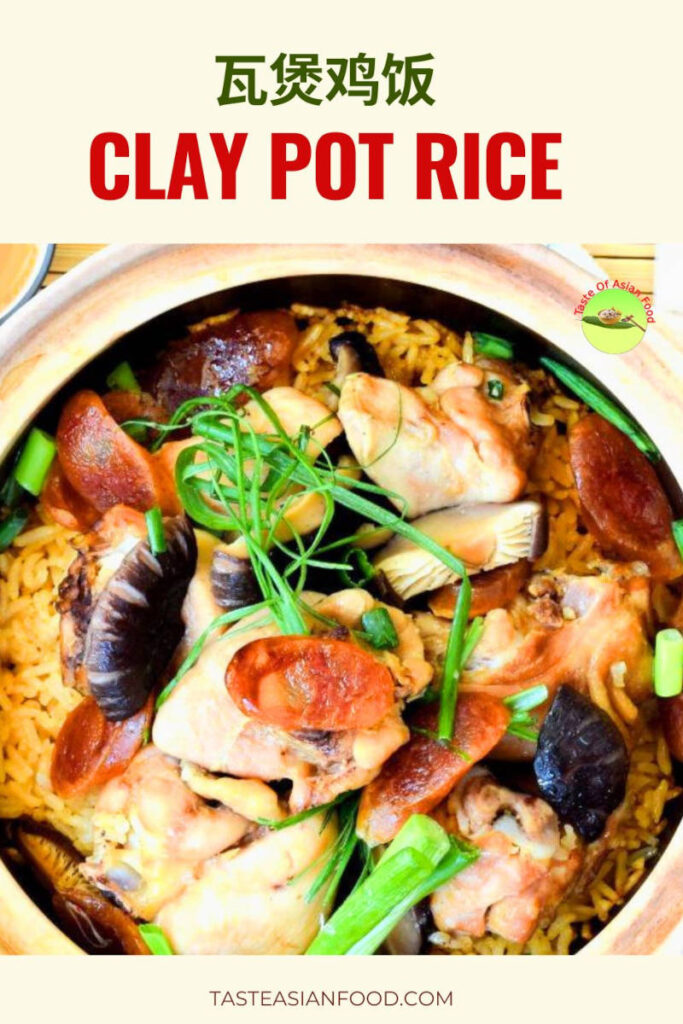
Clay pot chicken rice (煲仔饭 or 瓦煲鸡饭) is one of the most popular street foods among Malaysian Chinese. You can find it in many traditional coffee shops, known as kopitiam, as well as at hawker stalls. It is loved not only for its rich flavor, but also for the way it is prepared. The cooking is often done right in front of the shop or by the roadside, which makes it very eye-catching.
The rice is slowly cooked in a clay pot, allowing it to absorb the rich flavors of the chicken, Chinese sausage, and seasoning. When cooked over charcoal, the aroma becomes even more irresistible. The combination of tender chicken, well-seasoned rice, and the layer of slightly crispy rice at the bottom is something you simply cannot get from a regular rice cooker.
In this article, I will show you how to prepare this classic one-pot meal at home using simple ingredients, along with useful tips to help you achieve the best flavor and the signature crispy rice.
Content
Note: Click any item to jump straight to that part of the post.
- Key Ingredients That Make This Dish Special
- Why This Recipe Works
- Step-by-Step Instructions
- Tips for the Best Clay Pot Chicken Rice
- Frequently Asked Questions
Note: This post may contain affiliate links. Please read my privacy policy for more info. I may receive commissions for purchases made through links in this post. As an Amazon Associate, I earn from qualifying purchases.
Key Ingredients That Make This Dish Special
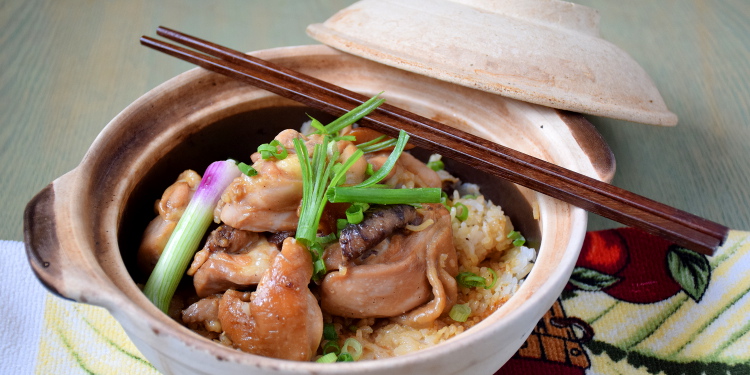
The unique flavor of clay pot rice comes from a combination of essential ingredients. Each group plays a specific role in creating its rich aroma and satisfying taste.
Chicken and Marinade
Chicken is the main source of flavor in this dish. Using bone in chicken is important, as it releases natural juices during cooking that are absorbed by the rice. If you prefer not to deal with bones, you can use boneless chicken as an alternative, although it will be slightly less flavorful. In that case, you can add a small amount of chicken broth to help enhance the taste.
The marinade, made with soy sauce, oyster sauce, sesame oil, ginger, and a touch of sugar, helps tenderize the meat while adding a well-balanced savory flavor. It also ensures that every bite of chicken is well seasoned.
Chinese Sausage (Lap Cheung)
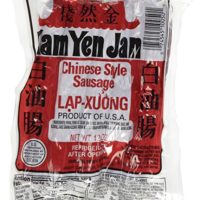
Chinese sausage is a signature ingredient in clay pot rice. It has a slightly sweet and smoky flavor that pairs perfectly with the chicken. As it cooks, the fat slowly melts and seeps into the rice, making it more flavorful and aromatic.
This ingredient is one of the key elements that give the dish its distinctive Malaysian Chinese character.
Salted Fish
Salted fish is optional, but it adds a strong umami flavor that elevates the dish to another level. A small amount is enough to provide a deep, savory note.
Although optional, many traditional versions of clay pot rice include salted fish for its bold and distinctive taste.
Mushrooms
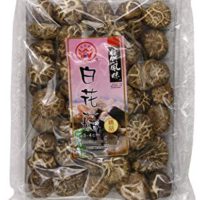
Dried shiitake mushrooms are another common ingredient, although some versions may leave them out. They have a rich, earthy aroma and a slightly chewy texture.
When soaked, the mushrooms release a flavorful liquid that is used as part of the cooking liquid for the rice, further enhancing the overall taste.
Rice and Seasoning Sauce
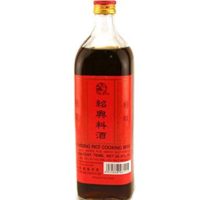
The rice serves as the base that absorbs all the flavors from the ingredients above. The seasoning sauce, made with soy sauce, oyster sauce, sesame oil, and Shaoxing wine, brings everything together and creates the signature clay pot chicken rice flavor.
This combination gives the dish its rich color, aroma, and satisfying depth of taste.
Why This Recipe Works
Clay pot chicken rice is not difficult to prepare, but achieving the best result depends on understanding a few key cooking principles.
Layering of Flavors
This recipe works because all the ingredients are cooked together in one pot. As the chicken, Chinese sausage, and mushrooms heat up, they release their natural juices and aroma, which are gradually absorbed by the rice. This creates a deep and well-balanced flavor in every bite.
Cooking in Stages
The rice is partially cooked before adding the toppings. This ensures that both the rice and the chicken finish cooking simultaneously. If everything is added at the beginning, the chicken may overcook before the rice is ready.
Controlled Use of Water
Less water is used compared to normal rice cooking. This is because the chicken and sauce will release additional moisture during cooking. Using less water helps prevent the rice from becoming too soft or mushy, and allows the grains to remain distinct.
Low and Steady Heat
Cooking over low heat allows the rice to cook evenly while giving enough time for the flavors to develop. It also helps prevent the bottom from burning too quickly before the rest of the ingredients are properly cooked.
You can prepare this dish on the stovetop using a clay pot. For a more convenient option, it can also be made using an electric rice cooker, although the texture and aroma will be slightly different.
The Crispy Rice Layer
One of the most important features of clay pot chicken rice is the thin layer of crispy rice at the bottom. This is formed by allowing the rice to cook undisturbed toward the end.
The slight charring adds both texture and a subtle toasted aroma that makes the dish especially enjoyable. This crispy layer is best achieved using the stovetop method with a clay pot. An electric rice cooker will not produce this effect, as it stops cooking once the rice is done.
Step-by-Step Instructions
Step 1: Prepare the Ingredients
Start by preparing all the ingredients before you begin cooking.
Soak the dried shiitake mushrooms in warm water for about 20 minutes until they become soft. Once softened, squeeze out the excess water and slice them into thin strips. You may keep the soaking liquid and use it as part of the cooking liquid for the rice to enhance the flavor.
Bring a small pot of water to a boil, then place the Chinese sausage into the boiling water and blanch it for about 30 seconds. Remove it from the water, and the casing can be peeled off easily. Slice the sausage into thin pieces.
Cut the chicken into medium-sized pieces. Try to keep the pieces similar in size so that they cook evenly.
Step 2: Marinate the Chicken
Place the chicken into a large bowl and add all the marinade ingredients, including salt, sesame oil, oyster sauce, dark soy sauce, ground white pepper, sugar, cornflour, and chopped ginger.
Mix well so that each piece is evenly coated. This step helps tenderize the chicken while building flavor from the inside.
Allow the chicken to marinate for at least 30 minutes. If you have more time, marinating longer in the refrigerator will give a deeper and richer taste.
Step 3: Prepare the Sauce
In a small bowl, combine all the sauce ingredients, including oyster sauce, dark soy sauce, light soy sauce, sesame oil, Shaoxing wine, and water.
Mix until well combined. This sauce will be added later to enhance the flavor and color of the rice.
Set the sauce aside until it is needed.
Step 4: Start Cooking the Rice
Rinse the uncooked rice a few times under running water until the water runs clear.
This step removes excess starch and helps prevent the rice from becoming too sticky. Drain the rice thoroughly before cooking.
Transfer the rinsed rice into the clay pot and add the measured amount of water.
Place the pot over medium heat and bring the water to a gentle simmer with the lid on. Once it starts to bubble, reduce the heat to low and continue cooking for about 10 minutes.
Step 5: Add the Chicken and Other Ingredients
After about 10 minutes, open the lid and carefully spread the marinated chicken evenly over the partially cooked rice.
Add the sliced Chinese sausage, mushrooms, and salted fish on top. Then, drizzle the prepared sauce evenly over the ingredients.
Do not stir at this stage, as the layering is important for proper cooking and flavor absorption.
Cover the pot again and continue cooking over low heat for another 10 to 15 minutes. During this time, the chicken will cook through and release its juices into the rice.
Step 6: Create the Crispy Rice Layer
For the stovetop method, towards the end of cooking, you can slightly increase the heat for a short period.
This helps to form the signature crispy rice crust at the bottom of the pot. You may hear a light crackling sound, which is a good sign that the crust is forming.
Be careful not to overheat, as this can cause the rice to burn.
Step 7: Rest and Serve
Turn off the heat and let the clay pot rest for about 5 minutes with the lid on. This allows the moisture to settle and the flavors to fully develop.
Sprinkle chopped spring onions on top before serving.
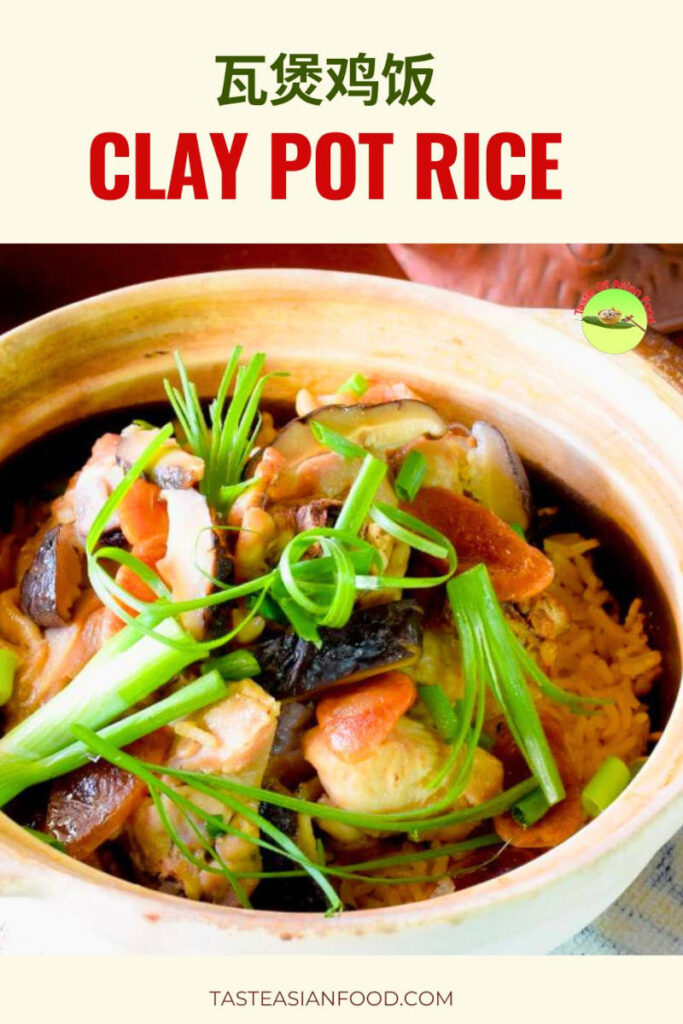
When serving, gently scrape the sides and bottom of the pot to loosen the crispy rice, then mix everything before eating.
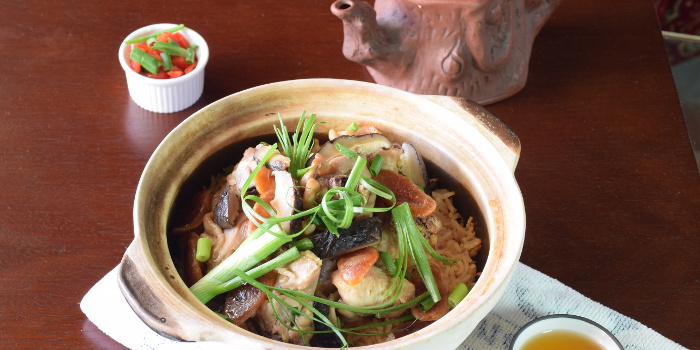
Serve hot directly from the pot for the best experience.
Tips for the Best Clay Pot Chicken Rice
Follow these tips to help you achieve results similar to what you would expect from experienced street vendors and professional cooks.
Use the Right Type of Rice
Long-grain rice is recommended because it produces a lighter and less sticky texture. The grains remain more separate, which is important for clay pot rice. This also helps create a better contrast in texture, especially when paired with the crispy rice layer at the bottom.
Reduce the Water Slightly
Clay pot chicken rice requires slightly less water compared to regular rice cooking. This is because the chicken, mushrooms, and sauce will release additional moisture during cooking.
Using too much water can result in soft or mushy rice, while using too little water may cause uneven cooking. Finding the right balance is important for achieving the ideal texture.
Do Not Skip the Marination
Marinating the chicken is essential for building flavor. A well-marinated chicken will taste more tender and more flavorful, as the seasoning is absorbed into the meat.
This step also helps ensure that the chicken contributes to the overall taste of the rice once its juices are released during cooking.
Cook Over Low and Controlled Heat
Maintaining low heat is one of the most important factors in this recipe. Low and steady heat allows the rice to cook evenly while giving enough time for the flavors to develop.
High heat can cause the bottom to burn too quickly before the rest of the dish is properly cooked.
Do Not Stir During Cooking
Once the ingredients are layered in the pot, do not stir. Stirring will disrupt the cooking process and prevent the rice from forming its signature crispy layer at the bottom.
It will also interfere with the natural layering of flavors that develops as everything cooks together.
Pay Attention to Timing
Adding the chicken and other toppings after the rice has started cooking is important. This ensures that all ingredients finish cooking at the same time.
Proper timing helps prevent overcooked chicken or undercooked rice, giving you a well-balanced final dish.
Use Bone-In Chicken for Better Flavor
Bone-in chicken releases more natural flavor during cooking. The bones help enhance the overall taste of the rice, while also keeping the meat juicy and tender.
If you choose to use boneless chicken, consider adding a small amount of chicken broth to make up for the reduced flavor.
Achieve the Crispy Rice Layer
To create the desired crispy rice layer, allow the rice to cook undisturbed toward the end of cooking.
You may gently increase the heat for a short period to help form the crust, but this must be done carefully to avoid burning. A light crackling sound is usually a good indication that the crust is forming properly.
Frequently Asked Questions
Can I cook clay pot chicken rice without a clay pot?
Yes, you can still prepare this dish using a rice cooker or a heavy-bottomed pot. However, the flavor and texture will be slightly different.
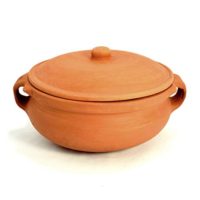
A clay pot is preferred because it helps retain heat evenly and creates the signature aroma and crispy rice layer at the bottom, which is harder to achieve with other cooking methods.
Why is my rice too soft or mushy?
This typically occurs when excessive water is added during cooking.
Clay pot chicken rice requires less water because the chicken, mushrooms, and sauce will release additional liquid as they cook. Reducing the water slightly will help you achieve a firmer and more distinct rice texture.
Why did my rice burn at the bottom?
Burning usually occurs when the heat is too high during cooking.
To prevent this, always cook over low and steady heat. Avoid rushing the process, and if necessary, move the pot to a lower heat source to maintain better control.
How do I get the crispy rice layer?
The crispy rice layer is formed by allowing the rice to cook undisturbed toward the end of cooking.
You can gently increase the heat for a short period to encourage the crust to form. When done correctly, you may hear a light crackling sound, indicating that the crust is forming.
Can I skip the Chinese sausage?
You can skip Chinese sausage if needed, but it is highly recommended.
Chinese sausage adds a distinctive sweet and savory flavor that is essential to the overall taste of the dish. Without it, the flavor will be less rich and less authentic.
Why use bone in chicken instead of boneless chicken?
Bone-in chicken adds more depth of flavor to the dish.
As the chicken cooks, the bones release natural juices that enhance the taste of the rice. Bone-in pieces also tend to stay more juicy and tender compared to boneless cuts.
Do I need to soak the rice before cooking?
Soaking the rice is optional, but it is recommended.
Soaking helps the rice cook more evenly and can slightly reduce the cooking time. It also contributes to a better overall texture, especially when using the stovetop method.
Chicken Rice in Clay Pot
Chicken rice in clay pot is one of the most popular street food among the Chinese in Malaysia.
Ingredients
A- For the rice:
- 300 g rice, washed until water runs clear
- 420 ml water
B- For the marinate:
- 500 g chicken, bone-in, cut into 4cm pieces
- 1 teaspoon salt
- 1 teaspoon sesame oil
- 1 tablespoon oyster sauce
- 1/4 teaspoon dark soy sauce
- 1/4 teaspoon ground white pepper
- 1 teaspoon sugar
- 1 teaspoon cornflour
- 1 tablespoon ginger, , finely chopped
C- For the drizzling sauce:
- 1 tablespoon oyster sauce
- 1/2 tablespoon dark soy sauce
- 1 tablespoon light soy sauce
- 1 teaspoon sesame oil
- 1 1/2 tablespoons Shaoxing wine
- 2 tablespoons water
D- Other ingredients
- 1 Chinese sausage, cut into thin slices
- 1 teaspoon salted fish, optional
- 2 Shitake mushrooms
- 1 stalk scallion
Instructions
- Soak the dry Chinese mushroom in warm water for 20 minutes. Cut it into long, thin slices. Set aside.
- Cut the Chinese sausage into thin slices.
- Mix all the ingredients in B together in a bowl. Marinate for one hour in the refrigerator.
- Mix all the ingredients in C together.to make the sauce.
- Rinse the rice a few times until the water runs clear. Drain and transfer it into the clay pot.
- Add water into the rice.
- Simmer the rice over low heat with the lid on for 10 minutes.
- Spread the marinated chicken, salted fish (optional), and Chinese mushroom evenly on the surface of the rice.
- Drizzle the sauce on it and cover.
- Simmer over low heat for another 10 minutes.
- Garnish with spring onions and serve.
Recommended Products
As an Amazon Associate and member of other affiliate programs, I earn from qualifying purchases.
Nutrition Information:
Yield: 2 Serving Size: 2 portionsAmount Per Serving: Calories: 939Total Fat: 47gSaturated Fat: 13gTrans Fat: 0gUnsaturated Fat: 29gCholesterol: 259mgSodium: 2991mgCarbohydrates: 50gFiber: 1gSugar: 3gProtein: 71g
This data was provided and calculated by Nutritionix on 4/16/2019
Hi KP Kwan, thanks for your prompt response. Am I right to put the marinated chicken into the half cooked rice? I saw your video the chicken is not required to be cooked first.
Yes, correct. Put the uncooked rice on the half-cooked rice. The reason not to put together with the rice initially is that we want to wait until the rice starts to firm up and able to support the chicken pieces. Otherwise, the chicken will sink to the bottom of the cooker.
Hi
I love all your videos!!! Fantastic. I am going to try this claypot rice in a rice cooker. May I ask when should the chicken, and other ingredients be added to the rice?
Hi Nancy,
You can start by cooking the rice for ten minutes. By now, the rice is still half-cooked. Add the chicken, and then continue to cook again until it is all done.
You can refer to the recipe for the details.
KP Kwan